

Why are some dogs terrified of fireworks? Paignton vets share Bonfire Night advice for owners
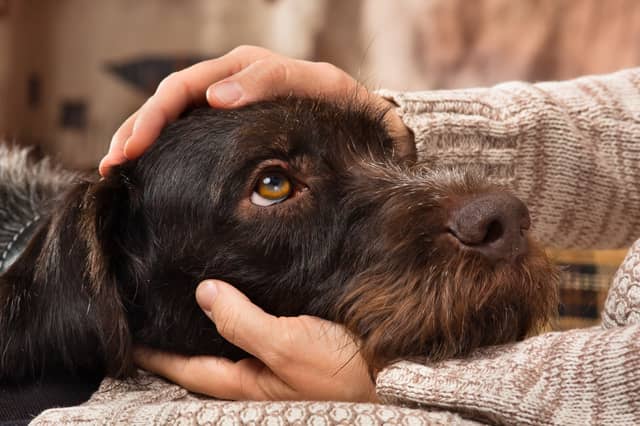

With Bonfire Night approaching, two Paignton vets explain why fireworks leave some dogs terrified while others barely react and share practical tips to help keep your four-legged friend calm and safe.
Do you dread Bonfire Night every year, worrying about how your dog is going to react to the fireworks?
Two Paignton vets reveal why some dogs are terrified of fireworks, while others may sleep through it undisturbed and share some advice on how you can help your dog this Bonfire Night.
Victoria Goss and Kevin Davidson, Clinical Directors at Dart Vale Veterinary Centre in Paignton, explain that dogs experience several physiological changes in response to the loud bangs.
Unlike humans, dogs cannot understand that fireworks are part of a harmless celebration, meaning the sudden bangs and flashes can seem threatening and trigger feelings of anxiety.
Victoria and Kevin added: “We experience fireworks knowing exactly what they are, when we're likely to hear them and that they aren't a threat.”
“Our dogs don't have that explanation.”
“Imagine suddenly hearing an extremely loud, unpredictable noise when you don't know where it has come from.”
“For some dogs, their body responds as though there is something they need to protect themselves from.”
They added: “These aren't dogs being naughty or overreacting.”
“They can be outward signs of a very real fear response.”
Research into firework-sensitive dogs has found measurable differences in autonomic nervous system activity after exposure to the recorded sound of fireworks.
Dogs also have much more sensitive ears than humans, allowing them to detect sounds from approximately four times further away and perceive higher-frequency sounds.
But if fireworks can trigger such strong reactions, why are some dogs terrified while others are seemingly unbothered?
Victoria and Kevin said: “Owners sometimes wonder why their new puppy is frightened when the previous dog wasn’t, or why two dogs living in exactly the same household react completely differently.”
Some dogs may show highly animated behaviours like barking, hiding, trembling, hyper alertness, searching for the sound, attempting to run away and freezing.
However, at the same time, other dogs may show signs of anxiety far more subtly.
For example, pacing, restlessness, quietly leaving a room, choosing an unusual place to lie in, panting, seeking attention or refusing food.
At the same time, other dogs may remain completely unfazed.
Victoria and Kevin confirm that no two dogs are the same and reactions to fireworks can depend on a host of factors, like age, health and previous experiences.
They added: “Fear can also change during a dog’s lifetime.”
Dogs who are in pain may also become more sensitive to noise, meaning that veterinary checks are advised if a dog suddenly develops a noise phobia.
Research also suggests that genetics plays a significant role in determining how likely a dog is to develop a fear of fireworks.
One recent study of Standard Poodles estimated genomic heritability for firework fear at 28% in the population studied, suggesting that genetic differences may help explain why some dogs are more prone to this fear than others.
For some dogs, the effects of Bonfire night can also last well beyond the night itself.
A study involving 1,225 dogs found that while three-quarters of the fearful dogs had recovered by the following morning, 12 percent took up to a week and more than 3 percent took several weeks or even months to fully recover.
This means that finding ways to help the dog manage their stress is important.
Some owners may think that repeated exposure could fix their dog’s firework anxiety.
While this may work for some, a significant proportion of dogs actually become sensitised, meaning their fear response increases with repeated exposure.
Instead, Victoria and Kevin have shared some helpful tips on how owners can help their dogs cope with the fear and stress caused by fireworks.
One of their key recommendations is to keep dogs indoors while fireworks are being set off.
Creating a safe, quiet space where dogs can retreat when frightened can also be helpful, particularly if owners close the curtains to block out flashes of light and provide background noise to muffle the sound of fireworks.
Giving dogs the freedom to choose how they manage their fear can also help.
Some dogs may want to seek extra reassurance from their owners, while others would rather retreat to a hiding place.
Planning ahead can also make a real difference in helping dogs cope with fireworks.
If you know your dog struggles, it can be helpful to speak to your vet in advance so you have time to put the right support in place, instead of waiting until it’s too late on Bonfire Night.
Some dogs who particularly suffer may benefit from longer-term approaches, like carefully managed desensitisation and counterconditioning.
Other dogs could also benefit from anti-anxiety medication or behavioural support.
There is plenty of support out there for concerned dog owners and Victoria and Kevin encourage people to contact Dart Vale Veterinary Centre if they need advice for an anxious dog this Bonfire Night.