Search


26 Mar 2026
Search
26 Mar 2026

Please allow ads as they help fund our trusted local news content.
Kindly add us to your ad blocker whitelist.
If you want further access to Ireland's best local journalism, consider contributing and/or subscribing to our free daily Newsletter .
Support our mission and join our community now.
To continue reading this article, you can subscribe for as little as €0.50 per week which will also give you access to all of our premium content and archived articles!
Alternatively, you can pay €0.50 per article, capped at €1 per day.
Thank you for supporting Ireland's best local journalism!
Paignton Zoo is celebrating a rare double baby boom after welcoming a second endangered king colobus monkey this winter, marking the zoo’s first animal birth of 2026 and another important contribution to international conservation goals.
The latest infant was born to 23-year-old Ivy in the early hours of Sunday, 1 February. She joins Limba, another young king colobus born at the zoo last autumn, meaning Paignton Zoo is currently caring for two king colobus infants within the same family group.
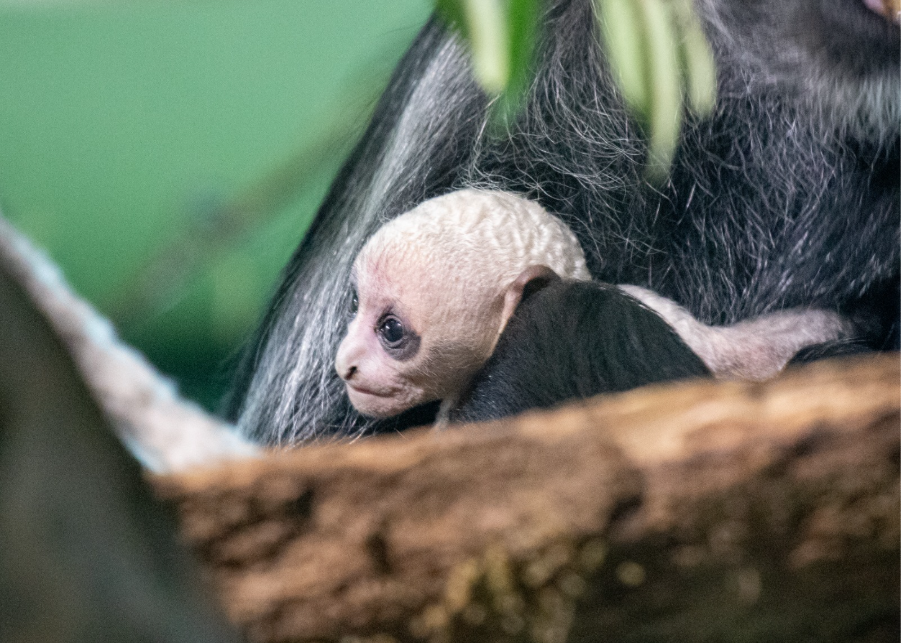 The new arrival marks Paignton Zoo’s first animal birth of the year as major redevelopment gets underway
King colobus monkeys are classified as Endangered, with wild populations declining due to habitat loss and hunting across parts of West Africa. Forest clearance for agriculture, settlements and resource use continues to reduce the space available for these monkeys in the wild.
European zoos work together through carefully managed breeding programmes to safeguard species like the king colobus by maintaining healthy, genetically diverse populations. Each birth is planned and monitored, playing a role in supporting the long-term survival of the species.
Nadia Gould, Team Leader of Mammals at Paignton Zoo, said: “We are incredibly proud to be part of a wider breeding programme that helps protect species like the king colobus. These births are the result of careful planning and years of collaboration between zoos, all with the aim of safeguarding the future of these animals.”
Ivy is also mother to Lola, who gave birth to Limba in October, a pattern that is common in primate species where different generations often raise young at the same time.
Both babies were sired by Limbali, an unrelated male introduced to the group as part of a managed breeding programme. Limbali sadly died just weeks before Limba’s birth, making the recent arrivals particularly poignant for the animal care team.
The newborn can be seen clinging closely to Ivy in the Monkey Heights exhibit, her bright white coat making her easy to spot. King colobus monkeys are born entirely white, and their colouring gradually changes as they grow.
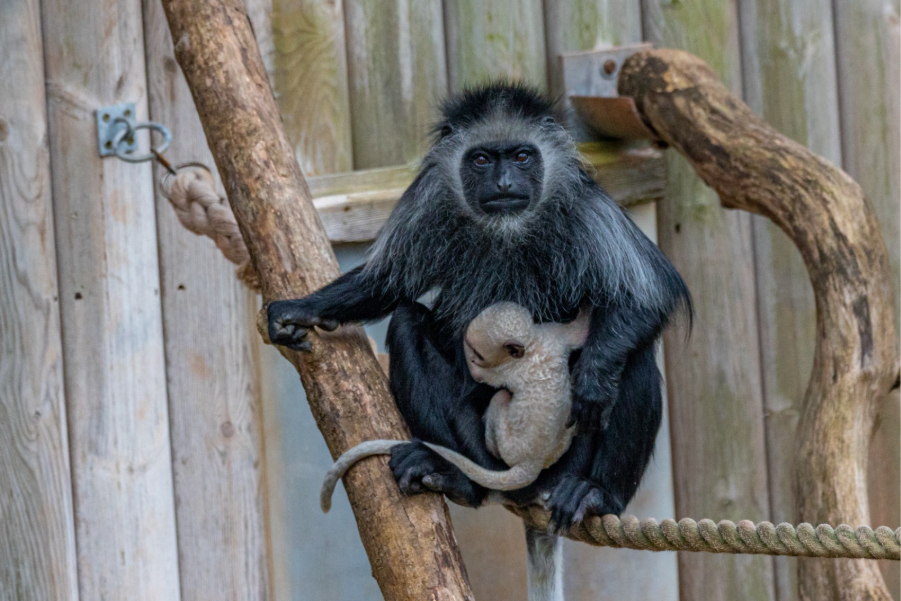 King colobus babies are born pure white, making them easy to see as they cling to their mothers in Monkey Heights.
At three months old, Limba has already undergone a striking transformation, now resembling a miniature version of the adults with dark fur and a distinctive white-grey cape. Her confidence and playful behaviour regularly catch the attention of visitors.
Monkey Heights is now home to three babies in total, with the king colobus infants joined by Koidu, a Diana monkey born last summer and affectionately known as the zoo’s “miracle baby”.
Nadia Gould added: “Having three babies in Monkey Heights at the same time has brought such a lovely energy to the zoo. Seeing visitors’ reactions when they spot them is always a highlight, and it gives us a great opportunity to talk about how endangered these species are and why breeding programmes like this are so important.”
The arrivals come at a time of significant change for Paignton Zoo and its sister site, Newquay Zoo, which have recently moved into new ownership under Libéma. With construction already underway and new exhibits planned, the births signal an encouraging start to a year of transformation.
While much of the development is happening behind the scenes, visitors can already see signs of change taking shape across both sites, with improved facilities and new animal habitats expected later this year.

Subscribe or register today to discover more from DonegalLive.ie
Buy the e-paper of the Donegal Democrat, Donegal People's Press, Donegal Post and Inish Times here for instant access to Donegal's premier news titles.
Keep up with the latest news from Donegal with our daily newsletter featuring the most important stories of the day delivered to your inbox every evening at 5pm.