

Making the most of Autumn rain in the garden
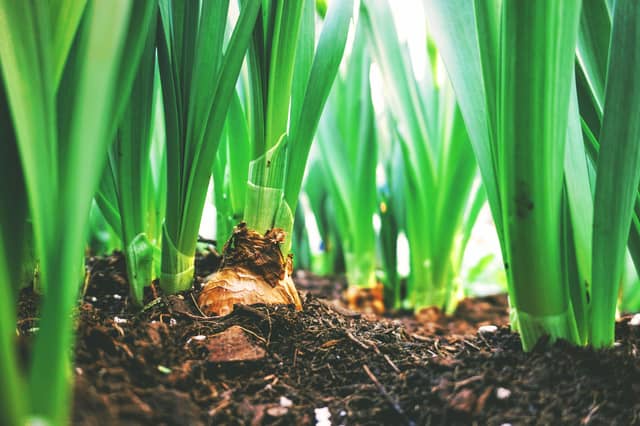

Planting bulbs in sequence from December onwards can bring colour to your garden even on the shortest days, with daffodils and hyacinths emerging in spring
In the Garden
Every cloud has a silver lining and the rain clouds we’ve seen have in some respects been incredibly welcome with their liquid sunshine softening the ground.
This is great news as it means the water table is high enough to not only collect more water, but on a micro level it means we can dig without hitting dust and also, indulge in the holiest of holies, planting bulbs.
Hiding bulbs must be one of the most satisfying planting tasks throughout the year. You don’t even have to label them or even mark where you put them half the time.
A ‘true bulb’ has a basal plate where the roots grow and reproduces by making more tiny bulbs around the parent bulb. Daffodils, which are among the easiest plants to grow, tulips, snowdrops, lilies and hyacinths all earn a living in this way.
An alternative bulb is a tuber, of which the potato is the most obvious example but begonias and dahlias also start off as tubers. The common denominator is that they all require basic skills and care to reach maturity. With that in mind, what’s not to like about them.
There is a trick however, and that is planting them in sequence where they can be seen from the house. Bulbs come out in spring which as we know can be inclement so planting them around the house is often beneficial.
They will come out in sequence from December onwards if you plant snowdrops, crocuses, daffodils, hyacinths, tulips bluebells, alliums, camassia and irises.
Daffodils have different varieties that appear from December (Rijnfelds Early Sensation) through to April/May (Pheasants Eye) so you can have some colour even on the shortest days.
Even in February we can start growing more exotic blooms like daliahs under glass in pots so they re ready to just drop in when the frost has gone.
On the Plot
We have around a month before anticipating the first frosts of the year, so that’s a month to prepare protections and defences. Gather together horticultural fleece from last year, hopefully it’s neatly put away rather than stuffed behind a bin where I found mine.
There is beauty to be found in autumn in the veg patch, overwintering leeks with their glaucous blue foliage and artichokes entering their architectural phase.
Globe artichokes can be planted a couple of yards apart in a hole that has been backfield with well rotted manure. They generally look after themselves if they have some slow release nutrients under them. Every plot should have at least one, for aesthetic reasons and also because they provide food for birds when there isn’t much around. Not forgetting they are an elite foodstuff too.
Now that log burners and bonfires have been lit for the first time, all that lovely potash can be collected and spread under cherry trees and the ubiquitous apple tree. If there’s any left, sprinkle it over the growing garlic.
Whilst garlic is on your radar, Elephant garlic, the gigantic version of garlic, can have its clove planted now. It’s easy to grow and milder than traditional garlic. It’s related to, and about the size of a leek.
If you hunt down or cadge a few cloves, they enjoy well drained and rich soil, which is an environment we can all create. They can be spaced to around 10 inches apart and pushed into the soil just a fingers depth. Once they reach maturity and are about the size of a fist then keep back a few cloves for growing and roast individuals to add a bit of sparkle to a winter meal.
Even though at times the rain intervenes, and that pretty much is the only weather you can’t garden outdoors in, other conditions allow us to get out there and do as much as we can enjoy. There is always something to do in the garden.