

Spookiest town in Britain? How Torquay became the Victorian capital of the supernatural
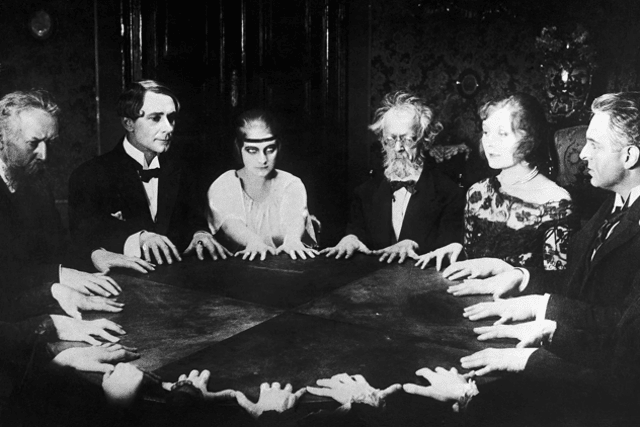

From Victorian séances and Gothic fiction to haunted houses and modern ghost hunting, Torquay has long been at the heart of Britain’s fascination with the supernatural. Discover how a blend of Spiritualism, literary imagination and local legend helped shape the town’s eerie reputation — and why its ghost stories continue to haunt us today.
In 1959 the American author Shirley Jackson’s wrote the classic novel ‘The Haunting of Hill House’. The novel has since been adapted to film twice, in 1963 and 1999, under the title ‘The Haunting’.
Shirley later revealed that she decided to write her "ghost story" after reading about a group of nineteenth century ‘psychic researchers’ who studied a supposedly haunted house. She didn’t reveal which investigation, but ‘The Haunting of Hill House’ and many other subsequent novels and films are part of a supernatural tradition with nineteenth century roots. And there is a particular association with Torquay; some stories being fictional, some claiming to be real experiences, and others a blend of actual events and local myth.
A fascination with the supernatural was already well entrenched in the Bay by the beginning of the nineteenth century; a reaction to the Industrial Revolution expressed in the Romantic and Gothic movements. Early tourists would visit nearby Berry Pomeroy Castle having read Edward Montague’s 1806 Gothic novel of horror, jealousy, and revenge. Though clearly fictional many visitors would believe the stories to be true, and some still do.
These disparate themes would be given an opportunity to come together through Spiritualism. In 1848 the Fox sisters in New York claimed that curious rapping sounds were messages from the dead. In 1852 table rapping came to England and the fashionable health resort of Torquay quickly seized on the new sensation.
At the time, organised religion was seen by some to be out of touch. In Ellacombe, for example, people were complaining that church sermons were long, dull, and dry. Doubts were also creeping in. Geology had proved that the earth was far older that the Bible claimed, while Torquay visitor Charles Darwin in his 1859 ‘Origin of Species’ was arguing for a new natural explanation for life’s variety.
Torquay was then ready for something that would offer reassurance that there really was an afterlife, and an exciting alternative and addition to the mainstream Church was Spiritualism. It was also respectable; Queen Victoria practiced table rapping. Torquay harbourside resident, the poet Elizabeth Barrett Browning was intrigued. She enquired, “Do your American friends ever write to you about the rapping spirits?”
Contacting the departed became a mix of parlour game, public entertainment and religion and soon it was possible to attend a number of seances across town. In a society of strict rules, they also provided a means for men and women to meet with the gas lights turned low. Mediums quickly found, however, that they needed to compete for an audience and so séances moved on from simple and predictable table rapping to feature floating tables, levitating musical instruments, and full materialisation of ghosts.
The town’s large population of the educated and wealthy had a great deal of time on their hands and, alongside Spiritualism, came an appetite for pseudoscience, including, telepathy, astrology, phrenology, mesmerism, reincarnation and anything supernatural. Torquay subsequently acquired a reputation for being a centre of occult thought and practice.
As a tourist resort, we also had visitors arriving expecting to be entertained. Carriages waited at the Strand and collected from hotels offering a day out from the mundane. This was a competitive industry and so guides had an incentive to invent, import, and embellish the stories they told their paying customers. The greater the excitement, the higher the gratuities and tours of haunted places became part of the Victorian and Edwardian holiday experience.
As it is today, the paranormal is associated with specific times of the year. The Victorian ghost was to be found at Christmas, and stories were often issued to support the centuries-old folk tradition Yuletide custom of telling tales by the fireside. While they did celebrate Halloween, Queen Victoria being an enthusiast, this was an occasion for themed parties with games being played for fun and not taken particularly seriously.
By the 1890s, newspapers and periodicals were printing ideas for Halloween games, recipes, and decorations, with homemade costumes of ghosts, black cats, fairy tales, and nursery rhymes a common theme. Predictably, seances were a party favourite, with Ouija boards used and ghost stories related, while divination games involved young women looking into mirrors, or scrying, to see the face of their future husband.
Such an environment stimulated a local demand for supernatural fiction. Before the start of Victoria's reign in 1837, stories of ghosts and hauntings were thought to be fading away. Then came a proliferation of ghosts in novels and short stories, on stage, and in spirit photographs.
One explanation for the upsurge in interest was the rise of periodicals aimed at middle-class audiences and the holiday reader was a good market. Ghost stories had traditionally been an oral form, but publishers suddenly needed a lot of content. These paranormal tales were short, usually just a few thousand words, cheap to commission, and easy to edit to a required length.
A good example is Charles Dickens, who visited Torquay to give readings of his books in 1862 and 1869. Spotting a commercial opportunity he had written his own highly successful ghost story, ‘A Christmas Carol’, in serial form just before Christmas 1843. Although Charles was fascinated by the supernatural he didn’t believe in literal spirits and considered himself a sceptic.
Indeed, many of our greatest authors ventured into the uncanny and profitable genre, including Mary Shelley, Percy Bysshe Shelley, Elizabeth Barrett Browning, Robert Louis Stevenson, Alfred Lord Tennyson, George Eliot, Arthur Conan Doyle, TS Eliot, Rudyard Kipling, Oscar Wilde, Wilkie Collins, Henry James, George Bernard Shaw, and James Joyce. All lived in or visited Torquay.
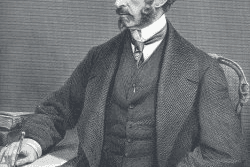
A major local contribution to the evolution of the ghost tale was Edward Bulwer-Lytton. Edward’s ‘The Haunters and the Haunted ‘(1859) is recognised as the first modern haunted house story and still appears in anthologies. The story, based on the famous haunting in London’s Berkeley Square, has a gentleman scholar investigating a house after hearing terrifying reports from a former tenant. The now-familiar cold spots, floating furniture, disembodied footsteps, whispering sounds, and dark shifting shadows are experienced. Eventually, a history of murders linked to an evil ‘psychic battery’ is discovered.
The American horror author HP Lovecraft called it “one of the best short haunted-house tales ever written” and its influence can be seen in pretty much every paranormal movie you’ve ever watched. It may also have given later real-life ghost hunters an unconscious script to work from.
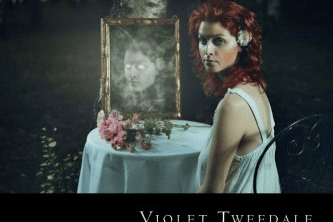
For instance, author and Spiritualist Violet Tweedale lived in Torquay’s Warberrries; very close to an old villa which had acquired a 50-year-long reputation for being haunted. It’s from Violet’s memoirs ‘Ghosts I Have Seen’ (1920) that we have a lengthy and colourful description of her involvement with the house, Castel-a-Mare. There are certainly parallels between Edward’s fiction and Violet’s experiences, and those of other investigators, at Castel-a-Mare.
Ghost stories are one of the most consistently popular genres in books, movies, and video games around the world. These modern tales, fanciful or otherwise, haven’t changed that much in two-hundred years and perhaps that is part of their appeal. We’re still having those eerie encounters. Around 40 percent of us believe in ghosts and one recent survey found that more people report a supernatural experience in modern Torquay than anywhere else in the nation.