

Jim Parker: Could independent shops play a major part in a new, revitalised town centre?


Jim Parker is hoping a back-to- the-future regeneration approach will bring a smile to jeweller John’s face
Could the battle to breathe new life into our town centres have a touch of the back-to-the-future and Deja vu about it?
I hope he doesn’t mind, and I know he won’t because he is passionate about this subject, but I am going to mention my old mate John Doble here.
The highly-respected jeweller has a string of shops throughout South Devon. He has been operating a jewellers in Torquay’s Fleet Street for more than 40 years. He can remember the glory years when people had money to spend and the town centre was a vibrant place to trade and shop.
Not so in recent years. Trading has been a challenge not just for John Doble. He will always blame the council for the never-ending string of so-called highway improvements and roadworks as well as buses chugging their way through a so-called pedestrian priority area.
The type of shopper has also changed. Now, instead of wallets filled with cash there are empty carrier bags. Anti-social behaviour, shoplifting, drugs and street crime haven’t helped the cause either. And then there are the shops or lack of them as more and more close around John.
He can remember the days of the independent shops and a vibrant Fleet Street before the diggers moved in to bulldoze the area to make way for the Fleet Walk shopping centre.
He can prove independents are still crucial to the lifeblood of the high street - he has jewellers shops in Totnes and Brixham where business is much less challenging and more successful because of that independent touch and offer.
Now a leading figure in the world of regeneration and redevelopment and who is playing a huge role in shaping the Bay’s future to make her fit for the 21st century is hinting that the likes of Mr Doble just may have a point.
Torbay’s official ‘vision’ for Torquay and Paignton focuses on reducing retail space and replacing it with homes, including affordable, leisure and health facilities and, wait for it, more traditional shops to make the ‘offer’ in the town more attractive..
Torbay Council and its private sector redevelopment partners Willmott Dixon and Milligan have been tasked with regenerating around a dozen key sites in the Bay including the three town centres to fit in with that masterplan.
In Torquay, in particular, the idea is to shrink the retail space at the Castle Circus top end of town and build homes and a new health hub and indoor market in a revamped Union Square development scheme. Retail would be pushed down past the GPO roundabout bringing those independent shops into play. With an already vastly transformed harbour area, the ‘offer’ would take on a totally different and more attractive look. It may even raise a smile with John Doble.
John Milligan has more than 40 years’ experience in real estate, with much of that time focused on retail. He is the founder and executive chairman of Milligan.
In a letter to prime minister Andy Burnham, he expresses his concerns and shares insights on how the High Street problems could be addressed.
His letter, published in the Estates Gazette, says: “The high street did not suddenly die. We built too much of it. There is a tendency to talk about the decline of the British high street as though something suddenly went wrong: the internet arrived, Amazon took over and shops started closing.
“The reality is more complicated. The high street needs a new life – not the old one.
“I started work in retail property in 1979. At that time, the problem facing the market was almost the exact opposite of the one we face today.
“There were simply not enough shops. Retailers were expanding aggressively. Successful chains wanted hundreds of stores and aimed to be represented in virtually every significant town in Britain. Scale brought enormous advantages.
“As those businesses expanded, Britain responded by building more retail space. Throughout the 1970s, 1980s and 1990s, town centres were redeveloped and new covered shopping centres were created. Streets were replaced with purpose-built schemes offering larger units, pedestrianised environments and increasingly sophisticated shopping facilities”
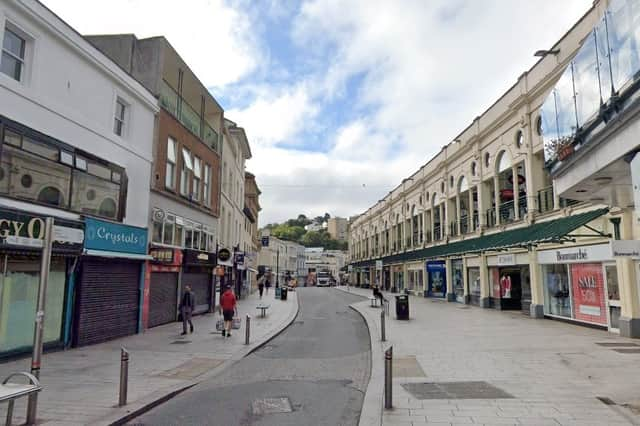
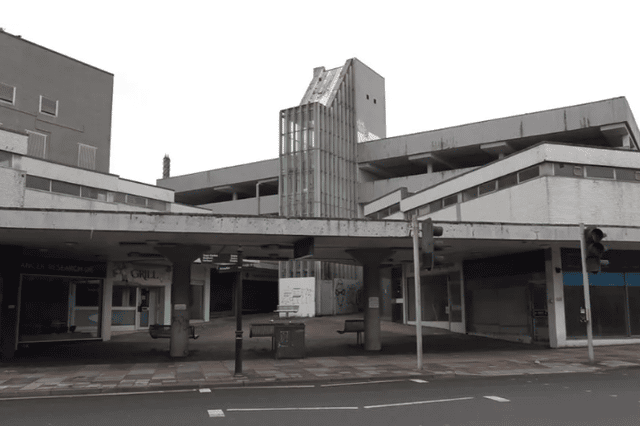
(Fleet Walk was opened in 1989. Crossways over in Paignton had already been up and running for 20 years but both offered covered shopping complexes with parking).
Mr Milligan says in his letter for a long time, space was absorbed. Retailers were still growing and the type of accommodation they needed was changing.
He explained: “A shop that had been adequate in 1960 was often too small by 1985. At the same time, Britain was becoming a car-owning society.
“Consumers who had once travelled into town by bus increasingly arrived by car, while retailers wanted larger stores than many historic centres could accommodate economically. Retail began moving out of town. Supermarkets led the way, followed by DIY, furniture and electrical retailers, and eventually fashion.”
Ringing any bells. Willows!
Retail parks offered large, accessible units, easy deliveries and free parking, said Mr Milligan. “These developments did not simply create more space. They redistributed spending away from traditional town centres.”
He added: “Long before anybody had heard of Amazon, the high street was already under pressure. Supermarkets absorbed trade previously undertaken by butchers, bakers, fishmongers and other specialists.
“Department stores struggled with large, expensive buildings that were increasingly difficult to operate profitably. What we describe as the decline of the high street was not initially a decline in retailing. It was a change in where retailing took place.
“Then came the internet. According to the Office for National Statistics, online sales represented 27.4 percent of UK retail sales in 2025. More than one pound in every four spent with retailers is now spent online.”
Mr Milligan said that for decades, we created additional retail floorspace because retailers could not find enough shops. We built town-centre shopping centres, supermarkets, retail parks, regional shopping centres and outlet centres.
Retailers became more efficient, supermarkets absorbed categories previously served by specialists, and the internet enabled customers to buy almost anything without visiting a shop.
Mr Milligan adds: “Much of the physical retail property created for that previous world remains. The result is not mysterious. Britain has too much retail space in the wrong places
“That does not mean retail is dead. Consumers still spend enormous amounts of money, but they divide that spending between the internet, supermarkets, retail parks, regional centres, outlet centres and traditional town centres.”
He maintains: “The location and format of retail have changed. The property market now has to change as well. We frequently ask: how do we fill the empty shops? Perhaps the better question is: how much retail space does this town actually need?
“If a town needs 600,000 square feet of viable retail accommodation but possesses 900,000 square feet, subsidising the weakest 300,000 square feet does not address the underlying problem. It merely postpones it.
“Buildings and sites must be repurposed for uses that bring people into town centres for reasons other than simply buying goods.
“That means housing, education, medical and health facilities, community uses, offices, leisure, restaurants, entertainment and public services. Above all, it means putting people and activity back into the centre of towns,” said Mr Milligan.
As for the return of the Independents, he claims: “The next generation of high-street businesses will not necessarily be national chains requiring 300 identical shops. They are more likely to be independent retailers, entrepreneurs, food businesses, service providers and small and medium-sized enterprises.” He said landlords will need to be more flexible with rent demands and business rates remain a major issue.
He adds: “Customers must also be able to get there. Good public transport, attractive pedestrian environments and cycling all have important roles. Parking needs to be available, convenient and reasonably priced.”
Mr Milligan says: “For my first 30 years in the property business, the central challenge was accommodating seemingly endless demand for more retail space.
“Today, our challenge is almost exactly the reverse. We must decide how much retail space we really need, repurpose the surplus, bring new uses and people into our town centres, and create an economic environment in which the next generation of businesses can establish themselves and thrive.”
Chris Lewis, the councillor in charge of regeneration, said Mr Milligan’s letter said it ‘very well’. He reiterated the need for the right number of shops in the right places in our high street.
He said: “You need really good shops but you can’t have empty shops in between. If you have a shorter area you don’t have empty shops.”
He cited the likes and success of Totnes and Brixham and its independent shops and cafes, but he adds: “The council cannot dictate who goes there. The market dictates that. But the area needs to be attractive to attract people. The hotel on the Strand will do that. A four-star offer will attract people.”
He revealed: “Local businesses are interested in going into the hotel development. Businesses are looking to expand. You can see the difference the likes of Otto/Twenty1/Offshore and the Yacht have made down there on the harbour..
“The area has been transformed and that will attract people. That is the way we get those independent shops to open. You need footfall to have shops but you need shops to increase footfall. It’s a catch 22 situation.”
So could it be a case of ‘out with the new and in with the old’? John Doble must be smiling now…. surely?