Search


26 Mar 2026
Search
26 Mar 2026

Please allow ads as they help fund our trusted local news content.
Kindly add us to your ad blocker whitelist.
If you want further access to Ireland's best local journalism, consider contributing and/or subscribing to our free daily Newsletter .
Support our mission and join our community now.
To continue reading this article, you can subscribe for as little as €0.50 per week which will also give you access to all of our premium content and archived articles!
Alternatively, you can pay €0.50 per article, capped at €1 per day.
Thank you for supporting Ireland's best local journalism!

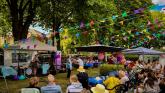
Image by WikiImages from Pixabay

The Halfway House: Sentinel Between Harbour and Headland
The Halfway House stands, as it has for centuries, on the rising road between Brixham harbour and the wild headland of Berry Head. At first glance today it might seem simply another cluster of cottages, its whitewashed stone walls softened by ivy and modern windows, its chimneys puffing harmless smoke into the South Devon air.
But if you linger there, halfway between town and fort, and listen to the wind that comes in from Torbay, you may still hear the echoes — of boots on gravel, of horses snorting in their traces, of laughter and quarrels carried from the taproom, of musket fire drifting on the breeze. For this was no ordinary alehouse. It was a sentinel, a meeting point, and sometimes a secret stage where the greater drama of England’s history brushed against the lives of Brixham folk.
Foundations in a Fishing Town
The story begins in the seventeenth century, when Brixham was already a bustling fishing port. The town grew haphazardly around its harbour — narrow lanes twisting upward, cottages pressed shoulder to shoulder, nets hung to dry on every post and line. Men put to sea in small trawlers and smacks, their wives salted fish and patched sails, and children grew up with tar in their hair and salt on their lips. Beyond the harbour rose the steep track that led to Berry Head, a promontory that jutted defiantly into the Channel.
It was on this road, about halfway up, that the inn was planted. Its purpose was practical: to serve those who made the journey between harbour and headland. Merchants driving packhorses, soldiers marching to the lookout, fishermen climbing home from the quay — all found in it a place to pause. The builders gave it sturdy stone walls, quarried from the very cliffs that framed Torbay, and a thatched roof thatched thick against the Atlantic gales. Inside, a central hearth glowed, its smoke curling up a chimney that was as much beacon as vent.
The inn became known simply as the Halfway House. The name stuck, as honest as the people who used it. For generations it stood as a landmark: “I’ll meet you halfway,” locals would say, and all knew what was meant.
The Gathering Storm: Napoleonic Wars
In 1803 the calm rhythm of life changed. War with France flared once more, and Berry Head was transformed almost overnight. Labourers from across Devon were hired to cut stone and raise walls; the air was filled with the ring of hammers and the shouts of engineers. Two massive fortifications rose on the headland, bristling with cannon. Soon after, in 1809, Berry Head House was built as a military hospital to care for the sick and wounded. The quiet promontory became a fortress, and the road that led there became a military artery.
The Halfway House suddenly found itself at the centre of this new world. Soldiers tramped through its doors, their red coats damp with mist. Naval officers drank ale at its tables; their boots stretched toward the fire. Couriers galloped up from Brixham harbour, thrusting dispatches into weary hands before gulping a tankard and racing on. Local fishermen, too, found custom there, selling fresh catch to feed the hungry garrison or swapping rumours about the French fleet. The inn’s rooms filled nightly, its yard crowded with tethered horses, its windows glowing late into the night.
One can imagine Thomas Blackwood, the innkeeper of those days, keeping a shrewd eye on all comings and goings. He learned to balance loyalty with discretion, offering warmth without too many questions. The Halfway House became not just a rest stop but a listening post, where gossip of invasion and whispers of smugglers mingled in the smoky air.
Shadows in the Corners
War breeds strange alliances, and the inn saw them all. Smugglers slipped through its door under cover of storm, their cloaks dripping brine. Merchants argued over contracts to supply the forts with bread, timber, and gunpowder. Soldiers found fleeting comfort in the arms of local girls before returning to the barracks. And sometimes, strangers appeared whose business was never clear — men who watched too closely, who asked too many questions, who vanished at dawn.
One stormy night, a courier arrived breathless, dispatches clutched tight, his horse near collapse. In the corner sat a hooded man, face hidden, who rose quietly and went upstairs when a patrol of Marines entered. The soldiers shook off their wet coats, laughed too loudly, and ordered ale, but the innkeeper noticed. He always noticed. Later he found a silver coin on the counter — foreign, heavy, marked with the head of Napoleon. He said nothing. To keep an inn at such a time was to know more than one dared speak.
Napoleon in Torbay
The Halfway House reached a strange kind of climax in July 1815, when history itself anchored in Torbay. The war was over; Waterloo had been fought, and Napoleon Bonaparte, once the terror of Europe, was a prisoner aboard HMS Bellerophon. The ship lay in the bay for several days, and crowds flocked to the shore to catch a glimpse of the fallen emperor. Brixham was thronged with onlookers, some arriving from Exeter and Plymouth, others trudging up from the harbour toward Berry Head, hoping to see the ship from the cliffs.
The Halfway House overflowed with custom. Government agents, naval officers, curious merchants, even suspected French spies — all passed through its doors. Glasses clinked, voices rose, and the inn became a hub of speculation. “Will they send him to London?” “Will he be tried?” “I heard he asked for asylum here, in Torbay!”
For those few weeks, the humble inn was a theatre where the fate of nations was debated over mugs of ale. Then the Bellerophon sailed, and with it the most famous prisoner in the world. But the memory lingered, and old Thomas Blackwood told his grandchildren that he had once poured a drink for a man who claimed to have seen Napoleon’s face from the cliffs.
Victorian Years: A Fishing Town Grows
Peace returned, and with it prosperity of another kind. By the mid-nineteenth century Brixham’s trawler fleet was among the largest in England, its red sails crowding the harbour. The town boomed; new houses rose, schools were built, and railways began to creep closer. The Halfway House adapted, welcoming not soldiers but fishermen, merchants, and travellers.
Inside its stone walls, voices were rough with salt and sea. Crews celebrated a good haul or cursed their luck when storms ruined the nets. Auctions at the harbour were followed by nights of revelry halfway up the road. The inn became part of the rhythm of fishing life, where men toasted new boats, mourned drowned comrades, and courted their sweethearts.
The Victorian thirst for leisure also brought outsiders. Gentlemen from Exeter came down to shoot on Berry Head or to sketch the dramatic cliffs. They too paused at the inn, marvelling at the views across Torbay. The building, with its thick walls and low beams, offered both rustic charm and a link to the heroic past of the Napoleonic wars.
The Twentieth Century: War Again
By the time the twentieth century dawned, the Halfway House was firmly embedded in local memory. It had become more than a pub; it was a waypoint in the story of the town. Then came another war.
In the 1940s, Brixham once again bristled with military activity. American troops arrived in 1944, preparing for the D-Day landings. Convoys lined the harbour, soldiers marched the roads, and the cliffs of Berry Head shook with artillery practice. The Halfway House, though no longer as central as in Napoleon’s Day, still saw uniforms pass through. GIs drank English beer and marvelled at the view; local girls danced with them in makeshift halls.
Older villagers remembered the stories of 1815 and muttered that once again the fate of Europe was being decided from these shores. The inn’s walls held their silence, absorbing the laughter, the tension, the whispered goodbyes before young men shipped out.
From Alehouse to Cottage
After the war, change came. The fishing industry declined, tourism rose, and the old rhythms shifted. The Halfway House closed as a public house and was divided into dwellings. Yet in its bones, the old building remained. The stone walls still bore the marks of centuries; the hearth still warmed the rooms; the views across Torbay still dazzled at sunset.
One part, Honeysuckle Bay Cottage, became a holiday let, welcoming visitors not with ale and gossip but with WiFi, private parking, and sea-view bedrooms. Yet those who stayed there often remarked on the atmosphere. At night, when the wind whistled from the headland, they swore they could hear boots on gravel, or catch a whiff of pipe smoke. Perhaps it was imagination. Or perhaps the old inn, though transformed, still kept watch.
The Legacy of the Halfway House
To stand today outside the Halfway House is to feel the weight of layered history. It is a building that has seen England at war and peace, that has sheltered fishermen and soldiers, smugglers and spies, Americans and Frenchmen, locals and strangers. It has been a place of laughter, of fear, of longing, of rest. Its walls have heard toasts to victory and murmurs of despair, confessions of love and secrets best forgotten.
The building’s conversion into homes has not erased that history; rather, it has preserved it in another form. The residents live daily with those echoes, as surely as the bats circle Berry Head or the lighthouse sweeps its beam across the bay. The Halfway House is part of Brixham’s story, inseparable from the harbour below and the fort above.
And if you walk that road in the quiet of evening, you may still feel, halfway up, that you are not alone — that the spirits of couriers and soldiers, of fishermen and innkeepers, linger still, keeping vigil on the sentinel’s rest.

Subscribe or register today to discover more from DonegalLive.ie
Buy the e-paper of the Donegal Democrat, Donegal People's Press, Donegal Post and Inish Times here for instant access to Donegal's premier news titles.
Keep up with the latest news from Donegal with our daily newsletter featuring the most important stories of the day delivered to your inbox every evening at 5pm.