

South Devon College students help shape future of maritime technologies
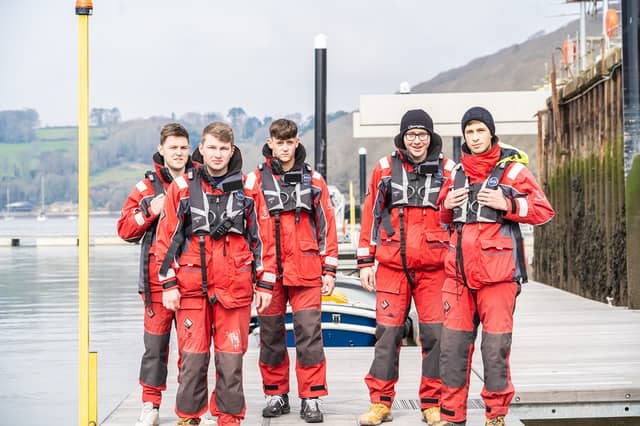

A business-led consortium, comprising South Devon College, HydroSurv, and BMT is set to collaborate on a cutting-edge uncrewed vessel technology project in Devon
South Devon students are playing a leading role in taking significant strides towards decarbonising maritime operations.
A business-led consortium, comprising South Devon College, HydroSurv, and BMT is set to collaborate on a cutting-edge uncrewed vessel technology project in Devon.
Hydrosurv is a global innovator in Uncrewed Surface Vessel technology that democratises marine geospatial data for safe and sustainable ocean industries.
BMT is an international multidisciplinary engineering, science and technology consultancy.
Dubbed Roc + Dock, the project will see Hydrosurv develop advanced, automated docking stations for the wireless deployment, recovery and charging of zero emission Uncrewed Surface Vessels.
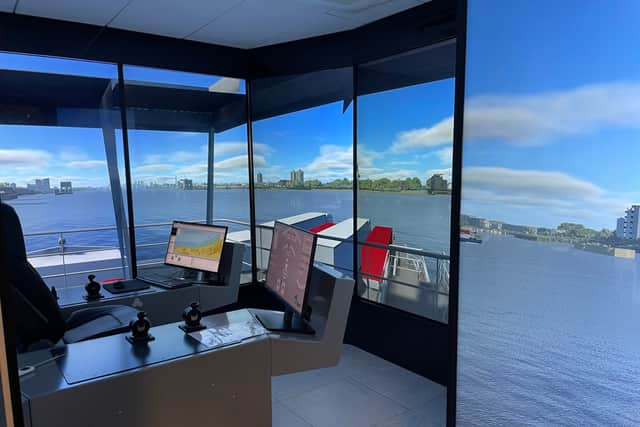
At the same time the college and BMT will work together to expand the college’s new REMBRANDT ship simulator into a cutting-edge dual-use Remote Operations Centre facility, enabling skills and course development and operator training provision.
This exciting collaboration has been shortlisted for The Maritime UK awards. The Future Skills Award recognises those that have made a tangible contribution to meeting the future skills needs of the sector. The consortium is up against two other entrants and will find out if they are successful at the event in Belfast.
The Roc + Dock project has been made possible as a result of £440,000 funding from Innovate UK through the Marine and Maritime in the Great South West Launchpad programme. The initiative aims to ensure a future-ready maritime sector through state-of-the-art technology and real-world training capabilities.
The Launchpad programme is aimed at supporting outstanding innovation projects led by businesses that will contribute to the Great South West’s ambitions for net zero targets and support key regional strategic marine and maritime markets.
David Hull, CEO of Hydrosurv said: “The project directly addresses the UK’s vision for clean maritime practices as set out within the government’s Maritime 2050 strategy. As the maritime sector evolves, demand for persistent coastal coverage for patrol, surveillance, monitoring and emergency response increases. Marine robotics has revolutionised data collection over the past decade and USV’s, which provide persistent high-frequency, wide spatial data collection in real-time, offer massive disruptive potential to strip out both carbon emissions and cost from these operations.”
The project will also leverage the world-leading capabilities of BMT’s REMBRANDT ship simulator with South Devon College Marine Academy’s new simulator suite being developed into a dual-use ROC facility.
Paul Singer, Business & Qualification Development Coordinator at South Devon College said: “Through the enhancement of BMT’s REMBRANDT Vessel Simulation Suite, the new ROC simulation capability will bring cutting-edge maritime innovation into further education, giving us the opportunity to deliver future skills and training to younger, aspirational students starting out in their careers as well as upskilling opportunities for the current workforce.
“The new ROC facility will provide students with a 360 degree view offering a fantastic and unique, real-life like environment. It means they will be able to practice realistic scenarios, such as incidents at sea, learn how to deal with different weather conditions and remotely operate a vessel in a safe environment.”
Students at the academy, based on the River Dart in Kingswear. will be able to replay real life incidents and work through different ‘what if’ scenarios before moving on to operating a real USV remotely.
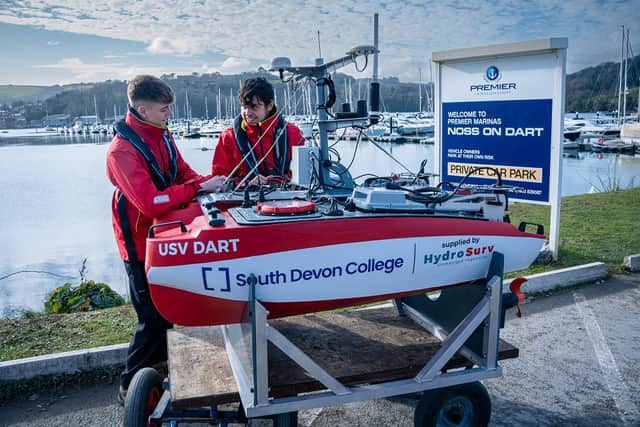
“We’re creating a real-world learning environment where advanced technology meets practical, hands-on training,” said Paul Singer.
“This exciting new project means that people will be able to learn new skills and have a career in the marine sector where they don’t have to go to sea. It opens up the marine sector to a wider and diverse range of people. And with the plans for Celtic Sea Floating Offshore Wind there will be even more job opportunities available here in the South West.”