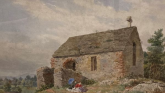
Volunteers and visitors at the old Paignton Monastery including (far left) Cllr Cat Johns (Image courtesy: Guy Henderson)
Search


07 Mar 2026

Please allow ads as they help fund our trusted local news content.
Kindly add us to your ad blocker whitelist.
If you want further access to Ireland's best local journalism, consider contributing and/or subscribing to our free daily Newsletter .
Support our mission and join our community now.
To continue reading this article, you can subscribe for as little as €0.50 per week which will also give you access to all of our premium content and archived articles!
Alternatively, you can pay €0.50 per article, capped at €1 per day.
Thank you for supporting Ireland's best local journalism!

What have football, cricket, manufacturing industries and the tourist resort got in common?
They’re all British inventions we have exported. In faraway places these innovations and traditions have been adopted and then adapted, acquiring a life of their own, often in more popular and profitable forms. All have flourished and transformed local cultures in disparate parts of the world.
Torquay's contribution to this tradition of exporting good ideas, and self-harming in the process, was through the creation of the coastal tourist resort.
Tourism is, of course, not a new phenomenon. In ancient Greece and Rome, travel was common among the wealthy. It expressed the eternal human desire to explore new places, learn from other cultures, and engage in leisure activities.
When travel becomes large scale, it becomes an industry. During the Middle Ages, for example, travel was often as part of a pilgrimage. People journeyed to holy sites to seek spiritual fulfilment, to earn forgiveness for sins or to fulfil a vow. While the most famous destinations were Rome and Jerusalem, the task of getting English pilgrims to and from Santiago de Compostela in Spain became a profitable sideline for many of the mariners of Brixham and Teignmouth. This can be seen as the beginnings of our local organised tourism industry.
But it is in the Victorian coastal tourist resort where we see the genesis of a global industry, one that would come to generate massive profits, provide employment for millions of people, and totally transform parts of our planet.
One of the earliest manifestations of that industry came when a scatter of rural and fishing hamlets clustered to form Torquay. The cause was the hiatus in the Grand Tour following the outbreak of the Napoleonic Wars. For decades wealthy young men would embark on extended journeys through Europe to gain exposure to classical culture and art. When these journeys became impossible, the wealthy replicated what they had witnessed in an insignificant bay on England’s south coast.
The second incarnation of Torquay was as a place for the treatment of, and hoped-for recovery from, illness. Specifically, the growing town offered relief for consumption, what we now call tuberculosis. By the 1840s Torquay was being called “the south west asylum for diseased lungs”.
Alongside the Bay’s gentle health enhancing climate, sea bathing was promoted as having prophylactic powers. A variety of practices were on offer as an extension of the older health regime of the spa and as components of a growing interest in personal wellbeing.
Yet, from the late eighteenth century sea-bathing resorts began to appear beyond Britain’s shores: on the French Channel coast; in south-west France; in what was to become Belgium and the Netherlands; in northern Germany; and parts of Scandinavia. Some of those seeking good health were travelling distances to access good beaches. By the mid-nineteenth century, for example, German and Austrian tourists were visiting Italian resorts.
But differences were to be seen. British society had a strong emphasis on modesty and propriety, with strict codes of conduct dictating proper attire and behaviour, even on vacation. We see this in 1847 when Parliament gave local councils new powers to set how far apart the genders had to be when bathing. Hence, to prevent ‘promiscuous bathing’, Torquay had four Ladies' Bathing Beaches.
European resorts had, on the other hand, begun to develop their own identity and practices, diverging from their British counterparts. The French, it was noted with some disdain, embraced more relaxed attitudes to mixed bathing.
During the early nineteenth century the industrial revolution led to the growth of a middle class with more disposable income to spend on leisure, self-education, and travel. Nevertheless, visiting Torquay still required a long and expensive journey by ship or carriage. This changed overnight in 1848 with the arrival of the railway, another British invention, which allowed easier, cheaper, and faster travel.
And so came the birth of a new type of town, the tourist resort.
The mass movement of people from one place to another for leisure involved the provision of services and facilities, including transportation, accommodation, food, drink, entertainment, alongside attractions such as amusement parks. Though this was certainly a new form of industry, it nevertheless remade communities and the landscape in much the same way as did more familiar industrial revolution industries such as mining or steel working.
The seaside resort consequently became the fastest-growing kind of British town during the first half of the nineteenth century. But not all resorts were the same. Blackpool was the world's first working-class seaside resort as it was close to the industrial heartlands of the nation. Torquay, on the other hand, exploited its remoteness to actively work to remain first amongst its 26 rivals.
Part of Torquay’s strategy was the ongoing maintenance of social order through appropriate dress codes and the upholding of moral standards. These were strictly enforced by the town’s political and religious elite. Yet a constant theme in the nineteenth and twentieth centuries was resistance to conservative domination by entrepreneurs, artists, and campaigners. The most striking example of dissent was the so-called Torquay War of 1888 when over 100 Salvation Army members were prosecuted and often imprisoned for their refusal to obey the town’s emblematic Sunday observance laws.
Meanwhile, and in contrast, comparative continental resorts not only tolerated but promoted dancing, the mingling of the sexes, casino gambling, drinking, and general displays of hedonism. But foreign excesses were not for the nation’s most prestigious resort. In 1914, for example, the Torquay Directory commented on a new dance craze, the Tango, calling it a “savage dance”.
The journalist continued: “In its native land the Tango has a meaning, but it is not one that can be expressed in an English ballroom. We are not hot-blooded Southerners, or volatile New Yorkers, or pagan Greeks.”
It was the English businessman Thomas Cook, the “father of modern tourism”, who organised the first package tour for leisure travellers in 1841. His fixed price trip from Leicester to Loughborough included transportation, accommodation, and attractions. In so doing he created the modern package holiday, a model that was soon adopted around the world.
The first to embrace this opportunity were the traditional Mediterranean French and Italian resorts which catered for the vogue for sunbathing and display. The Civil War delayed Spain’s full potential until the 1960s, but then the attractive beaches, climate and favourable exchange rates led to the rapid growth of Iberian tourism. By 1974, vacationing had become Spain's leading industry.
None of this would have been possible without air travel making it easier, faster and cheaper for people to reach distant places. By the 1980s such competition from new holiday destinations, together with changing tastes and expectations, began to challenge 'traditional' British family holiday destinations.
As is so often the case, popular movies picked up on this social change. In 1973 Carry On Girls was set in the seaside town of Fircombe (filmed in Brighton) where it is always raining and there is nothing for the tourists to do. Councillor Sidney Fiddler (Sid James) hits on the notion of holding a beauty contest, so enraging local feminists.
By 1977, in the big screen version of Are You Being Served? Young Mr Grace has forsaken the British seaside to send his Grace Bros department store staff on a paid holiday to the Spanish resort of Costa Plonka; even though the movie was quite obviously filmed entirely in Britain.
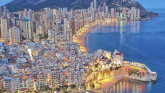
Tourism has now created cities and transformed coastlines and deserts from Benidorm to Las Vegas. Once freed from Victorian and Edwardian social constraints, the resort model generated newer and more attractive offers, first in the Mediterranean and then across the planet. The British traditional seaside holiday was then repackaged and sold back to us. But always remember that it started here.

Subscribe or register today to discover more from DonegalLive.ie
Buy the e-paper of the Donegal Democrat, Donegal People's Press, Donegal Post and Inish Times here for instant access to Donegal's premier news titles.
Keep up with the latest news from Donegal with our daily newsletter featuring the most important stories of the day delivered to your inbox every evening at 5pm.