Search


04 Apr 2026
Search
04 Apr 2026

Please allow ads as they help fund our trusted local news content.
Kindly add us to your ad blocker whitelist.
If you want further access to Ireland's best local journalism, consider contributing and/or subscribing to our free daily Newsletter .
Support our mission and join our community now.
To continue reading this article, you can subscribe for as little as €0.50 per week which will also give you access to all of our premium content and archived articles!
Alternatively, you can pay €0.50 per article, capped at €1 per day.
Thank you for supporting Ireland's best local journalism!

The story of Belgrave Road is the story of Torquay.
Beginning at the Torbay Road junction, Belgrave Road runs northwest to Mill Lane. It may only be a short journey but here we see a Torquay of two halves, dividing Janus-like at the crossroads of Falkland Road and Lucius Street.
In this townscape is a contrast between the seaward hotels of the paying visitor; and the inland homes, pubs, takeaways, and convenience stores of the Torquay resident.
Our story starts with the naming of the resort, the designation changing over time to reflect evolving needs, aspirations and identities.
Adjacent to Belgrave Road is the original Celtic, Anglo-Saxon, and medieval settlement of Torre. This is one of the oldest placenames in the Bay and comes from the word ‘tor’, meaning rocky hill in the language of the Dumnonii Brittonic Celts.
That craggy tor is still there as you travel up Tor Hill Road, though much reduced by quarrying, and beneath lies the Greek Orthodox Church of St Andrew. The church we know today was constructed in the fourteenth century on the site of an earlier Norman chapel. Before that, as far back as the late sixth century stood a much earlier church and holy well dedicated to St Petrox.
Around this church was the village of Torre, the nucleus of what Torquay would become.
The Domesday Book in 1086 lists the manor as being held by a servant of William the Conqueror called William the Usher. As there were many similar rocky hills around, the manor was then named after new owner William Brewer and became Tor Brewer. When William died in 1226 his daughter Alice married Reginald de Mohun of Dunster Castle so we have Tormohun.
It was only in 1876 that the Local Board of Health officially altered the name from ‘Tormoham’ to the hybrid Torquay, so combining the Celtic ‘tor’ and the Old English, originally Norman French, word ‘quay’.
In 1196 much of medieval Tormohun became the property of Torre Abbey when the land was gifted by William de Brewer. After the Dissolution in 1539 the land went through several owners until the estate was purchased by the Cary family in 1662. It remained mostly Cary property until sold to Torquay Borough Council in 1930.
The Cary family name lingers on in Torquay placenames such as Cary Park and Cary Parade. A less obvious example comes from Lucius Cary, Second Viscount Falkland. Lucius fought for the Royalists in the Civil War and died in 1643 when he recklessly charged enemy lines during the Battle of Newbury. Falkland Road and Lucius Street are named in tribute.
For hundreds of years the main route between the harbour and Paignton was inland via Abbey Road and through Chelston. As both Torquay and Paignton grew a more direct road was clearly needed and construction of the coastal New Road, now known as Torbay Road, began in 1840.
Unexpectedly, as work commenced, a twenty feet wide road was uncovered at the base of Waldon Hill, “consisting of large stones placed end to end and requiring gunpowder to break it up and remove it." Intriguingly, this road was referred to in Latin as the causeway, 'calcetum', suggesting a possible Roman origin. We’ll never know.
The Torquay Turnpike Trust opened the new coastal route in 1842 and building began in one of the few parts of the town with level access to the beach.
In 1856 Sand Lane, which ran from the village of Torre to the beach, was renamed Belgrave Road. The wider area was then designated as Belgravia, this new title inspired by London’s Belgravia, itself a relatively new and fashionable residential district encompassing Westminster, Kensington and Chelsea.
This was all part of a marketing strategy for Torquay. From its inception, Torquay’s Belgravia announced that it could provide the highest standards for the aristocratic visitor and for the newly emerging upper middle classes of industrial Britain and beyond. This finest of resorts, which claimed to be the richest town in the nation, boasted it offered the same level of service as the hotels of the capital. Hence, Belgravia adopted and promoted the title of ‘Little London’.
The area became increasingly popular after Torquay’s second railway station opened nearby in 1859. The same year, Belgrave House, Mauldslie, and Sherwood, later the Belgrave Hotel, the Kistor and Sherwood Hotels, were built. By 1880 the resort’s greatest concentration of accommodation was to be found in the Italianate style villas and hotels of Belgrave Road, Chestnut Avenue, Croft Road, and Scarborough Road.
Staying in the area was itself a mark of prestige. Belgravia was known as both the permanent residence and the vacation choice of some of most famous of the Empire. The Marquis Hotel, for example, was built as a holiday home for the richest man in the world, Scottish aristocrat, industrial magnate and philanthropist John Patrick Crichton-Stuart, Third Marquess of Bute. The Marquess’ local influence continues in the name of his Scottish seat, Mount Stuart, and in Bute Court.
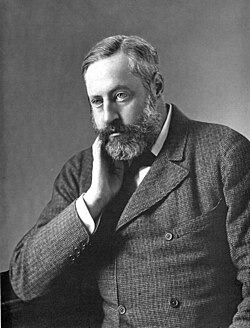
Nearby in Ehrenberg Hall lived the richest woman in England, Baroness Angela Burdett-Coutts. Her grand house, along with two others, was demolished in the 1980s. It was replaced by the English Riviera Centre with the promise that this new venture would never be a burden on the rate payer.
Fortunately, not all of Belgravia was developed. Torre Abbey Meadows originally extended between King’s Drive and Belgrave Road. In 1924 Torquay County Council purchased the land to create Abbey Park where it established tennis courts, putting greens, Italian Gardens and an ornamental pond.
Fortunes inevitably vary, however, and by the late twentieth century all of Britain’s 27 tourist resorts were experiencing decline. Even in Belgravia there were fewer Daimlers and more coaches to be seen.
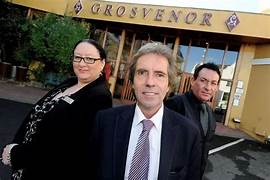
Then in 2012, came a new Basil Fawlty for a new millennium, exposing how much Torquay’s hotel land had changed from its heyday. This time it was in the real-life, though exaggerated, form of the Grosvenor Hotel’s Mark Jenkins in the Channel 4 TV series The Hotel. This was a new type of ‘televisual experience’, the comedy documentary, which used fixed cameras positioned in locations rather than using a camera crew. Unlike the nation, the local tourist industry was not amused.
Beyond the Falkland Road and Lucius Street transition come the guest houses and takeaways, convenience stores and the terraces of Church Street, Laburnum Street and Church Lane. This is an area of rapidly changing retail with Tek’s, Premier and Carter’s all fairly new. An exception is Cobley's Fish Restaurant which has been serving locals and visitors since 1927. In 1934 Chudleigh-born Charles William Cobley acquired the business and, despite the occasional name changes, we still have the Cobley name.
Torre remains a holdout of the British pub while so many other bars and clubs have closed. Each is a cultural institution where class distinctions blur, with its own culture, diverse clientele, and history. Sporty's, once the Tor Abbey Inn, has its place in local folklore as the birthplace of Torquay United back in 1899; while the Bull and Bush was originally Haarer’s Avenue Hotel. DT’s, in its days as the Rising Sun, was once on the front line of Torquay’s 1960s culture wars. It was the resort’s hippie pub and in April 1969 was raided by seventy members of Torbay’s Drugs Squad. This was the first action of its kind and seventeen people were arrested.
We began by describing Torre’s first church and we close with All Saints Torre. Built in 1867 with money from Agatha Christie's family, this is the church where Agatha was baptised on 20 November 1890 and where she worshipped as a child.
The sacred amongst the profane. One more holdout of tradition in a changing Torquay, and another contrast in an evolving townscape.

Subscribe or register today to discover more from DonegalLive.ie
Buy the e-paper of the Donegal Democrat, Donegal People's Press, Donegal Post and Inish Times here for instant access to Donegal's premier news titles.
Keep up with the latest news from Donegal with our daily newsletter featuring the most important stories of the day delivered to your inbox every evening at 5pm.