

The fascinating story behind Torbay’s much-loved beaches
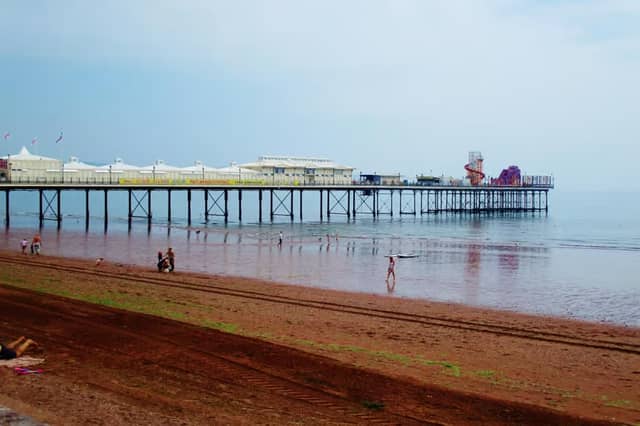

Explore the fascinating history and changing role of Torbay’s beaches, from their origins as working shores and feared coastlines to the much-loved seaside destinations of today. Discover how the arrival of the railway, Victorian tourism and generations of holidaymakers transformed the English Riviera, and why our beaches remain places of escape, freedom and timeless enjoyment.
On a Torbay beach
When ancient seafarers talked of being “on the beach” they meant being stranded or left behind, usually in poverty and helplessness. Today, the same phrase conveys images of health and pleasure.
For thousands of years the beach was a working space, a source of food, and where journeys began and ended. Or it was a place to be feared, a gateway for foreign diseases and a wilderness of shipwrecks and natural disasters, frequented by raiders, slavers, pirates and smugglers. This negative image, however, began to change around the mid-eighteenth century as aristocrats and intellectuals came to the coast to immerse themselves in its supposed curative waters.
They were followed by Romantic writers, philosophers and artists repelled by the slums and factories of urban England. Lord Byron, for example, viewed the shore as a refuge from corrupt society, while Torquay visitor Percy Shelley idealised beaches and the "azure sea" as symbols of transition and the sublime. Jane Austen visited several beach towns, including Sidmouth and Dawlish, which inspired iconic seaside settings in her novels.
The German philosopher Immanuel Kant extolled the beauty of the wild shore, while Britain’s Edmund Burke believed that a balanced and humble perspective of life could be gained by experiencing nature’s vastness and power.
A visual appreciation of beaches and coastal scenes came in the 1840s through JMW Turner’s creation of a new pictorial subject, the seascape. All contributed to the coast becoming seen as a location of transformative experiences, self-reflection, and rediscovery.
Yet, the coast remained the preserve of those with the time and the means to visit; a coach journey from London to Torbay could take twelve days. Then on 18 December 1848 everything changed. The South Devon Railway opened a branch line from Newton Abbot to Torquay, now Torre Station. With nowhere in Britain more than 120 miles from a shoreline, access became affordable and easy. Old towns were rapidly reconfigured and unfamiliar forms of communities arose to satisfy new appetites.
The Victorian resort was then born, and its focus was often the beach.
Neither land nor sea, beaches not only change each day, but alter completely between summer and winter, shifting from crowded swimming and sunbathing to isolated walks under storm clouds.
On the beach people learn to behave oddly; adults regress to childhood, consume unusual foods, wear strange attire, and obsessively record each other to a backdrop of eccentric buildings.
First came horse-drawn bathing machines which, over time, lost their wheels to become the multi coloured beach huts of today. Then, as municipalities took an interest in foreshores, seafront shelters and cafes were built, such as Torquay's much-loved but long gone Abbey Sands Cafe. A little further from the sands came fantastical buildings such as the Pavilion, Art Deco hotels, and faux Mediterranean bars. However, commercial outlets and branding necessarily had to be set back from the beach, away from the shifting sands, tumbling pebbles and weed-covered rocks, so preserving the impression of nature unsullied.
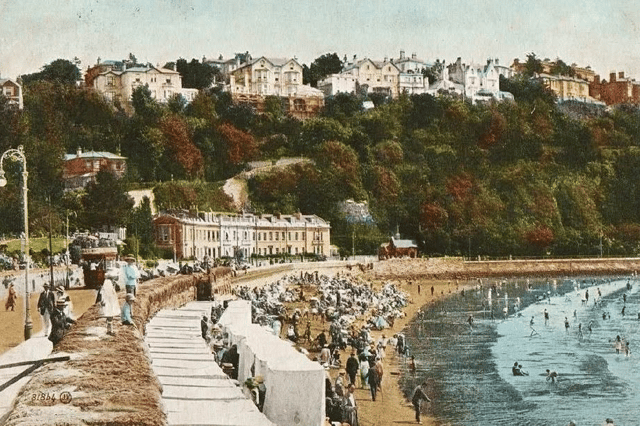
The exceptions to this demarcation between untamed sea and domesticated land were the piers where visitors could ‘walk on water’. Once functioning as simple landing stages for the growing number of paddle steamers that took trippers along the coast, piers became the emblem of the Victorian seaside. In the early days operators took pedestrian tolls at the shoreward end and landing dues at the seaward end. Then, bringing together engineering skills and entrepreneurial opportunism, money-making entertainments were added to occupy and entice visitors.
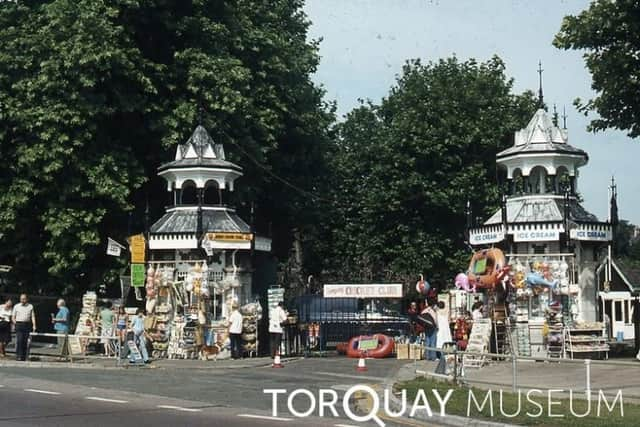
Providing the essentials for a visit to the beach were kiosks which had their origins in ornamental Ottoman garden pavilions. These small freestanding booths sold ice cream, newspapers, bathing suits, towels, and suntan lotion. Sometimes existing buildings were repurposed, such as the two turnstiles by the entrance to Torquay’s Recreation Ground.
The oddities of the beach are not confined to its architecture. Tourists get around in peculiar ways, such as cliff railways, ferries, open-topped buses, pedaloes, and road trains masquerading as Stephenson's Rocket.
Resorts became home to unusual forms of entertainment: Punch and Judy, putting greens, crazy golf, and donkey rides; though long gone are the minstrels, pierrots, and the opportunities to be photographed alongside a real parrot or monkey.
There's odd food that you rarely see anywhere else, like rock in its innocent or indecent incarnations; while some treats remain intimately associated with coastal holidaymaking, such as vinegar-drenched winkles, cockles and mussels, and fish and chips. And always ice cream cornets with a flake.
During the mid-twentieth century tearooms and hotels adapted the upper-class afternoon tea to create an affordable indulgence for tourists. Due to clotted cream spoiling quickly before refrigeration, enjoying a cream tea made the experience feel exclusive and distinct. The Devon-Cornwall divide is really just a clever marketing ploy; though it is, of course, ‘cream first’.
The professions the coast fosters are untypical and seasonal, such as the commercial guerrilla photographers, their reflex cameras quickly snapping tourists and later selling the prints from stalls.
Beaches are places where normal rules and authority do not apply. The beach is a non-place, with no history, only a few rusted reminders of failed attempts at colonisation. No one is in charge, there is no cost, and there are few regulations to tell you where to go and when you can visit. The sand may be crowded, but generally beach goers are egalitarian and tolerant, collectively organising themselves.
At low tide, the beach is perceived as an immense public property, a fleeting boundary between sea and land, washed clean by the tide every day. Gone are the sandcastles, towels, tiny spades, and windbreaks leaving the next day's incomers to start all over again.
Beaches are consequently places out-of-time offering a temporary escape from whatever version of modernity we are living through. Classes, ages and sexes mingle; a real shock to past generations. Importantly, beaches were among the first places where women could openly enjoy themselves alongside men.
Normal constraints on dress and behaviour are suspended, and we can wear brightly coloured clothes and expose our bodies in ways we never would in our hometowns.
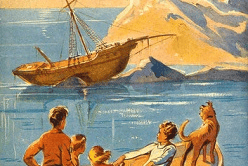
Some embrace the beach as an excuse to become children again, to unleash a long-suppressed pleasure principle. Perhaps tapping into a reservoir of memories of Famous Five-style adventures, parents join children and wield miniature spades and nets to dam up streamlets, construct temporary battlements, collect shells and sea glass, or mock fish for crabs, shrimps and minnows.
Beaches remain amongst the best places in which to do nothing. They reject the work ethic, nature having created an environment hostile to technology. Seawater and sand are best kept away from computers, so we return to past forms of pleasure. People who don’t read books at home do so on the beach, an opportunity well recognised by the world's publishing industry.
All to the soundtrack of the shore, the cries of children, screaming gulls, tinny radios, the rhythmic crashing of waves and water pulling back over pebbles.
Once our beaches were places to be avoided. Now properties overlooking beaches are our preferred sites for retirement and among the most valuable in the world.
Whether we choose Torre Abbey Sands, thronged in August, or a secluded cove, empty and windswept in November, Torbay’s beaches are now a part of our collective imagination. Do take the time to enjoy what we have on our doorstep.