

Henry Brunel: the engineer behind the name - Final part

From designing Tower Bridge to creating pioneering naval equipment, Henry Brunel left a lasting legacy of engineering achievements, many of which remain overlooked today
With the research establishment at Chelston Cross, Torquay, having moved to Haslar, Gosport, William Froude decided to retire. His son Eddy (Mr Robert Froude) was now offered and then accepted the position of Manager/Designer of the Naval research works at Gosport. Meanwhile, Henry Brunel, already at Gosport, had overseen the move of Froude’s equipment from Torquay. He was now asked by the Navy to design "an accuracy device" they had wanted for some time. It was to be his last project before leaving and only cost the Navy £57.29s.4d, likely the best investment the Royal Navy ever made. Officially named “Mr Brunel’s Paper Ruler” and remained in use until 1970.
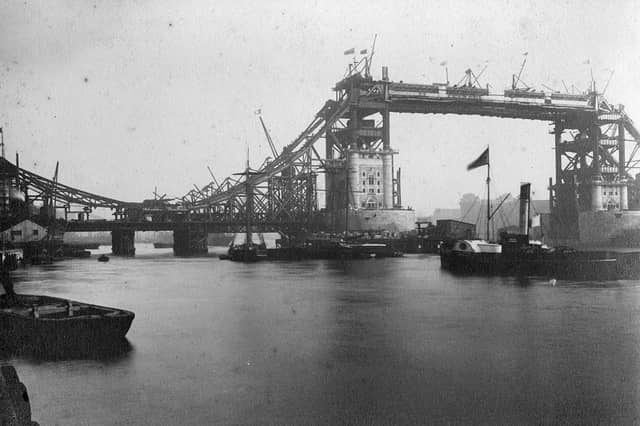
On leaving Gosport, Henry left the South Coast forever. Moving to London, he entered a partnership with Sir John Wolfe Barry, who let him design and eventually construct the capital’s famous bridge “Tower Bridge on the Thames”. But first Sir John had to win the contract for “Tower Bridge” and had Sir Joseph Bazalgette as his only opposition. Bazalgette had already submitted plans for a “low bridge” on the Thames, so Henry designed his bridge for the capital specially high to allow for modern “tall ships” to have access to the upper Thames. He now had to appear before a Parliamentary Committee in 1878, mirroring his father’s action when he opposed the building of Gasometers on Babbacombe Beach. Like Isambard, Henry’s arguments were successful with the help of Sir Barry.
Now Henry created a detailed design which included the lifting “bascules” invented by his grandfather, Sir Marc Isambard Brunel, in 1871 when designing a bridge for the Czar of Russia, no less. Having won the contract, Sir Barry gave “fulsome praise” to Henry, though he had no official or public praise for his visionary bridge over the River Thames in London, even though it was another first for Britain. Now Henry even helped dismantle the Hungerford Bridge (built by his father) and finally arranged for its huge chains to be taken to Bristol to be used on his father’s now famous “Clifton Suspension Bridge”.
Having gained experience when designing the docks at Elswick in partnership with Sir John, they were then asked to assist with the docks in South Wales. Later, they moved on again to Scotland to help build a railway bridge “over the narrows of Loch Creran”, work which was accredited jointly to Sir John, Edward Cruttwell, Sir Alexander Gibb (a pupil of Brunel and Barry) and, of course, Henry Brunel. But Henry alone in Glasgow designed the “SS Chauncy Maples” — a Mission Hospital Ship which was eventually transported overland to Lake Nyasa in Africa in 1899. Once berthed there, it served the local African community for well over a hundred years. But then came Henry’s most revered bridge in Scotland, “The Connel Cantilever Ferry Bridge, Argyll”, completed again in a partnership, this time with close colleague Sir John Wolfe Barry.
Becoming a Member of the Institution of Civil Engineers in the 1870s, Henry later joined the Institution of Mechanical Engineers and Institute of Naval Architects. In remaining single throughout his life, we can speculate this enabled him time to join many London clubs, in spite of being generally seen as a man that was “always on the move”. It was also recorded at that time “he was careless of personal possessions but never his friends”, and yet always remained in the shadow of his father and, to a lesser extent, grandfather.
The Institution of Civil Engineers, in their obituary, wrote: “Henry Brunel’s personal character endeared him deeply to all his friends. His keen and singularly whimsical humour, which with some reserve of manner with strangers at first sight seemed his chief characteristic, was thrown into the shade by his intimates for his rigid principles, high purpose, sympathy, and warmth of heart”. Henry undoubtedly was a brilliant multi-skilled engineer, draughtsman and designer, and yet today just his buildings and inventions are remembered.
Henry was synonymous with inventions, designs and devices, many of which he created while in Torbay when working alongside William Froude. Following his death, documentation left proved he had even found time to investigate the possibility of flight and looked into the initial aspects of a jet engine. With his brother Isambard Brunel, they became the last of the Brunel dynasty, as both brothers remained bachelors all their lives. Henry, having suffered a stroke in 1901, did recover and lived on for another two years before dying in his home at Abingdon Street, Westminster, London, on October 7, 1903. Today he lies with family members, which include his father, brother and grandfather Marc Isambard Brunel, all at peace buried in their vault at Kensal Green Cemetery in London.