Oldway Mansion as Buckingham Palace
Search


05 Apr 2026

Please allow ads as they help fund our trusted local news content.
Kindly add us to your ad blocker whitelist.
If you want further access to Ireland's best local journalism, consider contributing and/or subscribing to our free daily Newsletter .
Support our mission and join our community now.
To continue reading this article, you can subscribe for as little as €0.50 per week which will also give you access to all of our premium content and archived articles!
Alternatively, you can pay €0.50 per article, capped at €1 per day.
Thank you for supporting Ireland's best local journalism!

P38 Tony Collins

The inspiring football story of Tony Collins
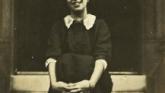
We live in a far more multi-cultural world than the one into which Tony Collins was born near the Portobello Road in 1926, the black son of a 17-year-old single white mother.
He was adopted and brought up by her parents.
What was his life like, what did he have to contend with at school and on the streets of West London in those days? And also when he was called up for the army at 18 – he fought in the invasion of Italy - in World War II?
We’ll never know, because he chose not to talk about it. And he certainly never wanted it to get in the way of a life and a career that remains one of the most remarkable in the history of English football.
Long before Cyrille Regis, Brendan Batson, Laurie Cunningham and Viv Anderson helped to break down barriers at West Bromwich Albion and Nottingham Forest in the late 1970s, or even Clyde Best and Clive Charles (West Ham) and Albert Johanesson at Leeds United in the Sixties, Collins forged a reputation as a feared left winger for York City, Watford twice, Norwich City, Torquay United and Crystal Palace.
When he signed for Torquay in the summer of 1955, he helped to complete one of the best teams that United have ever fielded.
Ronnie Shaw on the right and Collins on the left were the quickest and most dangerous pair of wingers in the old Third Division South.
In two years, they scored 32 goals between them and laid on scores more for fellow forwards Sammy Collins (no relation), Don Mills, Harold Dobbie and Ted Calland.
United hit 86 goals in 1955-56 (5th) and then 89 in 1956-57 when they finished runners-up to Ipswich Town, beaten for promotion to what’s now the Championship on ‘goal-average’.
After 18 goals and 92 games, Collins was sold back Watford.
They were the days of the ‘maximum wage’, when even some of the most famous players in the game earned little more than plumbers and bricklayers, and in many cases less.
There were few black players, and the idea of a black manager was almost out of the question.
So what did Collins do?
In 1961, as he was seeing out the final years of his career at Rochdale, the manager Jack Marshall left for Blackburn Rovers.
The players held Collins in such esteem that they persuaded him to apply for the job. Dale, in a bit of a hole and with little money, gave it to him.
Two years later, he led them to the final of the fledgling League Cup, where they lost over two legs to his old club Norwich. Dale are still one of only two Fourth Division (League Two) clubs to reach a major domestic final.
After six years in charge at Spotland, he stepped down, despite the pleadings of his players.
He applied for several other managerial jobs before and after he left Dale, and he received not one answer.
It would be more than 25 years before another black man, Keith Alexander, would be appointed at Lincoln City and 35 years before Leroy Rosenior became Torquay’s manager.
But Collins’ career in football was far from over.
He did briefly return to management as ‘caretaker’ at Bristol City, but he devoted the rest of his time to other fields.
Leeds and England boss Don Revie thought so much of his knowledge that he made Collins his chief scout, a role he went on to play for Ron Atkinson and Alex Ferguson at Manchester United and also at Newcastle United and Derby County among others.
He helped to set up many big signings, including Lee Sharpe’s move from Plainmoor to Old Trafford in 1988, and he was frustrated that other recommendations were not followed.
Kevin Keegan, Alan Shearer and Ruud Gullitt would all have ended up at very different clubs if Collins’ advice had been taken.
He sought out ‘the Torquay reporter’ at a Rochdale-v-United match one day, eagerly inquiring about his old club and former teammates.
From then on, we arranged to meet at the same fixture every season before he was taken into a nursing home where he died in 2021 at the age of 94.
That was only after he had written, with one of his three children, his autobiography ‘Tony Collins: Master Spy’, and been given a Service To Football award by the League Managers’ Association.
He was asked many times about the problems he must have encountered in his life, and he always gently brushed the inquiries aside.
And whether he was proud to be the Football League’s first black manager? “Not particularly,” he replied. “Never stopped to think about it – too busy.”

Subscribe or register today to discover more from DonegalLive.ie
Buy the e-paper of the Donegal Democrat, Donegal People's Press, Donegal Post and Inish Times here for instant access to Donegal's premier news titles.
Keep up with the latest news from Donegal with our daily newsletter featuring the most important stories of the day delivered to your inbox every evening at 5pm.