

Nearly half of Torbay A&E patients face four-hour waits, figures reveal
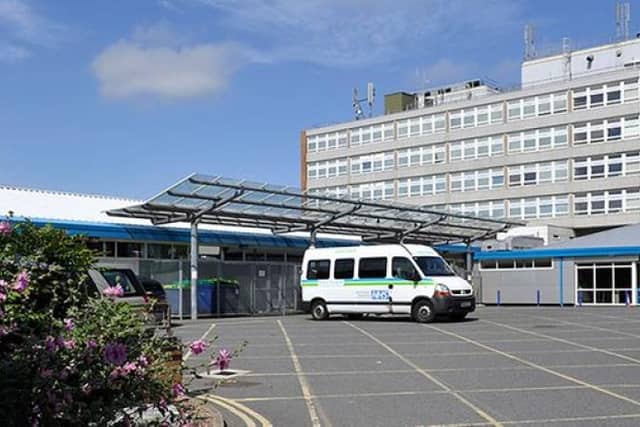

New NHS England data has revealed that nearly half of patients attending Torbay Hospital’s main emergency department waited longer than four hours earlier this year.
Nearly half of patients attending Torbay and South Devon NHS Foundation Trust's main emergency department waited more than four hours between January and March 2026, figures uncovered by the Torbay Weekly reveal.
NHS England data shows that just 51.4 per cent of patients were seen within four hours at the trust's Type 1 emergency department, its main A&E, where patients with the most serious and life-threatening conditions are treated, during the final quarter of the 2025-26 financial year. Of 20,620 attendances, 10,024 patients waited longer than four hours.
The NHS Urgent and Emergency Care Plan for 2025-26 sets a minimum target of 78 per cent of patients to be admitted, transferred or discharged within four hours. It is important to note that this target covers all types of urgent and emergency care, including minor injury units and urgent treatment centres, as well as main emergency departments. The 51.4 per cent figure covers Torbay's main emergency department only.
The trust has pointed out that when its urgent treatment centre and minor injury units are included alongside the main emergency department, overall performance is higher than the Type 1 figure alone suggests.
In January 2026, the trust told the Torbay Weekly that its combined figure across all urgent and emergency care types was 67.9 per cent, still below the 78 per cent standard, but a more complete picture of its overall urgent care performance.
Figures for the main emergency departments at Royal Devon University Healthcare NHS Foundation Trust and University Hospitals Plymouth NHS Trust, provided on the same Type 1 basis, show similar shortfalls.
Royal Devon saw 57.4 per cent of its 41,972 patients within four hours, with 17,871 waiting longer. University Hospitals Plymouth recorded the worst performance in the county, with just 36.7 per cent of its 25,712 patients seen within four hours, meaning nearly two in three patients, 16,263 people, waited longer than four hours. Combined performance figures covering all urgent and emergency care types for Royal Devon and Plymouth were not available.
The NHS constitutional standard, in place since 2010, originally required 95 per cent of patients to be seen within four hours, a benchmark that has not been met nationally for a number of years. The 78 per cent target for 2025-26 represented a significant lowering of that standard.
However, the trust told The Torbay Weekly it had been recognised nationally as one of the most improved for combined urgent and emergency care performance, noting that ambulance handover times had fallen by 51 per cent compared to 2024/25 despite a 15 per cent surge in demand.
Torbay MP Steve Darling described the situation as "corporate vandalism from National Health bosses" and blamed both the previous Conservative government and the current Labour administration for what he called historic underfunding.
He argued that the way NHS funding is allocated is fundamentally flawed for Devon, saying the formula is weighted towards deprivation but fails to account adequately for the pressures created by an ageing population.
"Torbay is the most deprived constituency that has a Liberal Democrat MP in the country, but they fail to take account of our frail elderly," he said.
Mr Darling said Devon's health system had been left to fail as a result. "It is utterly, utterly shameful that the Labour government is saying we put national insurance rates up to invest in the NHS, and we're just not seeing that in Devon," he said.
He was clear that frontline staff were not to blame. "The staff are incredibly good people, putting hard work, working above and beyond what they're contracted to do, and yet the system is failing to fund our NHS adequately in Devon," he said.
"Devon keeps on being seen as the naughty step people, because we overspend. But the reason why we overspend in our health system in Devon is due to them failing to take account of our elderly population, and that's why Devon is set up to fail," he added.
Dr Kate Lissett, Chief Medical Officer at Torbay and South Devon NHS Foundation Trust, acknowledged the pressure on services but pointed to signs of improvement.
"Devon's NHS experienced extreme pressure this winter, and we continue to manage an increase in demand from people requiring urgent and emergency care, and respiratory viruses," she said.
“We remain focused on supporting people to receive appropriate care at home and in the community through virtual wards, neighbourhood care, and technology, while working with our partners to strengthen and deliver preventative programmes to ensure earlier diagnosis and reduce unnecessary referrals.”
The trust also announced that a £14.2 million redevelopment of its emergency department is due to open this month in June, which it said would increase capacity and improve patient experience.
Dr Lissett said the trust was also working to reduce demand on its emergency department through community-based services, including The Harbour, a new frailty service based at Newton Abbot Community Hospital, which has received more than 750 calls since opening last October.
"We recognise there is more to do and we cannot improve without the support of our system partners," she said.
The figures were uncovered by the Torbay Weekly following a Freedom of Information request to Royal Devon University Healthcare NHS Foundation Trust, which directed to NHS England's published statistics on A&E attendances and emergency admissions. The data covers the period January to March 2026.