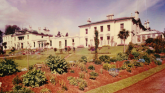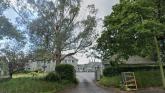
(Image courtesy: Google Street View)
Search


27 Mar 2026

Please allow ads as they help fund our trusted local news content.
Kindly add us to your ad blocker whitelist.
If you want further access to Ireland's best local journalism, consider contributing and/or subscribing to our free daily Newsletter .
Support our mission and join our community now.
To continue reading this article, you can subscribe for as little as €0.50 per week which will also give you access to all of our premium content and archived articles!
Alternatively, you can pay €0.50 per article, capped at €1 per day.
Thank you for supporting Ireland's best local journalism!
Post-Second World War Britain saw a revival of the vacation as the nation sought to rebuild and find solace.
For the first time, millions had paid annual leave due to the 1938 Holiday Pay Act and could take a day off work or a fortnight in a hotel or guesthouse.
It was still unusual for families to holiday abroad, however, and so the British seaside remained the most popular destination. There were 27 major resorts and Torquay was especially exotic, having long secured its position at the pinnacle of homeland holidaymaking. Making the town even more exclusive was that, as there were no motorways in the early post war years, it could take a full day to travel to the Bay. Getting here took more time, effort, and money than Blackpool or Brighton.
Recognising this elite reputation, in 1950 filmmakers chose Torquay as a location for a movie that combined clever social commentary with dark and unpredictable comedy.
Here’s the storyline of The Last Holiday: George Bird (Alec Guinness) is a mild-mannered salesman who is told that he has a terminal disease and only a short time to live. A bachelor with no family or friends, he withdraws all his savings to purchase an array of expensive suits and acquires the appearance of a wealthy gentleman. To get as much enjoyment as possible in the time he has left, he travels to the fictional upmarket seaside resort of Pinebourne where he books into a classy residential hotel.
The arrival of an apparently wealthy mystery man attracts the attention of the other affluent guests. George, however, feels more at home with the maids and clerks, including the housekeeper Mrs Poole (Kay Walsh).
George dispenses good turns and embarks on winning streaks at croquet, poker and the horses, his intelligence and insights bringing a breath of fresh air to his stuffy business and politician fellow guests. He is subsequently offered opportunities by his new acquaintances, including a cabinet minister (Campbell Cotts), an inventor (Wilfrid Hyde-White) and a well-to-do Cockney (Sid James). George falls in love for the first time and becomes aware that his imminent death has afforded him more chances in life than he had ever encountered before.
If you haven’t seen The Last Holiday before, there are two spoilers coming.
George discovers that his doctor had made a mistake and that he is, in fact, perfectly healthy. Overjoyed, he is ready to begin life afresh with his new love interest, friends and business opportunities. But, in a very British downbeat and twist ending, George is killed in a car accident. A shadowy figure playing a violin at both the opening and closing of the movie suggests that something supernatural was going on throughout.
Pinebourne is, of course, Torquay and the film location of George’s luxurious hotel was the real-life Rosetor on Chestnut Avenue. Known as The Hotel in the Garden by the Sea, the Rosetor operated between 1904 and1974 and was made up of several Victorian villas surrounded by five acres of landscaped gardens. Both resort and hotel fitted the upper class pretentions and the strict social hierarchies the filmmakers wanted to portray.
Alec Guinness’s subtlety and nuance is ideal for the part of George. Here is a master of his art. He epitomises the ordinary, a man without any exceptional qualities other than honour and dignity to the very end.
Alec’s career spanned over sixty years. His best known works are in Ealing comedies between 1949 and 1957, most notably as eight members of the same family in Kind Hearts and Coronets (1949). He also triumphed as Colonel Nicholson in The Bridge on the River Kwai (1957), in which he won the Academy Award for Best Actor, while many remember him as Obi-Wan Kenobi in Star Wars.
Supporting Alec are a fine cast including Beatrice Campbell (The Master of Ballantrae), Kay Walsh (Oliver Twist), Bernard Lee (Dr. No), Sid James (the Carry Ons), Wilfred Hyde-White (The Third Man) and Jean Colin (The Mikado).
Ernest Thesiger also appears. This was Ernest’s second appearance in a Torquay movie as he played Wiliam Pitt in 1918’s Nelson: The Story of England's Immortal Naval Hero, which was part-filmed at The Grand. He is noted for his later performance as Doctor Septimus Pretorius in James Whale's Bride of Frankenstein (1935). Ernest is played by Arthur Dignam in the fictionalised James Whale biopic Gods and Monsters (1998), starring Brendan Fraser.
The director was Henry Cass, prolific in film in the horror and comedy genres, while the screenplay was by the established novelist, playwright, screenwriter, broadcaster and social commentator JB Priestley.
In 1940, JB Priestly had broadcast a series of radio talks which were credited with strengthening civilian morale during the Battle of Britain. He was also a cofounder of the socialist Common Wealth Party which influenced the development of the welfare state.
Accordingly, Last Holiday is not a bleak film and far more than ninety minutes of watching a man slowly die. While the title does give a sensation of melancholy, the movie is a sharp class commentary full of ironic observations on the nature of life, love and luck. It joins other mid-century British movies with an interest in deeper existential issues. The film’s message is that we should focus less on our own situation and try to solve problems for others so that we can be remembered after our short time on earth.
The Last Holiday was well received. The Monthly Film Bulletin wrote: “In the principal part Alec Guinness gives an extremely clever performance.”
Kine Weekly said: “The picture is immensely readable fiction picturised with showmanship and intelligence. JB Priestley not only knows how to draw characters that live and breathe, but, even more important, the way to manipulate them on paper, on the stage and on the screen. Observant, humorous and human, its colourful and novel mosaic is first-class entertainment.”
Upon its release in the States, the New York Times film critic Bosley Crowther called The Last Holiday an “amusing and poignant little picture” that is “simple and modest in structure but delightfully rich in character”.
In The Radio Times Guide to Films the movie is recognised as “so achingly British”. And indeed, it is. George is told multiple times throughout the film to “keep a stiff upper lip”.
Perhaps it couldn’t have been made anywhere else and at any other time. The Last Holiday is a heart-breaking melodrama masquerading as a charming comedy, but with a political message.
Highlighting that British exceptionalism, in 2005 The Last Holiday was remade in the United States. Gone are JB Priestley’s social and political sub-texts as George Bird becomes Georgia Byrd (Queen Latifah) and comedy displaces subtlety and satire. Most telling about this sanitised and depoliticised new direction is the 1950 tragic ending being changed to a more audience-friendly one. In the twenty-first century Georgia lives on to open a successful New Orleans restaurant alongside her new-found lover, all paid for by her casino winnings.
Self-awareness, available to us all, has been replaced by American ideas of superficial material success, accessible to the very few.

Subscribe or register today to discover more from DonegalLive.ie
Buy the e-paper of the Donegal Democrat, Donegal People's Press, Donegal Post and Inish Times here for instant access to Donegal's premier news titles.
Keep up with the latest news from Donegal with our daily newsletter featuring the most important stories of the day delivered to your inbox every evening at 5pm.