

Scrap the 3pm blackout and lower league football will pay the price
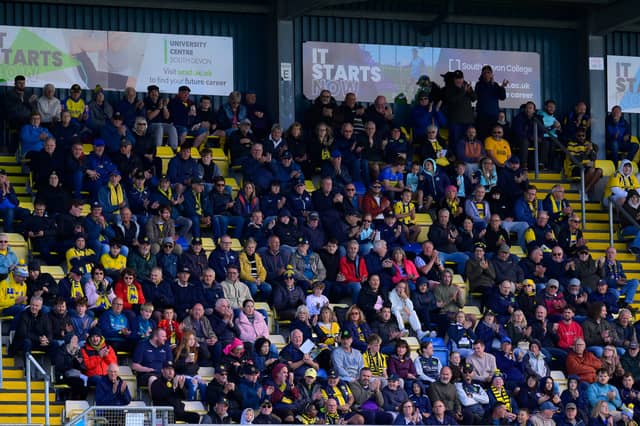

The question of retaining 3pm football as a non-televised event
Bob Lord was easy to dislike. He was an irascible, opinionated, loud (and proud) Lancastrian who became known, none too fondly, as the ‘Butcher Of Burnley’.
Lord was a butcher, and a very successful one, also chairman of Burnley FC during the most successful era of their history.
Under him, the Clarets won the First Division championship in 1960, reached the FA Cup Final two years later and developed the best youth scheme in England.
When they won that title, average crowds of 27,000 at Turf Moor accounted for nearly one in four of the town’s entire population.
Lord cared little for anyone who disagreed with him, he could be vindictive in that direction and was cold-shouldered by the FA and Football League top brass.
But among the causes, many of them unpopular at the time, that Lord championed were a union for players (PFA), the abolition of the maximum wage, professional referees AND a bar on live TV coverage of matches on Saturday afternoons.
Enough of his fellow chairmen did see the light on that subject.
In 1964 what’s become known as the ‘Three O’Clock Block’ was introduced, preventing live coverage of matches, except the FA Cup Final, between 2.45pm and 5.15pm on Saturdays.
Lord foresaw the threat to attendances, especially in the lower divisions, posed by TV.
This week another Lancastrian, Prime Minister Andy Burnham, got only one thing wrong when he threw his six pen’orth into the debate surrounding football’s next TV deal.
Burnham urged ‘a bit of caution’ over the increasing possibility of scrapping the ‘Three O’Clock Block’.
The PM should have recommended ‘a shedload of caution’. Or even ‘No Way!’.
The current TV deal with Sky and TNT, worth £6.7 billion, allows live coverage of 270 games per season at virtually all hours of the day and night – except Saturday afternoons.
It runs until 2029, and the Premier League’s chief executive Richard Masters has already said that ‘a decision about whether the blackout stays in place would need to be made in the future’.
We all get the message.
The world of 2026 may seem very different to the one that Bob Lord bestrode in the 1960s, and it may be from a technological point of view.
But some things don’t change.
One of them is that, if we can sit at home on a Saturday afternoon and watch a match from the comfort of our armchairs, the chances of us supporting Torquay United or Luton Town or Accrington Stanley or Lincoln City or Weston-super-Mare or whoever relies on us up and down the country will be seriously reduced.
Bob Lord was right back in 1964 and, nearly 45 years after he died, he’s still right now.