

Why autumn is one of the most rewarding seasons in the garden
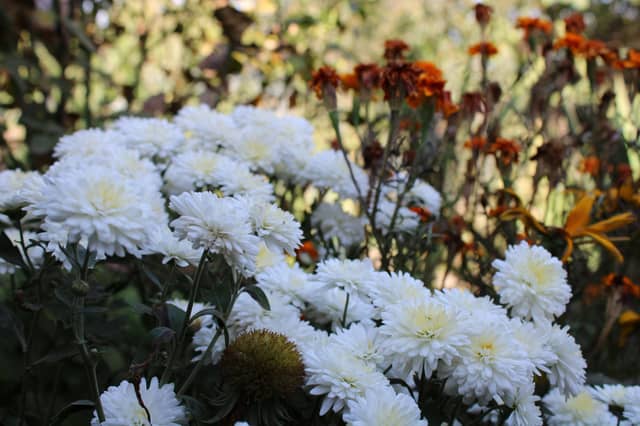

Autumn brings a fresh burst of colour to the garden, while the plot demands attention to weeds, composting and preparing for next year’s crops
In the Garden
Just as you think it’s all over, the garden starts its conclusion with subtle changes to plants like hydrangeas slowly slipping into a ruby colour from pink that will keep you uplifted until November arrives.
Bergenia comes into its own at this time of year when we are most emotionally vulnerable by turning its foliage red in the most dry and shaded areas where ordinarily nothing else would flourish.
Berries and rose-hips act like flames in the hedge. Pyracantha in particular creates clouds of berries for us and the birds. They can attract some unusual species like Waxwings into the garden as their berries are so highly visible and edible at the same time. If you’re considering a hedge that will stop anything coming or seeing through, then Pyracantha ‘atalantioides’ not only has yellow berries but is evergreen and prickly. Even a charging rhino would reassess charging it. In May, it presents you with a mass of white blossom as an indicator where the berries will grow.
In terms of small trees, for berries and fruit that will provide colour and cheerfulness at this time of year are crab apples (malus) and rowan trees (sorbs). Neither will grow into monsters and are delicate enough to offer more subtle leaf colour and changes. In fact, they won’t grow more than twice the average person's height. Crab apple in particular gives us a delight every season, with fruit, scent and blossom coming before the cooler changes later on.
Rowan is often planted in supermarket car parks for year-round interest in small spaces. They were also used historically to ward off evil spirits and a sign of good luck. There’s no end to the benefits, it seems.
On the Plot
With the hosepipe ban still firmly in place, it's worth collecting as much of the wet stuff as you can. It’s anticipated that water stocks won’t have been replenished sufficiently enough until at least the turn of the year. If you haven't already, rig up a water butt underneath a sloping roof on a shed or greenhouse. It’s possible to have one on each corner for maximum effect or to have water butts overflowing on a slope that fill each lower tub.
We’ve been spoiled with the lack of rain, which has kept the weeds down. Somehow they’ve come back stronger and are on the march across every bare patch. Ruderal weed species are engineered to complete their whole life cycle in a few short weeks, so hoeing over the tops prevents them self-seeding prolifically everywhere. Many of us will have noticed weeds replacing bare patches across lawns, and it's the same in the veg patch.
The last of the beans can be harvested now, but leave the roots in the ground if you can to help add nitrogen for the next crop.
It’s well worth walking through the brassica patch and removing any dead or dying leaves. They will only attract disease as well as slugs and snails (remember them?), who love damaged leaves and can also use them for hiding until it rains again or wait until nightfall.
Start to clear any beds that have gone over in readiness for adding a layer of compost. There will be enough leaves and grass clippings in the coming weeks, so you’ll need the space as well as start the layering process for next year's crops. Brassicas will go on and need a layer of compost as mulch and feed over winter.
The fig tree will need attention around now or else it will be wasting all its energy on trying to expand the tiny left-over fruits. Pinch them off if they are bigger than a pea, given that they won’t survive anyway. If it’s not established or in a sheltered area, cover it for the winter with fleece, especially if it’s a young tree.