

Torbay Council’s £7.5m pathology lab deal sparks public concern over transparency
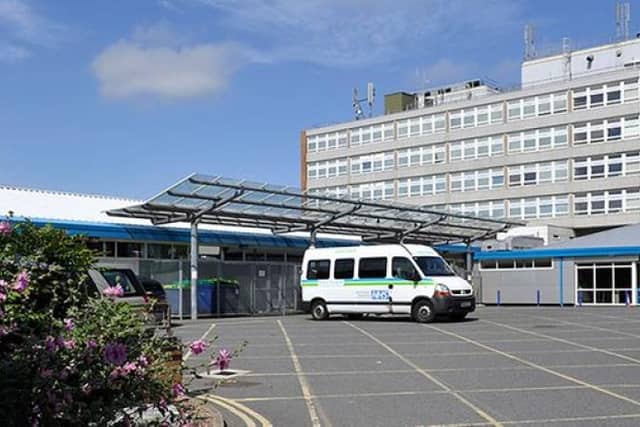

Torbay Council's decision to provide £7.5 million towards a pathology laboratory in Exeter has raised serious questions over transparency and accountability, with concerns about the potential consequences for Torbay Hospital and its patients.
I am afraid that this debate is going to run and run before we get proper answers to our questions about the situation at Gadeon House and why did Torbay Council agree to provide £7.5 million towards a pathology laboratory in Exeter, and what consideration was given to the consequences for Torbay Hospital?
Serious questions are being raised about Torbay Council's decision to commit £7.5 million towards converting part of Gadeon House in Exeter into pathology laboratory facilities for the Royal Devon University Healthcare NHS Foundation Trust (RDUH). A Freedom of Information response, dated August 26, 2026, reveals that the Council agreed to contribute the £7.5 million towards a £10 million fit-out project, with the NHS Trust expected to repay the money, plus interest, over the lease term.
But the response raises as many questions as it answers, particularly concerning financial scrutiny, democratic accountability and the possible consequences for services and skilled employment at Torbay Hospital.
So, we are left with the £10m question. Perhaps the most striking issue concerns the extraordinary difference between the project's stated costs and the value of building works identified in the original information request.
The request referred to a contract showing building works costing £1,110,000, including VAT. Yet the Council states that the required fit-out was priced at £10 million, with £7.5 million being provided through a Capital Contribution and Works Deed.
That leaves a difference of almost £8.9 million between the two figures. There may be perfectly legitimate explanations. Specialist pathology laboratories require expensive equipment, ventilation, technical installations and infrastructure. The £1.11 million contract may represent only one element of the overall project. But where is the detailed breakdown?
The Council was specifically asked what the £7.5 million would pay for. Its answer referred generally to construction, refurbishment and restructuring.
For a financial commitment of this magnitude, surely the public deserves considerably more detail. When asked who undertook the due diligence to establish whether the expenditure was justified, the Council's answer consisted of three words: "Director of Finance".
When subsequently asked where evidence of those checks could be examined, the Council provided no identifiable financial appraisal or risk assessment. Instead, it repeated that the arrangement would be funded through prudential borrowing, with RDUH expected to repay the Council, including interest. But an expectation of repayment is not evidence of comprehensive due diligence.
What assessments were undertaken of affordability, financial risk, value for money and the NHS Trust's repayment obligations? What happens if the project costs increase, the lease is terminated early or the Trust's circumstances change? And what safeguards protect Torbay taxpayers? These are reasonable questions whenever substantial public resources are committed to a long-term financial arrangement.
As I have highlighted before, equally concerning is how the decision was reached. According to the Council, the £7.5 million arrangement was not approved at a public meeting of Full Council. Instead, the Chief Executive exercised urgent decision-making powers after consulting the Leader of the Council and the leaders of the Liberal Democrat and Independent groups. All reportedly agreed.
Urgent decisions can be entirely lawful under local government constitutions. Nevertheless, the Council's response does not explain precisely why this particular transaction required urgent approval or identify the constitutional provision relied upon.
Why could the matter not have been considered through ordinary public decision-making procedures? Was there a deadline that made delay impossible? Were councillors provided with a detailed financial appraisal? And was the decision subject to any subsequent scrutiny?
Curiously, the Council also states that the decision was made on Friday March 24, 2026, and published on Monday March 27. Neither weekday matches the calendar: March 24, 2026, was a Tuesday and March 27 was a Friday. This may be a simple administrative error, but it reinforces the need to examine the original decision record.
Perhaps the most troubling question concerns the potential consequences for Torbay Hospital. The Council confirms that RDUH first expressed interest in Gadeon House in April 2024 and that, during negotiations, it became aware the Trust intended to use two floors for a pathology laboratory.
The information request specifically asked whether the potential loss of vital hospital services and highly skilled employment from Torbay had been considered. The Council's response was that the lease represented a negotiated agreement to provide essential healthcare services across the wider region. I believe that does not answer the question.
Was any assessment undertaken of the implications for Torbay Hospital, its workforce, clinical services or patients? If services are relocated, what effect might this have on the speed and availability of diagnostic testing? Could the loss of laboratory capacity affect emergency treatment, surgery or other hospital departments? And what consideration was given to retaining specialist employment in Torbay?
The documents do not establish precisely which services or jobs will transfer. Those details must be confirmed by the NHS organisations responsible. Nevertheless, the Council's knowledge of the proposed laboratory use makes the absence of a clear answer particularly concerning.
Another puzzling feature is the Council's insistence that it is not providing a loan to RDUH. Yet the response describes £7.5 million being made available through prudential borrowing, with the Trust repaying the money plus interest. There may be a technical legal distinction between a conventional loan and a repayable capital contribution linked to a lease. But that distinction needs explaining. Whatever the contractual terminology, the public is entitled to understand the financial exposure, repayment terms and protections attached to the arrangement.
Where is the much-needed transparency? None of these unanswered questions establishes wrongdoing, unlawful conduct or financial impropriety. The Council may possess perfectly satisfactory documentation supporting its decision.
But the Freedom of Information response has not provided it. The public should now be given access, subject to legitimate legal exemptions, to the relevant financial appraisals, cost breakdowns, decision records and risk assessments. The NHS organisations should also explain what pathology services are proposed for Gadeon House and what the implications will be for Torbay Hospital and its patients. This affects everyone – you, your children and your grandchildren,
At a time when the future of Torbay Hospital services is attracting intense public concern, decisions involving millions of pounds and potentially significant changes to healthcare provision, everything demands exceptional transparency. The central question is straightforward: was this arrangement demonstrably in the interests of Torbay residents, and where is the evidence? Until those answers are provided, legitimate public concerns will remain.
Very importantly, the chief medical officer Sir Chris Whitty, has recently highlighted the health challenges in England’s rural areas not being recognised or supported. In his annual report on the state of the public’s health, he refers to the “unique challenges” faced by people living in rural areas and small towns.
Calling for the development of a national strategy for rural health, Whitty said government policy did not recognise that much of the country’s burden of disease fell on rural areas, because of their ageing population. “In my view, that is not reflected in the planning or provision of services in the country,” Whitty told reporters ahead of the report’s launch.
Doesn’t this sum-up the problem and highlight the fact that our council and the Torbay and South Devon NHS Foundation Trust are not even listening to the UK government’s Chief Medical Adviser. Surely this questions the whole local governmental system.