

Social Media Crackdown for Under-16s Must Deliver More Than Empty Promises, Says MP

As the Government's consultation on restricting social media access for under-16s closes, concerns are growing that ministers may once again fail to take meaningful action. An MP argues that the harms of social media are now impossible to ignore and warns that young people cannot afford further delays.
The closure of the government’s consultation on banning social media for under-16s
brought a flurry of statements suggesting robust action is just weeks away.
Last Tuesday, ahead of meeting bereaved parents and campaigners, the Prime
Minister promised any future action would be a “game-changer”.
If only those in the room shared his optimism. Speaking after the meeting, Ellen
Roome, an inspirational campaigner who I have had the pleasure of meeting,
remained sceptical because, as she put it, “we’ve heard this all before”.
Ellen’s doubt is well-founded. For far too long, the government has talked a good
game on social media safety but has resolutely failed to act.
Take a parliamentary debate from March last year, which I spoke in. During its
conclusion, the then-Minister for Culture said: “nothing could matter more than the
mental, physical, and spiritual health of our young people. There are many aspects
to that health, including addiction to alcohol, drugs, gambling and, I would argue, as
many others have done today, smartphone use”.
If those words were sincere, why then did it take a year for the government to even
launch a consultation on social media restrictions for under-16s? It is little wonder
campaigners like Ellen remain dubious that any action would be even close to a
“game-changer”.
What gives me hope, however, is the sheer number and variety of interventions we
are seeing. Two from last week, I believe, were particularly significant.
The first came from former Health Secretary Alan Milburn’s report on young people
who are not in education, employment, or training – colloquially known as NEETs.
The report eviscerated a system which has left a million young people stranded, not
in employment or education. This is a generation which has been denigrated as soft,
snowflake, or work shy.
In reality, Milburn argues, they are anxious. Social media has changed their sleep
and concentration patterns. That in turn, is impacting their ability to work.
This was hammered home in an interview from a business owner who employs
young people. She spoke of unreal expectations super-charged by social media.
Where young people expect to be promoted within weeks of joining having been fed
a lifestyle via social media where success and riches come easy.
Having such a warped view of reality is massively damaging to mental health. In
their submission to the government’s consultation, the Academy of Medical Royal
Colleges compared social media’s impact on health and wellbeing to smoking –
mirroring the language the government used in March last year.
The AOMRC went on to say that few issues have “united clinicians so resoundingly in
recent years as the impact that unfettered exposure to tech and devices is currently
having on children and young people’s health”.
What is strange is that it is the same for politicians – no matter the party, politicians
are waking up to the dangers of social media and are calling for the government to
act.
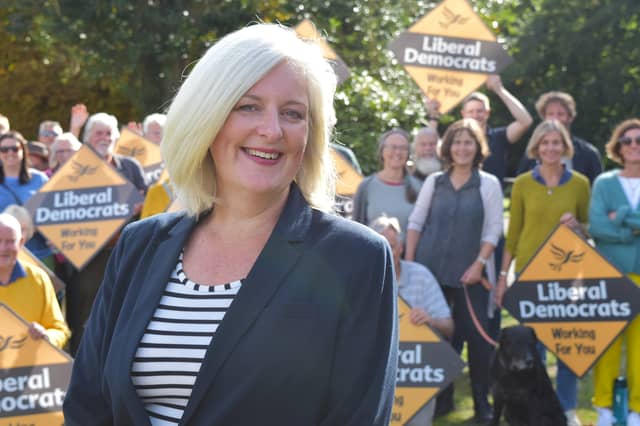
Earlier this year, the Liberal Democrats set out our plans to protect young people
from the harms posed by social media. Our plan, which is backed by multiple
charities and organisations, would see film-style age ratings imposed on social
media, games and platforms to offer a tiered approach to protection.
It remains to be seen which approach the government eventually goes for. What’s
clear from Australia is that imposing a blanket ban on selected platforms isn’t an
ideal solution. Banning or demonising a technology will not force social media
companies to make the changes needed to protect our children and we must
incentivise them to do that. We also need a nuanced, harms-based approach which
allows children to experience the best bits of the online world, while protecting their
physical and mental health.