

Russell Brand convicted of rape after judge rejects 'she was asking for it' defence
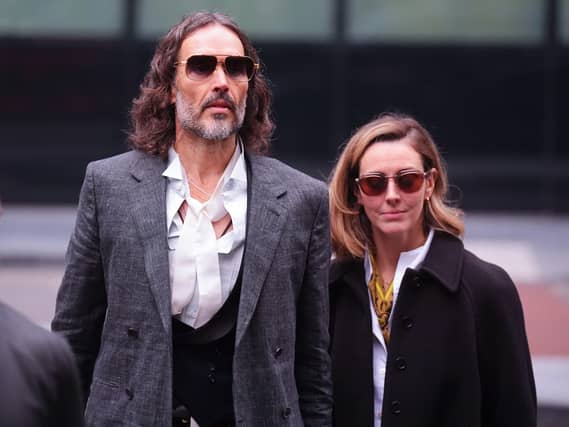

The judge in the Russell Brand rape case rejected the defence's argument that the victim was 'asking for it', stating that 'no woman is asking for it' and that the victim retains the right to say no and demand justice.
Was I shocked when Russell Brand was found guilty of rape? As many commentators pointed out, he was hiding in plain sight. What did surprise me was the widespread rape myths which I thought had been debunked by the 1980s. Even his barrister, a highly qualified KC, used extraordinary ideas to defend his client. He appeared to be at least 170 years out of date. Part of his defence was that “none of the complainants … resisted or screamed or even tried to leave”.
In a rape case in York in 1854 the defence argued that rape was unlikely as “the woman made no outcry whatever”. The judge dismissed this argument saying, “she would have been astounded and indignant and so it is understandable that she did not report it immediately”. We may no longer use the words “astounded and indignant” but the argument still applies. Many women freeze with fear.
I was a police surgeon trained to examine sexual assault victims and so I have some experience.
For many years rape was a common law offence, meaning that there was no Act of Parliament, but it relied on case law. In the dark ages rape was defined as “ravaged against the King’s peace” but the law moved on. By 1800 it had evolved to mean “carnal knowledge of a woman against her will”. Violence was not needed. Some keyboard warriors are two hundred years out of date. I have even seen a TV detective commenting that postmortem showed that she had not been raped. How can you tell from a body whether she consented, a Ouija board?
In 1828 the Offences Against the Person Act defined rape as penile penetration without consent. The victim did not need to appear in court. It was enough for the examining doctor to give evidence.
The 1861 Offences Against the Person Act redefined rape as a man having carnal knowledge of a woman against her will by force, fear or fraud”.
In 1956 Sexual Offences Act defined rape as “Unlawful Sexual intercourse without her consent by fear, force or fraud”. This was the same as the 1861 Act except that the new law defined consent. Unfortunately, the definition of consent under this act caused problems. Consent was the “reasonable man” test. Would a reasonable man have assumed she consented? It did not specify that she had to consent, only that a reasonable man would have made that assumption. This meant asking a victim what she was wearing or how she behaved would be logical if the court are trying to decide whether a man would interpret her behaviour as consent. Victim blaming became a common courtroom ploy.
In 2003 David Blunket passed a today’s Sexual Offences Act. To prove consent the onus is now on the man to explain what he did to ensure she was consenting.
If a woman is under the influence of drink or drugs to the extent that she does not know what she is doing, she cannot consent.
Sadly, there are still rape myths around, often exacerbated by social media. Stranger rape is rare. The perpetrator is usually known to the victim. Sometimes they had been in a relationship in the past, but this does not mean she still consents.
In the Russell Brand case the judge challenged another myth. “Whatever women wear, wherever they go, indeed whatever they drink, they retain the right to say no and to demand justice”. In other words, no woman is “asking for it”.
Sexual violence often occurs when there is a power imbalance. Brand was the powerful “star”. It would have been difficult for a young woman to complain. No one would listen. He was also making money for the publishers and TV companies.
Can we learn anything? Will these sexual offences keep appearing amongst our “celebrities”? This awful case could not have happened if others had not turned a blind eye. When will other celebrities realise that if they do not speak up they are implicated in the crime?
We need to educate men and women to understand this evil crime and debunk these myths.
Most importantly we must not forget the victims. The rape may have only taken a few minutes but the psychological damage lasts a lifetime.