

How Devon helped shape Britain’s musical landscape - part 1

The first part of a two-week look at the people, places and sounds that helped define music in Devon
Devon has a rich and diverse musical heritage and I thought it only right that I explore it.
Over the next two weeks I will delve into the history books and see how artists who were born, lived or were educated here have influenced the musical landscape. Also, I will look at the music that has shaped our beautiful county. The variety of genres is wide and, as a Torbay Hospital Radio presenter, I am used to this, as requests we receive from patients could not be more eclectic. The shows we put together differ from presenter to presenter and, as you will see, music from Devon follows a similar vein.
Let’s go back in time, before the days of vinyl records, and see how times gone by have affected things. If we go back to the 1800s, there is evidence that bands and choirs played a big part in daily life. The Brixham Band, Chudleigh parish bands, and Devonport Choral Society all took part during Queen Victoria’s 1838 coronation celebrations. Before 1900, it is clear to see that the county's close connection with all things maritime has had an influence, with sea shanties and naval ballads. Numerous Shanty Festivals across the county show confirm their continuing popularity.
Songs such as ‘Widecombe Fair’ show that folk music has also influenced the region’s musical identity long before recorded music. Devon’s folk tradition wasn’t built by famous performers, it was shaped by the ordinary man, thatchers, fishermen, farmers, and their families, who kept songs alive by singing them in the kitchen, the church or the local pub. They were passed from singer to singer; little was written down at the time. Eventually, collectors like Baring-Gould did write the songs down, but it was the singers who carried on the tradition.
Sabine Baring-Gould was one of Devon’s most fascinating historical figures, a Victorian clergyman, a writer of over 100 books, and England’s most important early folksong collectors. He also wrote famous hymns such as “Onward, Christian Soldiers” and “Now the Day Is Over”. Rumour has it that he travelled from village to village, listening to people sing the songs they had inherited and then recording them in a collection of books. We have a lot to thank him for!
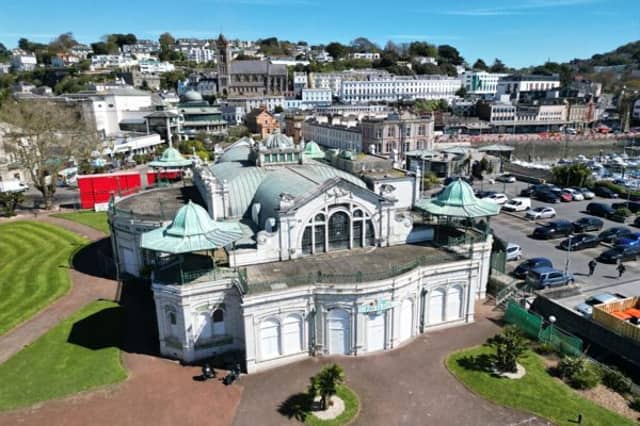
Prior to the First World War, Devon’s larger towns had a lively entertainment culture with concerts, and grand venues to host them, such as the Theatre Royal & Opera House (Torquay), which is now The Royal Lyceum. Some of you may know it better as the site of the former cinema in Abbey Road. Another venue that will be familiar to locals is the Torquay Pavilion. They hosted world-class shows by well-known artists, perhaps they will again?
In the inter-war years, music hall was extremely popular but by the time we reached WWII, the scene had become more community-driven, often trying to put on morale-boosting shows, or to try and raise money for the war effort. After the war we began shifting towards modern tastes. Traditional dance bands dominated local venues, but change was coming. Rock’n’roll was on the horizon and everything was about to change. In 1957, Torbay’s first rock’n’roll club opened in Union Street, founded by Lionel Digby, who has written in this publication and is well known around the Bay.
It laid the foundations for the 1960s boom at Torquay Town Hall, where huge names later played and was the inspiration for many local musicians. Brixham being a hotbed of talent, with bands like The Royals, The Atlantics and The Blackhawks all having a great reputation and a strong local following. Talent was clearly countywide as two future members of the legendary Kinks were born in Devon. Peter Quaife, the original bassist, was born in Tavistock and John ‘The Baptist’ Gosling, born in Paignton, played keyboards.
I’ll bring things right up to date next week.