

Famous Faces of Torbay: Henry James and His Riviera Connections (Part One)
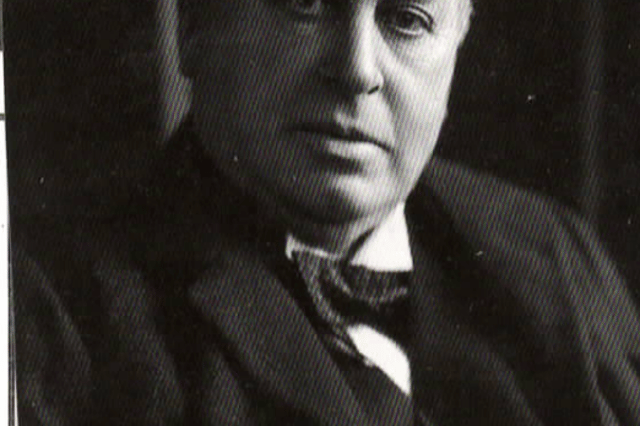

In the first of a two-part feature, Ian Handford, President of Torbay Civic Society, explores the life and legacy of celebrated novelist Henry James and examines the acclaimed author's connections to Torbay and the English Riviera.
HENRY JAMES (Part one of two)
This incredibly prolific writer produced an unaccountable number of stories, theories and
academic features in his lifetime. His father was also and American called Henry, being the
fifth child of eleven and this article refers to him as Henry Snr. His son Henry was born in
Boston America on April 15 th 1843 the second of five children and he and William (sibling)
would attend numerous schools abroad before coming home to go to University.
Henry (Snr) was a disciple of the Swedish scientist Swedenborg and Henry and his brother
William seemed destined to tread path and also become disciples. Later in life both concluded
the “Last Judgement” had occurred. Their father had also decreed his “children should not be
allowed to take root in any religion, political system, ethical code or set personal habits” strong
views having a strong effect on Henry. Later Henry spent time analytically observing his fellow
man before commenting “they lived in a highly cultured society”.
William became a psychologist and philosopher and like Henry a very serious academic. Both
boys attended at least ten schools and were taught by a dozen teachers. Eventually both
returned home to go to Harvard University. Henry later described the unusual attendance at
many schools in his “ A Small Boy and Others” published in 1913. Henry was then called (or
was it drafted) to the American Civil War but unlike his brothers he was quickly exempted due
to a back disability. Returning home he immediately started writing his first short story aptly
titled “A Tragedy of Error” being a critical work. By 1864 he was writing on contemporary
French subjects while undertaking general reviews and even completed what were 132 short
stories.
In 1868 his brother William returned to find his brother with not only a bad but suffering from a
new problem involving his digestion. Was this because he needed more stimulus and cultural
activities is unknown but now he was being persuaded to go to England. Disembarking at
Liverpool he moved to London and lived in Half Moon Street Mayfair. Now he started to
associate with the famous in the Capital including - John Ruskin, William Morris, Charles
Darwin and Oscar Wilde. Henry then toured Britain widely and eventually came to reside in the
Osborne Hotel on Meadfoot Sea road Torquay. .
Having returned to America next he now befriended William Dean Howells - a fellow novelist
and critic yet unlike himself - an editor. Then in the November the James family moved to No
20 Quincy Street Cambridge next to the Havard Yard. Soon after that he and William plus some
friends toured Europe for two years which took in Florence and Rome. In Rome in 1868 Henry
started his book “Roderick Hudson” (serialised) which was a major work. Next came “A
Passionate Pilgrim” which had been written in 1875 but not published until 1869 as Henry
returned to Britain via Liverpool funded by his family. Later and back in America he produced
no less than 58 features for New York’s magazine the “Nation” which were all published within
a year before he was made the permanent correspondent for “Nation” though based in Europe.
By 1876 and back at 3 Bolton Street in Mayfair this time he continued that quest to associate
with the famous of the era. Now he met T H Huxley, the anthologist Palgrave, Gladstone,
Tennyson and even Browning. More diversions to and from Europe continued until he settled
permanently in our Capital City and stayed here ten years. By then his work included writing
travel features, dozens of reviews and even becoming a critic of Essays while still undertaking
and completing many beloved fiction stories. You might imagine this huge amount of varied
work would have made him well off, but not so the wide travelling and his high lifestyle always
ensured Henry was short of money.
Now he concentrated on two new ambitious novels giving him no guarantee of any financial
gain at all. His “The Portrait of a Lady” was first followed by “Washington Square” both being
major works written during the 1880’s. On completion Henry returned to England and
Devonshire again having learned where the writer Edmund Gosse lived at St Marychurch in
Torquay. Gosse would much later record that he and Henry James became “literally lifelong
friends” following the visit.
(Final part two continues next week).