

Doctors voice fears over future of Torbay Hospital
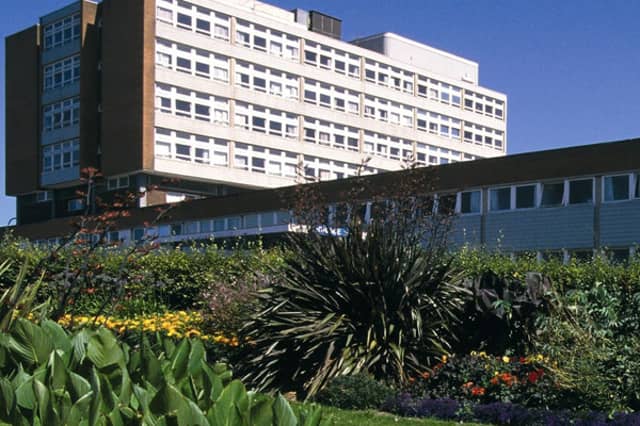

Senior clinicians claim key decisions are being made without adequate consultation and could threaten local services
For over a year now, I have been working with the award-winning and recently retired cardiac consultant and former head of cardiology, Dr Phil Keeling, on, initially, ‘Save the Heart Campaign’, and more recently the all-encompassing ‘Save Torbay Hospital’. He is passionate about Torbay Hospital and retaining all of its services to maintain the acute status of our hospital.
There has been a lot of information put out there from the Devon Integrated Care Board and Torbay and South Devon NHS Foundation Trust and, listening to Phil’s former colleagues, who are current consultants at the hospital, shall we just say politely, that “recollections may vary”. So, with the help of Phil and his “deep throat” colleagues, here is a summary of what is actually going on at the coalface with no flimflam.
In short, senior clinicians have expressed growing concerns about the future of Torbay Hospital, warning that a series of decisions by NHS managers could lead to a gradual downgrading of services without adequate clinical involvement or meaningful public consultation. The concerns, shared by a number of senior consultants who requested anonymity for fear of professional repercussions, centre on what they describe as an increasing trend towards centralising acute hospital services across Devon under the direction of the Devon Integrated Care Board (ICB).
According to the clinicians, major decisions affecting Torbay Hospital are increasingly being taken on a "One Devon" or "Pan Devon" basis, with insufficient consideration of the impact on the local population. They argue that both hospital staff and the public have become increasingly excluded from decisions that could fundamentally alter the future of healthcare in South Devon.
One of the strongest criticisms concerns the decision-making process itself. Consultants claim that Torbay and South Devon NHS Foundation Trust leadership has become increasingly constrained by financial pressures imposed by the Integrated Care Board and now feels compelled to accept proposals for service consolidation or relocation, even where there is significant clinical opposition.
They say consultants are often informed of decisions after they have effectively been made, rather than being involved in developing them. Several clinicians described the process as one in which medical expertise has been replaced by management-led decision making. In summary, this means that the clinicians are being told, not consulted. Shockingly, this means that paper pushers, and not highly trained medical consultants, are making all the decisions over the future health of our community. Clearly, this is both unacceptable and highly dangerous.
Following widespread concern over last year’s proposal to move acute heart attack services from Torbay Hospital to RD&E, consultants say attention has now turned to proposals to relocate elements of Torbay Hospital's pathology services to Gadeon House in Exeter.
Initially, this concerns histopathology (microscopic examination of cells and tissue taken by biopsy or at surgery), but is highly likely to expand to blood and microbiological tests. They argue that these proposals have again been developed with little meaningful engagement with the clinicians who rely on these services every day.
Doctors warn that pathology services underpin virtually every hospital specialty. Delays in blood tests, microbiology results or tissue diagnosis could affect emergency medicine, surgery, intensive care, orthopaedics and cancer care. Consultants believe these delays could increase pressure on already stretched emergency departments and contribute to longer hospital stays. This would effectively downgrade Torbay Hospital to a non-acute cottage-type hospital, dealing principally with elective work.
They also question why funding appears available to convert office accommodation elsewhere while previous proposals to modernise facilities at Torbay Hospital were reportedly rejected because of a lack of local capital funding. Consultants further claim that the financial modelling underpinning the proposals relies on outdated assumptions and that no comprehensive, up-to-date Integrated Impact Assessment has been published.
Doctors also describe what they see as a deterioration in multidisciplinary decision making. Historically, major operational changes affecting one specialty were discussed across all affected departments before implementation. Clinicians say this collaborative approach has largely disappeared.
The consultants also criticise the Trust's continued use of voluntary redundancy schemes. They acknowledge the financial pressures facing the NHS but argue that experienced senior clinicians and specialist staff are leaving without timely replacement. According to those raising concerns, vacancies often remain unfilled for months - or permanently - placing additional pressure on remaining staff and threatening the long-term sustainability of key departments.
Clinicians also report hearing discussions suggesting that additional services could eventually be centralised away from Torbay. Among the services reportedly mentioned are:
- Obstetrics and Gynaecology.
- Paediatric Surgery.
- Maxillofacial Surgery.
- Emergency inpatient services.
Some consultants also report hearing suggestions that Torbay Hospital should reduce the opening times for A&E to 9-5 weekdays only. Not having a local emergency system would have huge implications to our population's health, completely disrupt the ambulance teams, which would be constantly transporting patients to RD&E and hence away from providing local care to us in Torbay.
Another concern relates to recruitment and training. Consultants say trainee doctors across the South West have reportedly been discouraged from applying for training posts at Torbay Hospital because of perceptions about the hospital's future. If true, they warn this could create a damaging cycle in which fewer trainees lead to fewer future consultants choosing to work in Torbay, weakening the hospital's ability to sustain specialist services.
They believe current proposals risk undermining both patient safety and public confidence.
The Trust and the Devon Integrated Care Board have previously stated that service changes are intended to improve patient care, increase resilience and ensure NHS services remain sustainable in the face of significant financial and workforce pressures. The clinicians raising these concerns are calling for the publication of the full clinical evidence, financial modelling and impact assessments underpinning any proposed changes before further decisions are taken.
Dr Keeling and the consultants conclude: “We do not make these comments lightly but are really concerned for the future of Torbay Hospital. The NHS was established to provide healthcare to people both free and local to where they live. Over the years Torbay Hospital has proven itself to be a highly effective medium-sized district general hospital able to provide high-quality care to its local populations and the numerous visitors to our area. We need to protect this aspiration and stop what we fear is a slow sequential degradation of this service. Please support the campaign and Help Save Torbay Hospital.”
The consultants at Torbay Hospital care passionately about saving our lives and giving us all a better quality of life, isn’t it time that the ‘paper pushers’ listened to those who are qualified to make these life-changing decisions rather than pushing through decisions which could actually lose lives?