

Devon's council shake-up may be delayed, but change is still coming
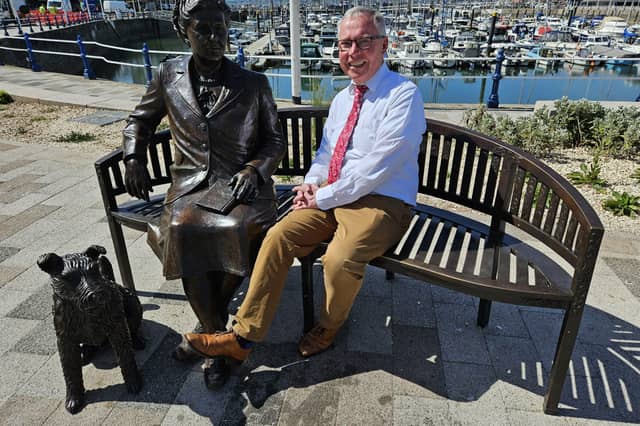

Nick Bye reflects on the surprise halt to local government reorganisation, the political wrangling behind competing Devon proposals, and why he believes unitary councils remain the future
No one saw the pause/review of local government reorganisation coming, and given the huge amount of time and effort expended over the last 18 months or so, colleagues in the Town Hall might be forgiven if the atmosphere was a little "blue" when the news broke.
It's almost impossible to exaggerate how all the energy gets sucked into an initiative like this, even though there are so many other jobs to be done at the same time. We went through something similar about 17 years ago when Exeter, like now, had ambitions to become a Unitary Council, separate from the rest of Devon. The then Labour Government wanted to consider proposals for all of Devon, including Torbay, and I guessed, wrongly, we would end up as part of a larger unitary council in some form.
Then along came a new Conservative/Liberal Democrat coalition government, and all this was knocked on the head.
This time the new Prime Minister and team have lost confidence in decisions made as recently as July. It seems the threat of a judicial review was enough to get them to think again.
In truth, I am not a fan of judicial review, running off to the lawyers (at great expense) in the hope a decision you might not like gets overturned. Decisions have to be made, and rarely is a judicial review successful. There's also nothing worse than uncertainty, which is exactly what we have got now.
However, in this case the decisions made by the Labour Government were so far adrift of what they announced would be the criteria for local government reorganisation when they started the process, it's hardly surprising someone has decided "to have a go".
In particular, in Suffolk and Norfolk there were rejected proposals which absolutely matched the criteria of new large unitary councils covering distinct, indeed obvious, geographic areas, so up went the cry of "gerrymandering!"
Instead of going for a Cornwall-type solution of one unitary council covering the entire two-tier County Council area (and which has worked reasonably well in Cornwall), the government decided to carve out much smaller unitary councils which, in some cases, might ensure continuing Labour Party control. These were a VERY long way short of the original requirement of having a population of 500,000 or more.
In Devon, the government, as I predicted, accepted the proposals from Plymouth and Exeter City Councils, both Labour-led and backed by the local Labour MPs. Here again these proposals didn't meet the government's own criteria, but in fairness neither did any of the other proposals which were put forward.
All this and more was discussed on the BBC Politics South West when I challenged the North Devon Liberal Democrat MP, Ian Roome, who is always congenial company on these occasions. Ian was still advocating for what was called (I think!) the 5:4:1 model, which had support from most of the District Councils and would have seen Plymouth basically stay as it is; Torbay would have joined South Hams, Teignbridge and West Devon in a new unitary council; Exeter and the remaining councils would have formed another.
This had a number of shortcomings, not least the fact the very rural West Devon area has little in common with Torbay or Teignbridge, and its major towns of Tavistock and Okehampton look more towards Plymouth and Exeter, respectively.
Of course, the 5:4:1 model was fundamentally undermined when the Liberal Democrat leadership of Devon County Council came up with their own suggestion of creating a new unitary council on the Devon CC boundaries and leaving Plymouth and Torbay to continue as we are. I seem to recall this got the support of our local Torbay Liberal Democrat MP/Councillor and some of those close to him.
You couldn't make it up! On a subject of considerable importance to the future of all Devon communities, the dominant party in the county, certainly the one with the most MPs and councillors, couldn't come up with an agreed position or even something which matched the government's criteria.
So, for the time being, we stay as we are and elections will take place next May for Torbay Council on existing boundaries.
My hunch, however, is change will come in the not-too-distant future as the government pursues the reform of local government, creating single-tier unitary councils which are inherently more efficient and straightforward to understand: one council for an area providing all services. This is most likely to provide effective leadership of place and to fit with the ambition of having directly elected Mayors to lead devolution. As it stands, a Mayor for Devon would have to work with a total of 14 separate councils; after reorganisation they would most likely work with 3 or 4, which should be easier to manage.
Council Tax bills are also generally much lower in unitary councils compared to those places with numerous levels of local government. For example, band for band, residents in Torquay and Paignton pay hundreds of pounds less compared with their neighbours in Newton Abbot and Totnes.
Finally, and staying with money, I was astonished to hear Nigel Farage's Reform Party has received two donations of £36 million within a couple of days. It certainly puts my fundraising for Torbay Conservative Association (all those dinners!) into perspective.
Given Reform's finances are something of a hot topic, it remains to be seen how much good this will actually do. Are voters happy to be bought?
There is some irony in that a part of Reform's appeal to older voters is to offer a sort of old-fashioned anti-immigrant "Britishness", but this feels like the worst sort of brash Americanisation of our politics.
My preference for funding political parties is to get people involved with all the fun of supper clubs, jumble sales, coffee mornings, raffles and more. Political parties shouldn't be in hock to crypto billionaires.
There is a local connection to this traditional form of political engagement. Disraeli was so enchanted by the flowers each spring in the grounds of the splendid villa Mount Braddon, just around the corner from where I write these few words, the Primrose League was founded shortly after his death to encourage participation in politics and uphold Conservative values.
Politics should involve the many and not be bought by the few.
Best wishes,
Nick Bye