

Cocaine, crime and the price society pays
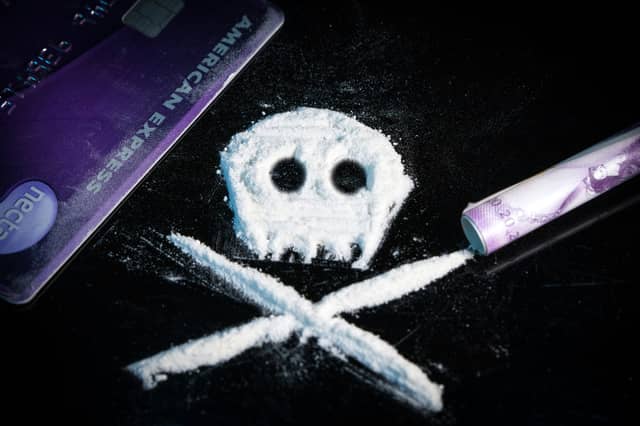

The story of cocaine stretches back centuries, but its modern trade continues to leave a trail of crime, addiction and misery across Britain
When there was rioting in Middlesbrough in support of the joy riders killed driving the wrong way down a dual carriageway, it was blamed on gang warfare. Sadly, two police officers were also killed. Underlying these crimes was a war between rival gangs involved in drug trafficking.
It is easy to blame poverty, the lack of amenities for young people or the loss of industry, but we should also blame the well-off middle class who enjoy a line of cocaine. Does the businessman enjoying cocaine at a North London dinner party realise how he is supporting county lines and organised crime? We also have a problem on our doorstep in Torbay. In July a Torquay dealer was jailed for over two years with, amongst other drugs, cocaine with a street value of nearly £14,000. When Eric Clapton sang the song “Cocaine”, did he understand the evil criminals providing his cocaine?
In the 1980s cocaine was rare in South Devon. Most people wanting a stimulant chose the cheaper option of amphetamine. Today, cocaine has come down in price.
Cocaine has a long history. The native South Americans found that, chewing coca leaves, “filled the hungry, fortified the tired and exhausted and let the unhappy forget their sorrows.” It was so helpful that the Inca decided that it must be a divine gift, especially as the Inca Royal family and priests held the monopoly of coca leaves.
When the Spanish and Portuguese arrived they banned cocaine as it was associated with their old religion. The ban did not last long as the Peruvian mineworkers, who were digging for their gold, could not work without it. The monopoly was quickly moved from the Inca priests and Royal Family to the new European Governments. The Europeans then started growing it themselves. They used forced labour and only paid them with coca. Not surprisingly many workers died, although the overlords became rich. But killing your workforce is not only inhumane but poor economics. The Government banned the practice but justified it by blaming the crop. “The plant acts through idolatry and witchcraft ... has no true value.”
As the leaves did not travel well cocaine was almost forgotten in Europe until German PhD student Albert Niemann isolated cocaine from the coca leaves in 1860, proving that it did not act through idolatry and witchcraft after all. And pure cocaine could travel, unlike the leaves.
Initially it did not appear to have any medical use but then Niemann noticed that it caused numbness of the tongue and realised that it worked as a local anaesthetic.
Sigmund Freud was a heavy user of cocaine in the 1880s, claiming that it was a safe “miracle” drug. He even wrote a paper praising cocaine for boosting energy, lifting depression and curing indigestion.
Only three years after Niemann had isolated cocaine an Italian chemist, Angelo Mariani, marketed a wine that he named after himself; Vin Mariani. This was wine treated with coca leaves; 11% alcohol and 6.5% cocaine. What he did not realise is that alcohol extracts cocaine from the leaf and enhances the effect of both drugs.
During the American Civil War an Atlanta pharmacist, Colonel John Pemberton, was wounded and became one of the many soldiers addicted to Morphine. Looking for a cure from morphine addiction he had heard of the Vin Mariani and developed a cocaine wine of his own he called “French Wine Cola”, although it had no relation to France. Unfortunately for Colonel Pemberton, Fulton County, Atlanta, passed a prohibition law in 1886. Ever resourceful, he removed the alcohol, renamed it Coca-Cola. He claimed that it offered “the virtues of coca without the vices of alcohol.” Each bottle contained the equivalent of a line of cocaine. For anyone concerned, the police will not arrest you if you have a bottle of Coca-Cola.
Cocaine was removed in 1903 although the company still uses coca leaves with the cocaine removed.
The police in Middlesbrough are right to deal with the gangs who are supported by organised crime. They are behind the dangerous driving and rioting. Whenever a middle-class city trader snorts a line of cocaine claiming it is harmless, it is not harmless to society. By creating a market for the drug they are fuelling organised crime.