

MP Anthony Mangnall: Helping to shape the future of farming
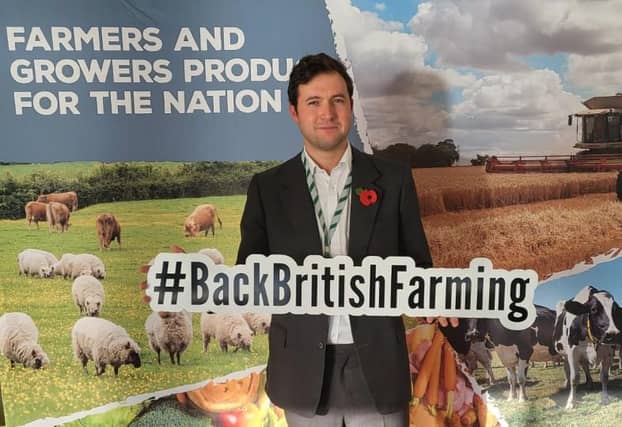

Last week, the National Farmer’s Union marked Back British Farming Day. This nationwide campaign has been designed to raise awareness of the back-breaking work our farmers undertake, the value they bring to our communities and the incredible ingredients
Last week, the National Farmer’s Union marked Back British Farming Day.
This nationwide campaign has been designed to raise awareness of the back-breaking work our farmers undertake, the value they bring to our communities and the incredible ingredients they produce.
Their work is often overlooked and undervalued. The very ease with which we are all able to buy our produce from supermarkets means so many do not consider how and where our food comes from, let alone who produces it.
However, we are at last having a national debate about how we produce our food, support our farmers and maintain a high degree of food security.
Much of this discussion has been born out of the pandemic, as well as supply chain shocks, the closure of borders, and the increase in home working, all of which have meant that we have needed to question our food production systems.
The last time such a conversation was held was in 1939 when the approaching storm clouds of war necessitated an agricultural system that was intensive and brutal. The scale-up was immense and as a result, Britain was able to weather the six years of war and prevent starvation using its own supplies.
Much of that intensified and mechanised farming still exists today, but its effects are clearly depleting the land of its richness. Previously fertile soils are now yielding less, biodiversity has been obliterated and many of the crops we are producing are either less healthy or being produced solely for animal feed.
It is unsustainable and the national debate that is being held by the likes of the NFU and CLA is helping to shape the future of farming in a manner that is more balanced and orientated towards food production, nature recovery and wildlife enhancement.
The Government has set down the marker under the new Environmental Land Management Scheme, which promises to reward environmental improvements under the caption of 'public money for public good'.
While the scheme is new and needs some improvement, it offers us a chance to change our farming habits for the better with both producer and consumer playing their part.
At this year’s excellent Dartmouth Food Festival, much of the conversation was around food production. The energy and drive are there, and it is now more essential than ever that these conversations are translated into action.
First, we need to shorten our own domestic supply chains. Supermarkets should operate using local food sources first, before going further afield. If done correctly, we can improve the at-gate and at-port prices for farmers and fishermen.
We can, in South Devon, go further and ensure that every town has a regular and well-attended farmer’s market. Using what we have in our midst is a sure way to sustain those farms upon which we all depend.
Second, education about our food needs to start in the earliest years of school. Every schoolchild across the country should have the opportunity to learn about the food they eat.
In doing so, we can teach about seasonal variety and encourage healthier eating. A better understanding of food leads to better choices of eating.
Third, there must be a national food security report to Parliament, as outlined in the Agriculture Act, as soon as possible. Only by understanding our shortages can we address them and identify where we need to improve.
The sooner we do so, the sooner we can harmonise our agricultural network in a manner that benefits farmers and the public.
Fourth, we must protect our agricultural land from development and solar panels. CPRE estimates there are enough brownfield sites across the UK to accommodate a million more houses. These sites must come first. Additionally, we must use the hundreds of thousands of acres of industrial units to site new solar panels rather than productive agricultural land.
The conversation, the debate and now the legislation are all moving in the right direction. These suggestions can all be achieved at a local level and in doing so, we can provide a national solution.