

Emergency drought measures ‘will not be needed’ in Devon this winter, South West Water says

Concerns were raised at a major water summit in Exeter last week. We look at what South West Water, the council and the government have said.
Households could be left without running tap water for periods or have to collect water from standpipes if drought conditions become severe enough to trigger emergency restrictions, according to Environment Agency guidance.
These measures could be introduced as a last resort under Stage 4 drought restrictions, the highest level of emergency response when water supplies are at serious risk of running out.
However, South West Water has confirmed such measures will not be needed this winter, despite parts of Devon remaining in severe drought.
The reassurance comes after concerns about the impact of prolonged drought on residents and essential services were raised by Devon County Council, which held a major Water Quality Summit in Exeter last week.
Stage 4 restrictions are intended for the most extreme circumstances, when water supplies are seriously threatened and emergency arrangements may be needed to maintain access to essential drinking water.
Environment Agency guidance identifies rota cuts, where mains supplies are temporarily interrupted, and standpipes, where residents collect water from designated points, as examples of measures that could be used.
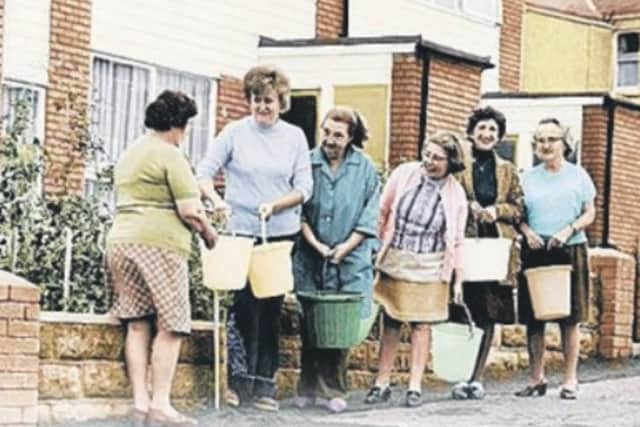
These are national emergency planning options, rather than restrictions that have been announced for Devon.
South West Water said it was required by the Department for Environment, Food and Rural Affairs (Defra) to maintain contingency plans because of the severe drought affecting parts of the region.
A spokesperson said: “Although these measures will not be needed this winter, DEFRA requires us to have clear contingency plans in place as a last resort due to severe drought in the region.
“Our reservoirs remain low after the hottest summer on record, but steps taken by our customers to use less water, recent rainfall, and the important work we’re doing to fix leaks and move water around our network is making a difference.
“We will continue to work closely with local authorities and the emergency services on contingency planning and would like to thank our customers for using water wisely.”
Devon County Council has also confirmed that South West Water does not expect to introduce Stage 4 restrictions before the end of 2026.
In a statement, the authority said: “South West Water has now announced that there will be no Stage 4 drought restrictions introduced this year, although the current hosepipe ban remains in place.
“The South West remains in drought status and we continue to encourage all households and businesses to use water carefully and conserve supplies wherever possible.”
The council said concerns raised at its Water Quality Summit reflected the drought conditions and the potential risk of further restrictions at the time.
It added: “However, South West Water's latest announcement means that no additional Stage 4 restrictions are now expected this year.”
Defra has also sought to reassure households that drinking water supplies are not expected to be affected.
A spokesperson said: “There are no plans for water rationing, and we do not anticipate any impact on public water supplies.
“The government and Environment Agency continue to act to protect water supplies across the country, and it‘s right that water companies in the areas of severe drought have contingency plans, alongside daily monitoring of reservoir and river levels.”
Despite recent rainfall, parts of Devon remain in severe drought, with reservoirs still significantly below their usual levels for the time of year.
The Environment Agency's latest update, published on November 20, confirmed that areas supplied by Wimbleball Reservoir and several smaller reservoirs remained in severe drought.
The rest of Devon was also still classified as being in drought.
However, the Environment Agency's severe drought classification is different from the operational drought levels used by water companies to determine their response.
South West Water's Wimbleball supply zone was at Drought Level 2, while Roadford and Colliford remained at Level 1, according to the latest government figures.
None of those zones was at Level 4.
Under Environment Agency guidance, Level 1 involves encouraging households to use less water, increasing efforts to repair leaks and making better use of existing water supplies.
At Level 2, water companies can introduce restrictions such as hosepipe bans, while Level 3 can involve tighter restrictions on non-essential water use and further measures to protect supplies.
Level 4 is reserved for the most extreme circumstances, when emergency measures such as temporary interruptions to household water supplies or the use of standpipes could become necessary.
However, reaching a particular level does not automatically mean every restriction will be introduced. The measures taken depend on the circumstances and the water company's drought plans.
The existing hosepipe ban remains in force across South West Water's supply area, excluding Bournemouth.
The company has also applied for permission to introduce restrictions on certain non-essential uses of water in its Wimbleball supply zone. These are separate from emergency rationing of household drinking water.
Restrictions would include watering plants on commercial premises, filling or maintaining certain non-domestic swimming pools and ponds, vehicle washing and cleaning non-domestic buildings and premises.
The continuing pressure on water supplies was among the issues discussed at Devon County Council's Water Quality Summit, held at Sandy Park in Exeter on Tuesday, November 17.
The event brought together representatives from 60 organisations, including South West Water, the Environment Agency, Devon Wildlife Trust and agricultural organisations.
Discussions covered water resources, pollution in Devon's rivers, agricultural water use and the future regulation of the water industry.
Councillor Paul Arnott, Devon County Council's deputy leader and Cabinet member responsible for water quality, said the summit had provided an opportunity for organisations to discuss how Devon's water resources should be managed.
He said: “Water really is the issue of the day in the South West with the dire threat of serious drought restrictions hanging over us this winter.”
The council had also discussed the consequences of drought at a Cabinet meeting on November 10, when members endorsed arrangements for monitoring water supplies, working with partner organisations and preparing for emergencies.
The meeting considered the potential impact of prolonged drought on residents, businesses, communities and critical infrastructure.
Councillors also raised concerns about protecting vulnerable people during emergencies, including residents in care homes and others who could need additional assistance during a water outage.
The Cabinet agreed that councillors should promote the Priority Services Register, which helps utility companies identify customers who may need additional support during power, gas or water interruptions.
Although emergency rationing is not expected, South West Water has warned that recent rainfall does not mean the drought is over.
Richard Stanbrook, the company's Drought Programme Director, said: “We’re continuing to see the benefits of wetter weather after months of exceptionally dry conditions.
“There’s still a long way to go to rebuild our storage heading into next year and the Environment Agency has said England needs at least 120% of its average rainfall over the next six months to be out of drought by spring.”
The Environment Agency's latest assessment said at least 120 per cent of average rainfall would be needed over the following five months for the whole country to emerge from drought by spring.
South West Water said it was continuing to repair leaks and move water around its network to protect supplies while reservoirs and rivers recover.
The company said it had repaired more than 23,000 leaks over the previous 12 months and recruited an additional 40 leakage specialists.
It is also using acoustic monitoring equipment, satellite technology, drones and specially trained leak detection dogs to locate leaks.
Mr Stanbrook added: “Even when it’s raining, the water households and businesses save today helps ease pressure on supplies now and leaves more water in reserve for next year. Please keep using only what you need.”
Devon County Council is preparing a wider report on the state of the county's water environment, expected to be presented to Cabinet in early 2027, following discussions at the summit.
For now, officials say emergency restrictions on household drinking water will not be needed this winter, but the hosepipe ban remains in place and residents are being urged to continue conserving water while supplies recover.