

Devon folklore enthusiasts follow The Three Hares Trail
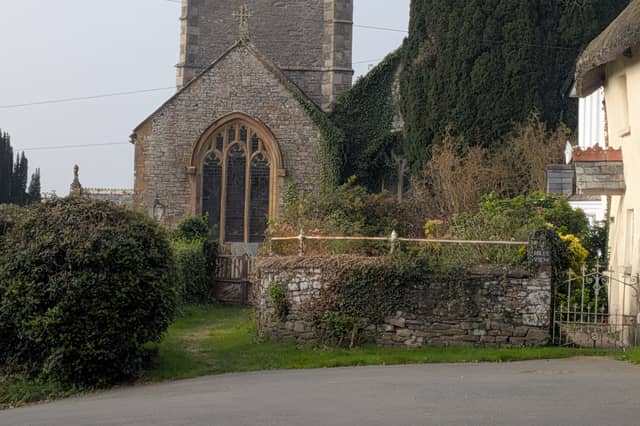

The Three Hares symbol is an ancient motif, presumed to originate in the Orient, and can be found on churches across Devon, including in the village of Cheriton Bishop.
Last week I told you all about our adventures in Shebbear, when Sarah P, Steve and myself, witnessed a bit of folklore in action, with the annual turning of The Devil’s Stone, on November 5th, an interesting alternative to bonfires and fireworks!
Afterwards, I entertained the locals with a selection of Devil related tales, plus a bit of witchcraft, thrown in for good measure, all of which my audience seemed to enjoy. Once everyone had departed, it was time to retire to my bed for the night, upstairs at The Devil’s Stone Inn, where I spent a very peaceful night, in an allegedly haunted bedroom...
The next morning, the three of us met for breakfast....mine was a very yummy omelette, whilst Sarah and Steve went for Full English...where we made our plans for the journey home. As we sat, and ate, we were not alone, for, as we were the only people still in the bar, we got the full attention of the pub’s pets, who I had met, along with my Sarah, on our previous visit, when we had received the same treatment. At one point, I had the two Cockapoos, Tommy and Cooper, on either side of me, whilst with the cat, Lily, having taken a liking to my lap, I was able to pose with my best Blofeld (a James Bond villain) impression, for the camera.
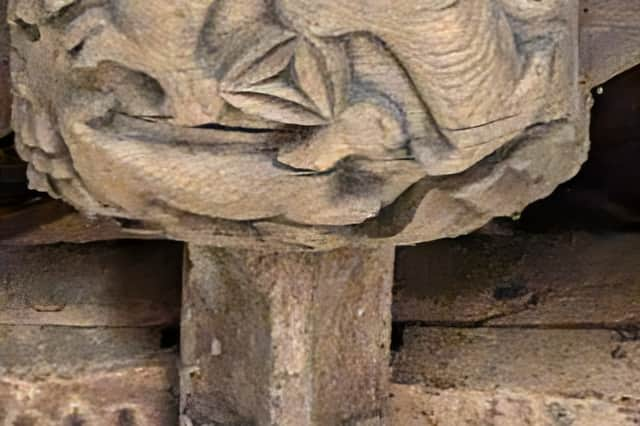
What I hadn’t realised, was that Sarah P is such a big fan of the Three Hares symbol, found on bosses high up in some old church ceilings. I myself, am quite partial to them too, having discovered all about The Three Hares Trail, all over Devon, especially on Dartmoor, from a leaflet I’d picked up in Chagford church, during the research for my Ghost Walk there. She was such a fan, that she happened to have a well researched, and well illustrated book by Eleanor Ludgate, who owns The Three Hares gallery in Chagford, about her person, and, as I had my leaflet detailing where to find all the churches that housed them, it would have been rude not to seek out some on our journey home...
The Three Hares symbol is ancient. Presumed to originate in the Orient, and when European merchants plied their trade across Asia, they were discovered on Chinese pottery. The Christian traders, took it to represent the Holy Trinity...three hares, or rabbits, conjoined by their ears...and they returned home to persuade the builders of churches to put the design on a wooden or plaster boss, in the ceiling of their parish church, as a decoration. The churches that have them, usually have just one or two...but the church at Broadclyst, next to The Red Lion Inn, where I host my meetings for the Exeter branch of my investigation group, TIP (called TIP-X), has nine...why so many? My research into that little mystery continues...
In medieval times, the tinners of Dartmoor adopted it as their official symbol...The Tinners Rabbits...which can still be seen emblazoned on other buildings (not just churches), within the Stannary Towns of Chagford, Tavistock, Ashburton and Plympton. It was here that the tin ore would be weighed, valued and sold. Thus the symbol took on even more importance, as rabbits were the staple food source of the miners, which can still be seen on the pub sign of one of the most famous of Dartmoor’s inns...The Warren House.
After breakfast, we checked out...after booking rooms for this time next year, as we would like to experience it all again, especially as there are those who missed out this time around...fuelled up the cars, and set out on a route I’d devised, after consulting the map on my leaflet. There were four on our route home...a potential fifth, at Ashreigney, where my Sarah’s father was born and raised, I had ruled out, as I felt she would like to be with me, when I visited that one...the first one being at Iddesleigh, which I’d never visited before, but as it turned out, it was well worth our time, as there was a little surprise waiting for us...
Arriving in the village, the church was obvious, but a car park for it, not so much. We ended up parking in a hedge opposite, and then went looking for the way in. We came across a dilapidated sign, announcing The Duke of York Inn, with a path leading up to it. To our left was the church path, with picturesque cottages along it, whilst to our right was our surprise...a tiny bookshop...The Hidden Bookshop no less! As all three of us love books, we were thrilled to find it would shortly be open for the day’s business. We used the time, whilst we waited, to check out the village, and find the Hares in the church.
On the village green, there is a hand-pumped well; a tiny, hedge-rimmed memorial garden, complete with flagpole; and a black metal silhouette of a rampant horse...a war horse...for this is the home village of Michael Morpurgo, writer of the book that bears that name. In the surrounding lanes, there are other attractions that commemorate the book, the stage play and the film...but, for now, our mission was to find Hares...
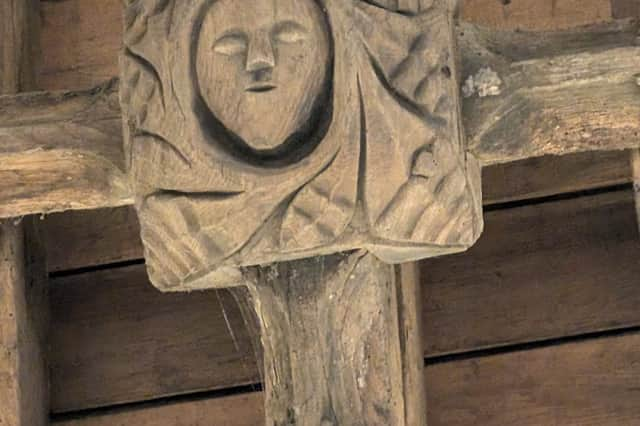
Once inside the charming little church, it didn’t take too much neck straining to spot our target, the wooden boss, up above us. Picture taken, Steve and I explored, whilst Sarah read us the relevant entry, from Eleanor Ludgate’s book. It’s a typical Devonshire parish church, with barrel-vaulted ceiling. Sadly, no sign of one of my elusive Devil’s Doors...but there does appear to be a Green Man boss, as an accompaniment to The Three Hares.
Back out to the bookshop, where we met Kay, who runs it with her mother, and who informed us that, along with the very evident fantasy section that dominates the shelves, she is branching out into folklore...music to my ears! We had a very pleasant chat, during which Kay mentioned that Michael often does book signing events there. We suggested some other authors she might like to consider to stock, and all of us left having made purchases. Mine consisted of a reasonably priced Dean Koontz thriller, that is missing from my collection, plus a very compact compendium of Winter themed folk tales, just right for reading, whilst sitting around a Storyteller’s fireside.
Our next stop was meant to be Sampford Courtenay, but as Kay had warned us, and signs confirmed, the village was suffering from unhelpful road works, so we moved on to our planned lunch stop instead.
Having visited Sampford Courtenay church in the past, to view its Green Man, I wasn’t unduly bothered, but it would have been nice to add its two Three Hares to my collection...another time, hopefully.
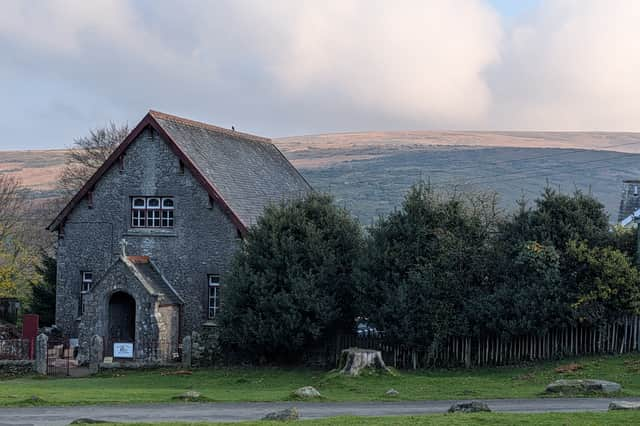
Sarah P had heard that the tea rooms in Belstone, on the northern edge of Dartmoor, had reopened, which was news to me, having seen its recent closure well publicised. However, I was happy to be led by them, and followed on, into the village, where we eventually managed to park. I usually park up there for Letterboxing purposes, but closer to the moor gate. The centre of the village seemed unusually busy, for a weekday.
Admiring the famous stocks, we headed towards the chapel, which houses the tearoom at the back. Once inside, we were pleasantly surprised to find it busy, only having been open again for a couple of weeks. Taking a seat, we perused the menu, each plumping for some warming Soup of the Day...my favourite, Tomato and Basil.
As we lunched, we chatted with the new owner, Kelly, who was being ably assisted by her sister, whose first day it was on the job! Being Belstone born and bred, it turned out their parents used to run the village pub, The Tors Inn...somewhere I know well...and she was now still trying to do her bit to serve villagers, and visitors alike, by re-establishing this much loved old business. As we reminisced, we discussed the idea of holding storytelling sessions there, maybe in the chapel, itself, if it’s not too cold, and I even tried to sell her on the idea of producing her own Letterbox stamp for her business (as I know a man who can make them now), as a way to attract fans of the hobby. Whilst there, I checked out the potential of the building. Kelly even let me nosy in the crypt (her storage area) that runs the full length of the chapel, and which is, sadly, very much empty of bodies! I left the village, brimming with ideas. I’m sure I will have further reason to visit there, very soon...
Our next planned stop, was meant to be Spreyton, but, once again, due to Road Closed, and diversion signs, I decided that another visit to Tom Cobley’s Grave, as well as the church’s two bosses, would have to wait for another day. Instead, we contented ourselves with one final stop in Cheriton Bishop.
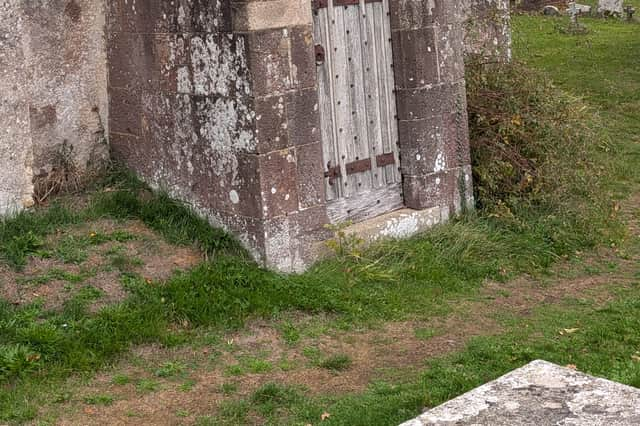
This is another village that I have previous history with, as I once visited it during a couple of long, hot, Summer walks, both times the heat forced us to make purchases of refreshments from the little store there, to help cool down. As a result of these visits, I felt confident that I’d seen the church before...turns out I hadn’t, but after a few wrong turns, and asking for directions, we eventually found it, having to compete with mums picking up their children from school, for parking spaces. Once again, the church shares similarities with others that I’ve visited locally. However, in this instance, there are signs that the north facing wall might once have had a Devil’s Door, as the south wall sports something similar...
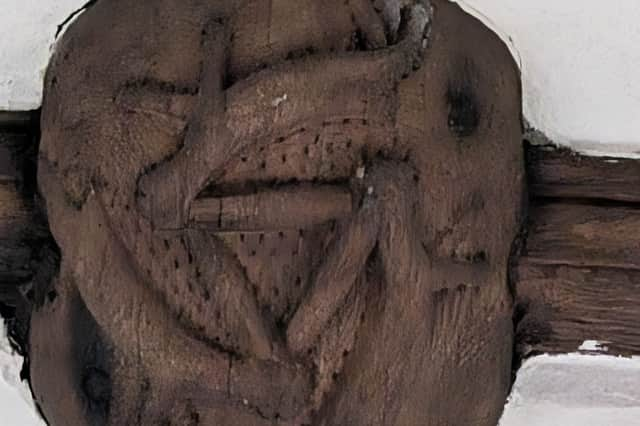
As Sarah regaled us with the entry from The Three Hares book, Steve and I found this example, and I photographed it for my collection.
Finally, it was time to leave the trail behind us, and head for home. I’m already looking forward to repeating the experience next year, with more stone turning, storytelling, and searching for Hares in old churches. Activities that all come highly recommended!