

Dr Peter Moore: How Laura's GP grandfather helped to change general practice
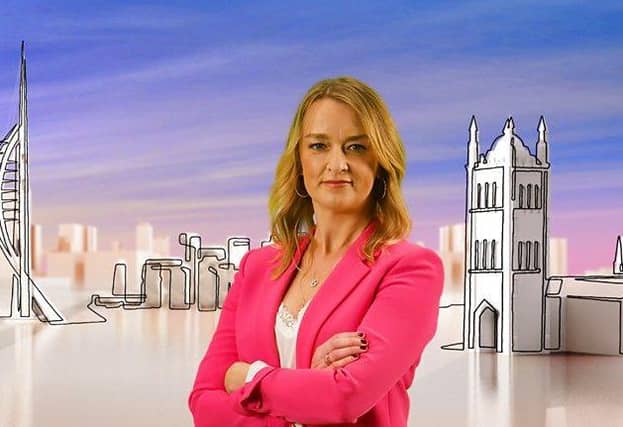

It must be difficult being a top BBC journalist. Laura Kuennssberg is, in my view, a brilliant interviewer. In the days of social media, asking intelligent questions to a politician will upset anyone who only read reads tweets supporting their views. Sad
It must be difficult being a top BBC journalist.
Laura Kuennssberg is, in my view, a brilliant interviewer. In the days of social media, asking intelligent questions to a politician will upset anyone who only read reads tweets supporting their views. Sadly, the attacks can be highly offensive.
But whatever slings and arrows are thrown, her grandfather showed that the Kuenssbergs are tough.
I will always admire Dr Ekkehard von Kuenssberg, who helped set up the Royal College of GPs in 1952, along with Dr R.M.S. McConaghey, a GP from Dartmouth.
Dr Kuenssberg was the son of a law professor at the University of Heidelberg in Germany. Although his German ancestry could be traced back to Charlemagne’s reign in the 8th century, his mother’s family had Jewish origins. He studied at the University of Innsbruck and, in 1933 was asked to join Hitler’s SS.
He fled to Britain claiming to be a sports student. He then worked as a laboratory assistant in Cambridge and applied to several medical schools. He was accepted by Edinburgh and qualified the 1939.
As he was German, he was interned in 1940 but released later the same year before working as a GP locum. In 1944, he joined the Royal Army Medical Corps and rose to the rank of Lieutenant Colonel.
When he left the army he became a partner in the practice where he had been a locum.
In 1948, general practice completely changed with the coming of NHS. The idea spread throughout the profession that somehow GPs were 'the dustbin of the profession'. Any doctor with ambition aimed for hospital medicine.
Dr Kuenssberg, along with several GP colleagues, were determined to change this mindset. They set up a college which became the Royal College of GPs.
He was elected as chairman of the Scottish General Medical Services Committee which, in plain language, means he represented all Scottish GPs. He helped negotiate the 'GP Charter' in the mid-1960s with Harold Wilson’s government which dramatically changed general practice.
It was still seen as an important turning point when I became a GP 20 years later.
Amazingly, he never forgot his patients, often negotiating with the minister in London during the day before flying back to Edinburgh for evening surgery. In 1969, he was awarded an OBE.
Not content with meeting ministers and negotiating a new dawn for general practice, he became chairman and later president of the Royal College of GPs travelling around the world.
He was involved in the early trials of oral contraceptives and also one of the first doctors to spot at disastrous effects of the drug Thalidomide on unborn babies.
Because of this work he was appointed as the only GP on the Committee of the Safety of Medicines, the forerunner of the Medicines and Healthcare products Regulatory Agency, MHRA. This committee reviews and licenses every new drug in the UK and played a leading role in the Covid pandemic.
When I became a GP in 1980 not every GP was a member of the college. I had to take an exam, the MRCGP, to become a member which required both written papers and an oral exam. We had to keep a diary over several surgeries which we were quizzed on.
Now no doctor can become a GP without passing the MRCGP exam and general practice is no longer seen as the dustbin of the profession. Among the GP pioneers we can thank Dr Kuenssberg from Germany and Dr R.M.S. McConaghey from Dartmouth for the vast improvement an increased professionalism in general practice.
As I look at the state of general practice today I know that my successors are working hard to try to provide a service in difficult times but I sometimes wonder whether we need another Dr Kuenssberg to negotiate with the government.
I suspect that his questions to ministers behind closed doors were as tough as his granddaughter’s questions on Sunday mornings.