

Gary Johnson: How safe is safe in competitive sports?

I think a lot of us in football will have raised an eyebrow at the news that players in Scotland are going to be stopped from heading the ball on the day before and after matches, writes GARY JOHNSON, manager of Torquay United. It's part of a campaign to
I think a lot of us in football will have raised an eyebrow at the news that players in Scotland are going to be stopped from heading the ball on the day before and after matches, writes GARY JOHNSON, manager of Torquay United.
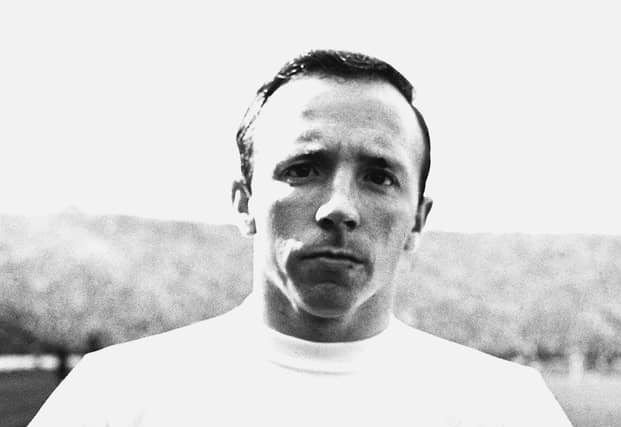
It's part of a campaign to reduce the number of head impacts, which are reported to have led to cases of dementia in a number of former players. The names of Jeff Astle and Nobby Stiles come to mind.
The first thing to stress is that nobody wants anybody to get dementia, and it is right that we try to be as careful as possible in this area.
But I do have some reservations about the sort of measures which have been taken in Scotland.
For a start, the balls we all use nowadays are so much lighter than they were back in the time of Astle and Stiles.
Gone are the days when coaches used to boot a heavy ball up in the air as high as they could, and the poor old centre-halves had to go and head it time and again.
In my experience the head knocks which have always worried everybody the most are exactly that - head onto head, rather head against ball. Unless you ban heading altogether, you're always going to have incidents like that.
The day before a game is when professional teams practise their set-play routines, which always involves heading, so I don't understand the new Scottish rules either.
Also, I believe it would be more dangerous for young players to go into games without having practised the technique and timing of heading the ball. They need to learn those skills.
If they want to give young players head-guards for heading sessions, a bit like rugby or amateur boxing, that might be an idea, and those guards could become of part of their kit.
Having said that, I always wondered, when the Chelsea goalkeeper Petr Cech used to wear a head guard, whether it actually made him braver. Is that right?
We've read and heard the sad stories about sportsmen developing dementia through 'brain trauma', and we know the measures which sports like rugby and American football have been trying to take to reduce the risks of it happening.
But is there an exact science we can work with here? And, at the end of it all, how safe is safe in competitive sports?
It's that time of year, when the pitches at Seale Hayne, our training ground near Newton Abbot, are either flooded or waterlogged, so all our sessions are now held at South Devon College's all-weather centre at Paignton.
It happens every year, until a bit later in the season or unless we get a very dry spell, which doesn't seem to happen in our winters. I'm sure we're not the only club, especially at lower division level who are in the same boat, so to speak.
People can pick up strange little injuries, more 'tweaks' than anything, on the all-weather but I'm just thankful that we've got such a good surface to train on and a good venue to work in.
I well remember the old 'plastic' pitches, especially the one they laid at Queen's Park Rangers, where I played several times in the 1980s.
The ball would bounce three times as high as the ones now and, if you wanted to knock a long ball in behind the opposition defence, your strikers had no chance of getting on the end of them unless you had Usain Bolt in your team. Those days are gone, thank goodness.
The college pitch is 4G, or Fourth Generation, which does give you a more forgiving and flat surface, and it always lets you work on your passing and quality.
We try not to make it an issue, far less an excuse, and we never will. In fact, SDC really is a vital place for us.