

Atlantic rowers celebrate Christmas with satellite call - plus sharks, monster waves and endless skies
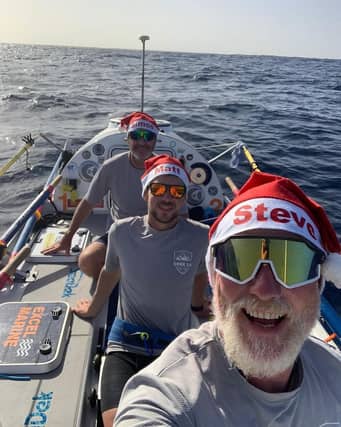

The second week of the Talisker Whisky Atlantic Challenge - the world’s toughest rowing race organised by Atlantic Campaigns - has seen crews adapting to the challenges of an Atlantic crossing, writes HILARY BASTONE. Forty-three ocean rowing boats, a rec
The second week of the Talisker Whisky Atlantic Challenge - the world’s toughest rowing race organised by Atlantic Campaigns - has seen crews adapting to the challenges of an Atlantic crossing, writes HILARY BASTONE.
Forty-three ocean rowing boats, a record entry, with 127 ocean rowers representing 17 nations set out from San Sebastian de La Gomera on December 12 to race 3,000 miles unsupported rowing race across the Atlantic Ocean west from San Sebastian in La Gomera, Canary Islands (280N 180W) to Nelson’s Dockyard in English Harbour, Antigua & Barbuda (170N 610W).
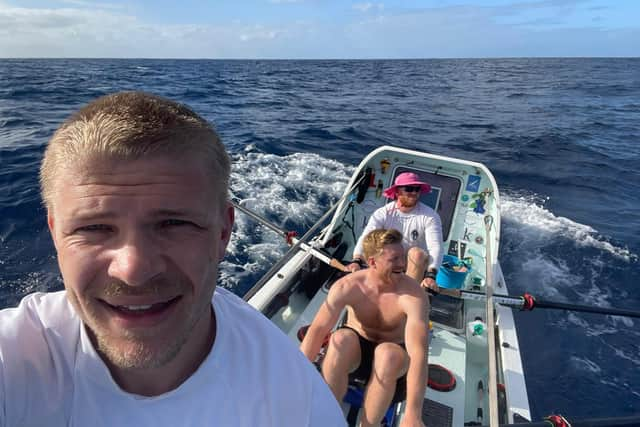
‘The Friendship’ crew of four, the Friend brothers from Tiverton, are two sets of twins. Also competing from Devon is Millie Frith from Exeter in the trio crew ‘Atlantic Girls’, Simon Lemon from Plymouth in the trio ‘Status Code 14’ and Jessica Rowe from Seaton in the fours crew ‘Full Throttle’.
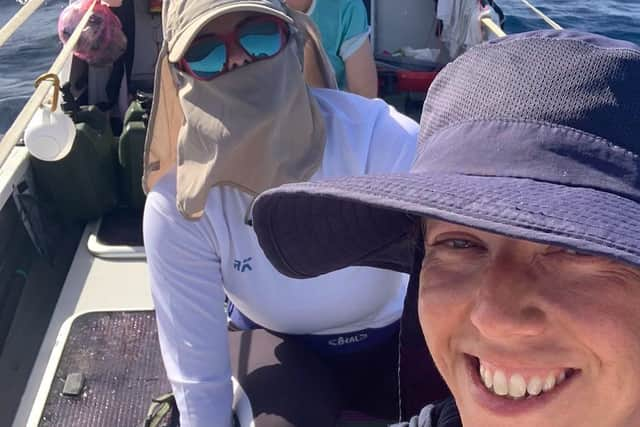
‘Atlantic Girls’ have sent a couple of messages. In their first message they said: “Hello from a very large ocean. We have had quite a tiring couple of days. Seasickness has meant a bit of downtime and only one person on the oars so to see we’re still making progress in the group is great.
“We have also been experiencing some hefty ocean waves. One of the first nights we tried to put our para anchor out to stop the relentless rocking from side to side and hunker down with a brew but after a call to the safety officer he said don’t bother and head south. So, it was a night of zero sleep and guessing where the waves were.
"Not only that but the ocean speaks and we hear voices constantly. We’ve stopped asking each other ‘what did you say?’ because we know the answer will be ‘I didn’t say anything’.
“But, however daunting the ocean is at night we love day shifts, snacks, audiobooks, sunshine.”
And on Christmas Day they messaged home: “Merry Christmas from the Atlantic Girls! We’ve just received a Christmas satellite call from the ladies and it was so lovely to hear how they’re getting on.
“Since we last heard from them some sharks have been sighted along with monster waves, endless skies and ocean for miles.
“Christmas will look a little different for the girls this year with cheesy mash and a mini Christmas cake as the stars of the feast on board Vaquita.”
In his first report on the race Ian Couch, the head safety officer, who lives at Stoke Gabriel, said: “Conditions. After a safe but tough start crews have managed to make progress S and the trade winds are general pushing the crews in a SW direction which is perfect at this time. Though the winds are largely favourable the wave direction and swell are less so.
"Powerful weather systems hundreds of miles to the N have created beam seas - waves often coming from one side. This can make rowing more awkward and frustrating. For concerned Dot Watchers and supporters the conditions are good and have not been dangerous. Tough as expected and at times frustrating it is relatively kind at present. Some rowers are more unsure than others but to date conditions have been decent though tough in the first couple of days.
“However, much expectation management has gone on most rowers have no real understanding of what it is going to be like, how much it will take but also how much it will give. Adapting takes time. Throughout training and the Ocean Rowing Course we stress that the first week to ten days is often the hardest part of the row.
"Day one is generally good as there is excitement and crews start well rested and healthy. By day three things can be at their lowest - seasickness, aches and pains as the body adapts, anxiety, sleep deprivation and self-doubt. Day five seasickness starts to ease for most, the body is starting to adapt, confidence can grow, and sleep starts to actually happen.
"By day seven to ten, most rowers are adapted and physically and mentally settling into the demands of this challenge. It doesn’t mean that there will not be further challenges and doubts but by this stage I will normally have had to deal with a number of rowers looking for a reason to stop without losing face and that has not happened even once this year.
“We have seen seasickness across about 80 per cent of the fleet which is lower than usual though for a few unlucky rowers it has continued though improving.
“Blisters. We always stress the need to prepare the hands to avoid blisters as gloves often make things worse. However hard you prepare sometimes the continued exposure to water, heat and the effort of hauling an ocean rowing boat still causes damage. This is part of the challenge and though uncomfortable is manageable and not something to be overly concerned about.
“Sore bums. Rowing in ever changing conditions can take its toll and seat padding and skin health is a hard thing to get right as training sessions can never replicate the conditions at sea. We have some issues this year which is particularly early but we advise those rowers on how best to treat and look after the problem in order to be able to contribute to the rowing.
“Nutrition. Many rowers have been struggling to eat all they should. This can be due to sea sickness but also stress and fatigue. Much of the weight loss of the row happens in the first two weeks as the body adapts but it is essential rowers eat the kcal specified in the rules to maintain optimum health and performance. Eating is a task to complete rather than eating what you want.
“Mechanical and electrical. All boats are inspected twice by the Safety Team for rule compliance and having the correct equipment but are also inspected by a marine architect and must have and electrical sign off. It is a harsh environment and we have seen some breakages of rowing gear and power failure and issues. These are being addressed, in some cases remedied and in others work around found. This can be hugely frustrating for crews but problem solving is as much part of the adventure as the act of rowing.
“Highlights. Despite the hardship and effort there have been wonderful encounters - numerous whale sightings - one so close the spray soaked the crew, dolphins are a regular occurrence for many crews, sea turtles, shark, marlin (one of which speared a daggerboard of
one of the crews), sea birds hitching a ride and stunning bioluminescence. The night sky continues to be more spectacular than anywhere on land.”
“Communication. To date we have made over 400 calls and texts speaking with all crews every two to three days and sometimes multiple times a day. It means that we have a view of how they all are, the concerns and highlights and allows us to offer guidance when required or give confidence checks, advice on weather technical issues, health or just be someone different to talk to who has rowed, can empathise and knows how it is.
“Look forward. The weather looks to give favourable NE, ENE and E winds pushing crews in the right direction. Waves and swell direction vary depending on the position of the boat but largely come from the N but with occasional periods of NNE.
“As time goes on routine becomes established and it is essential that rowers eat, maintain the boat, maintain themselves and remember that this is a long haul.
“So far it is looking good!”
Crews can be tracked at https://www.taliskerwhiskyatlanticchallenge.com/
Positions after two weeks at sea:
1 This Way Up (R) UK Four 1,537 nautical miles to the finish
6 The Friendship (R) UK Four 1,561
10 HMS Oardacious (R) UK Four 1,684
17 In Our Element (R) UK Four 1,842
21 Atlantic Girls (R) UK Trio 1,891
22 Full Throttle (R) UK Four 1893
33 Status Code 14 (O) UK Trio 2,042
(R) Race class boat. (O) Open class boat.