

Rare bird’s nest inspires amazing South Devon clifftop home design
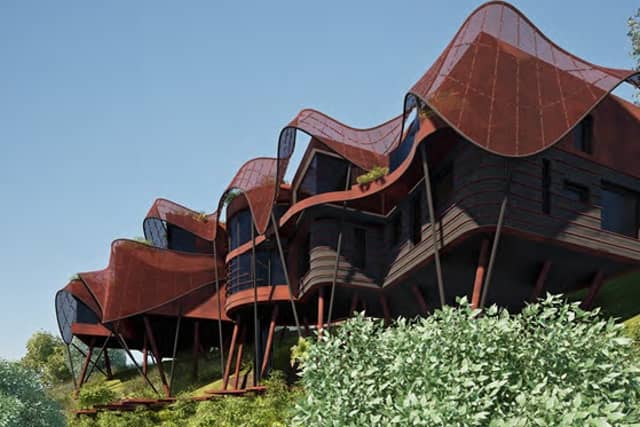

A luxury home inspired by the nest of a rare bird has been proposed for a clifftop overlooking the South Devon coast, but objectors say it could threaten local wildlife.
A spectacular new luxury home inspired by the nest of a rare bird is being planned for a clifftop overlooking the South Devon coast.
The home near Shaldon would be ‘exceptional’, according to a panel of experts.
But objectors say rare birds, bats and wildlife could be threatened. A nearby nature reserve operated by the Royal Society for the Protection of Birds is home to cirl bunting – the species that has inspired the home’s design.
An application has been lodged with Teignbridge Council for the home at Beacon Copse, overlooking Labrador Bay. If built, it would command views far out to sea across Lyme Bay.
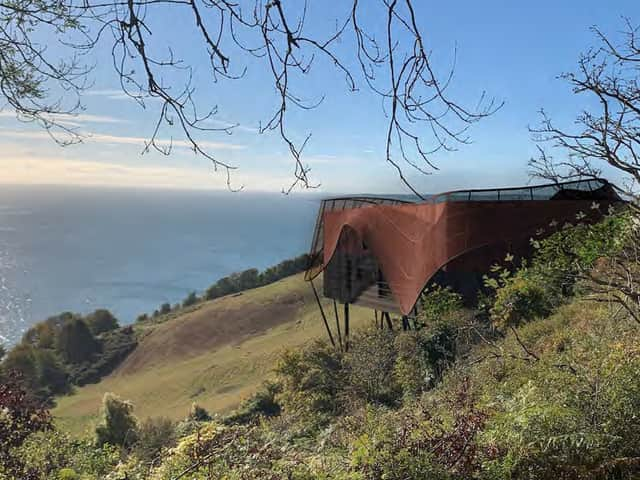
It has a radical ‘brise soleil’ canopy designed to block direct sunlight and keep the property cool. The colour scheme of the exterior of the home would be predominantly brown, allowing it to blend in with the countryside around it.
Just one objection has been lodged against the plan, from a person in nearby Teignmouth who says it conflicts with the local development plan and goes against the council’s own advice that the site is not suitable for a dwelling.
The objector also points out that the council has already decided four times in 20 years that the site should not be developed.
But the local applicant says the home – on a site which is currently a green field with a mixture of scrub, bracken and scattered trees – would be ‘truly exceptional’.
The Squirrel Design team behind the extraordinary structure cite a section of the National Planning Policy Framework which says new, isolated homes can be built in the English countryside if their design is of ‘exceptional architectural quality’.
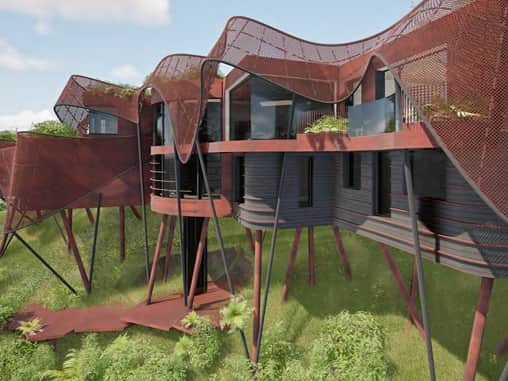
The framework says the design must reflect the highest standards in architecture and help raise design standards in rural areas. It must significantly enhance its immediate setting rather than just fitting in passively, and must be ‘deeply sensitive’ to the surrounding area.
Proposals must also have strong environmental credentials, such as meeting passivhaus energy standards or being carbon-neutral.
Designers say they have used the nest of the cirl bunting as a source of inspiration, adding: “The concept was to develop a building that uses the ability to ‘float’ within the tree canopy/landscape with a series of connected spaces.”
And, they add, the ‘unique, undulating’ thatched roof of the former Labrador Bay tea rooms which stood nearby provided the inspiration for the shape of the canopy.
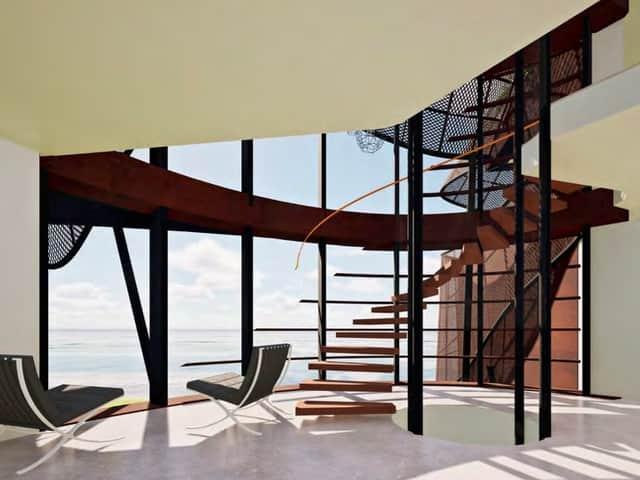
The South West Design Review Panel saw the proposals in 2025 and said: “The panel feels that the proposal meets the tests of the National Planning Policy Framework, demonstrating exceptional architectural quality, sensitivity to its context and a scheme that would significantly enhance its immediate setting.”
A campaign has begun on social media titled ‘Save Labrador Bay – Protect our Wildlife and Coastline’. Objectors say cirl bunting, bats and other wildlife could be at risk.
The campaign statement goes on: “Let’s speak up for the wildlife that cannot speak for itself.”
But comments below the post show other local people supporting the plan. One writes, ‘what a great design, will be an asset to the area’ while another adds, ‘I love that design and I don’t see the issue. I think it blends in quite well’.