

Major funding boost for Torbay in national push to end rough sleeping
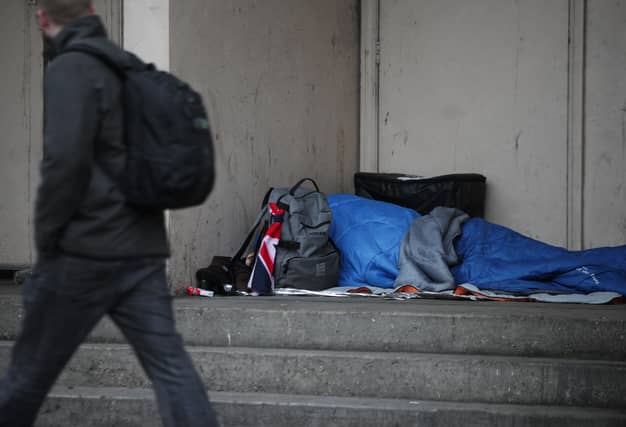

Torbay has been allocated more than £1.3 million from a £442 million national government package as part of Prime Minister Andy Burnham’s drive to offer emergency housing to every rough sleeper in England by Christmas.
Torbay has been allocated over £1.3 million in government funding to tackle rough sleeping, following Prime Minister Andy Burnham’s pledge to offer emergency accommodation to every rough sleeper in England by Christmas.
Under the national £442 million Rough Sleeping Programme published today, Torbay will receive £1,336,486 over the next three years to support outreach services, specialist healthcare, and long-term accommodation across the Bay.
The funding injection comes as local housing services face sustained pressure, with local assessments showing a significant rise in individuals approaching the council for emergency housing support.
How Torbay's Money Will Be Spent
Government allocation data breaks Torbay's £1,336,486 total package down into specific annual operational (RDEL) and capital (CDEL) streams over the 2026–29 programme:
- 2026–27 Financial Year: £366,973 in operational revenue funding (RDEL) to expand immediate frontline outreach services and emergency bed spaces, with zero capital allocation in Year 1.
- 2027–28 Financial Year: £492,312 total allocation, split between £279,152 in operational funding (RDEL) and £213,160 in capital housing investment (CDEL).
- 2028–29 Financial Year: £477,201 total allocation, split between £263,290 in operational funding (RDEL) and £213,911 in capital housing investment (CDEL).
Overall, the three-year package provides £909,415 in operational funding (RDEL) for day-to-day services, such as frontline outreach workers, medical care, addiction support, and immediate bed spaces, alongside £427,071 in capital funding (CDEL) reserved strictly to acquire, build, or convert long-term supported accommodation across Torbay.
Understanding the Funding: Revenue vs Capital
The multi-million-pound package is divided into two distinct government funding streams:
- Revenue Funding (RDEL): Pays for day-to-day operational costs. This includes salaries for frontline outreach workers, medical and addiction care, and immediate emergency room bookings like B&Bs.
- Capital Funding (CDEL): Strictly restricted to long-term physical assets. This money can only be used to purchase land, construct new buildings, or renovate existing properties into permanent supported homes.
Treasury rules mean local authorities are legally banned from using capital "building" money to cover everyday running costs or staff salaries.
How Devon Authorities Compare (2026–29)
- Plymouth: £2,621,589 (£1,614,539 revenue / £1,007,050 capital)
- Exeter: £1,974,556 (£1,147,966 revenue / £826,589 capital)
- Torbay: £1,336,486 (£909,415 revenue / £427,071 capital)
- Torridge: £904,169 (£417,400 revenue / £486,769 capital)
- South Hams: £625,835 (£310,124 revenue / £315,711 capital)
- North Devon: £608,721 (£350,412 revenue / £258,309 capital)
- East Devon: £274,903 (£274,903 revenue / £0 capital)
- Teignbridge: £221,922 (£221,922 revenue / £0 capital)
- Mid Devon: £163,006 (£163,006 revenue / £0 capital)
- West Devon: £154,252 (£154,252 revenue / £0 capital)
The government's official guidance issued alongside the funding explicitly mandates that local authorities must adapt their support for women sleeping rough.
The guidance warns that women experiencing rough sleeping are often less visible and face a heightened risk of violence, abuse, and exploitation. It instructs local areas not to rely solely on traditional street outreach to identify women in need, but to work proactively with specialist women's services, domestic abuse charities, health partners, and violence against women and girls (VAWG) organisations.
Furthermore, ministers specify that support must be trauma-informed and centred on safety, instructing councils to provide single-sex accommodation alongside intensive, specialist care to help women feel safe and access help early.
Announcing the initiative, Prime Minister Andy Burnham called on local authorities and partner agencies to unite in a "national drive" to get everyone off the streets before winter.
Under official government guidance published for the programme, councils have flexibility over immediate emergency bed spaces, including short-term B&Bs, shared flats, night shelters, and sit-up spaces, to bring people indoors quickly before Christmas.
However, the guidance makes clear that emergency options like B&Bs and dormitories are intended as immediate stepping stones. Local authorities are expected to prioritise small-scale, supported housing arrangements combined with intensive healthcare, addiction recovery, and trauma-informed support to build permanent pathways off the streets.