

Christmas banned in Torbay during English Civil Wars


Christmas was banned in Torbay during the English Civil Wars, but locals secretly continued to celebrate the holiday, with many shops closing their doors on the day and citizens defying the authorities.
The first decades of the seventeenth-century saw Christmas in Devon celebrated in ways we still recognise today. A 12-day festival lasted from the 25th of December to Twelfth Night on January 6. There were church services, feasting and festivities including carol singing, dancing, plays performed by amateur ‘mummers’, and wassailing in the orchards. Houses and hearths were decorated with holly, ivy, and mistletoe.
This all changed with the outbreak of the English Civil Wars in 1642.
The sparsely populated towns of the Bay played little direct part in the wars and little is known about local loyalties. Our communities were small and records are limited: Brixham had a population of around 700 people, Paignton had 800 and Torquay only 300. But we do know that Devon's major towns and the Puritan merchant classes generally supported Parliament, while much of the rural nobility favoured the Royalist cause. On the other hand, the vast majority of seafarers and merchant mariners overwhelmingly declared their loyalty to Parliament.
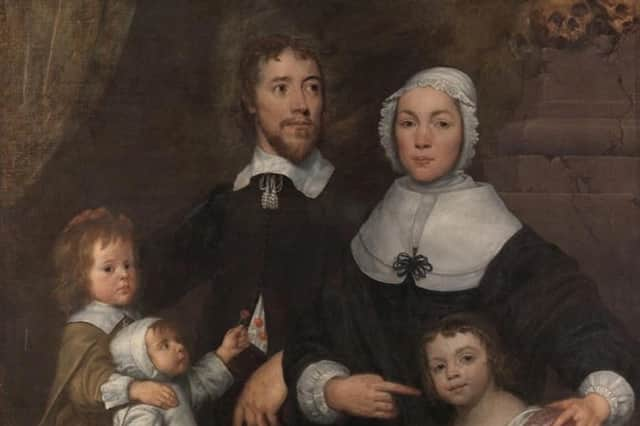
We do have a local reminder of the conflict. Lucius Cary, 2nd Viscount Falkland was 33 when he was killed fighting for the Royalist cause at the First Battle of Newbury in 1643. His body was found stripped and mutilated the day after the battle and only recognised by his servant. Both Lucius Street and Falkland Road are named after him.
One piece of evidence of the Bay’s allegiance does exist in the form of a letter written on 11 July 1644 by King Charles’ nephew Prince Maurice to Colonel Edward Seymour at Torre Abbey: “Diverse persons disaffected to His Majesty’s service and peace of the Kingdom do associate and meet together about Torbay in a hostile manner to the great terror and distraction of His Majesty’s loyal subjects".
The Colonel was authorised "to repair with your force to Torbay… there to repress and reform the same, and in the case of opposition or resistance to slay, kill and put to execution of death by all ways and means.”
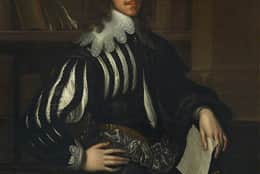
When the wars ended over 200,000 people, almost 5% of the population, had died from combat, disease, and hardship caused by the conflict. Parliament was ultimately triumphant and England became a republic led by Oliver Cromwell. This so-called Interregnum lasted between the execution of Charles I on 30 January 1649 and the Restoration of his son Charles II on 29 May 1660.
In the ascendancy were the Puritans who wanted to ‘purify’ the Church of England of any remaining Catholic practices and rituals. Parliament then enforced a strict, austere moral code and passed measures against what it deemed blasphemous, atheistic, or radical religious and social opinions. The traditional Church of England service book was banned in 1645, and the office of bishop was abolished in 1646. Cathedrals were closed or repurposed, and thousands of Anglican clergy were removed from their livings. Stage plays, theatres, and acting were completely outlawed, and traditional community celebrations, including maypoles, Morris dancing, and traditional games, were suppressed.
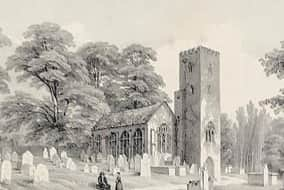
Puritans also rejected any celebrations connected to Christmas. They saw no evidence in scripture that Jesus was born on the 25th of December and concluded that the day was merely a remnant of Catholic or pre-Christian superstitions.
One influential critic of Christmas was the Puritan lawyer, William Prynne. In his 1632 book Histrio-Mastix, William was scathing about "disorderly, bacchanalian Grand Christmasses”. He claimed that more sin, drunkenness, and debauchery occurred at Christmas than during all the rest of the year combined and so the day should be more accurately be termed Devil’s mass or Saturn’s mass.
Few, however, seemed to want to do away with Christmas entirely, they just wanted to tone down the overindulgence and immorality that came with the celebrations. Perhaps surprisingly, alcohol was not a major issue. Puritans viewed beer, ale, cider, and wine as a "good creature of God." The alternative, of course, was the often disease-ridden water. And there were plenty of opportunities to partake as there were about one alehouse for every 90 inhabitants. Nevertheless, the drunkenness associated with Christmas was certainly a sin.
Despite a general lack of enthusiasm for a ban, Parliament had a hard core of the most committed and ideological Puritans and in 1644 laws were passed abolishing Christmas.
To inform people that Christmas Day and other superstitious festivals must not take place, town criers announced the prohibitions. That meant that in faraway Torbay the 25th of December could not be marked by either religious or secular events. It was unlawful to solemnise the day in churches, while markets and shops were to remain open. Feasting and other celebrations could not take place so Christmas meals could be confiscated with anyone caught celebrating fined.
The authorities were stricter in London than elsewhere. Soldiers patrolled streets and shut down illegal church services and confiscated anything that usually marked the season, including food, garlands, wreaths and boughs.
In many towns the ban clearly angered the public and there were anti-Puritan riots in London, Canterbury, and Norwich in 1647. Most resistance, however, was passive and throughout the years the ban was in force, many secretly held church services, sang carols, and celebrated in private. Commemorating Christmas also became a way for Royalists to show their loyalty to the King.
Many shops still closed their doors on the day citing various reasons such as ill health or absence. In 1650 the Council of State complained that in London and Middlesex the law was being flouted by “a general keeping of their shops shut up.” And in 1652 the Republican newspaper Flying Eagle Gazette condemned the "Anti-Christ's masse" but still found that citizens were defying both Parliament and biblical scripture by making the "belly their God"; lawbreakers “would pawn the clothes off their backs just to provide Christmas pies”.
For many decades Devon was known as a county resisting national religious edicts and so it seems likely that behind closed shutters Christmas was still being discretely celebrated across the Bay.
Another hint at local disobedience comes in the John Taylor’s 1653 ‘Vindication of Christmas’. The Royalist pamphlet laments the ban and features an early personification of the holiday season, ‘Old Christmas’; today's Father Christmas. Old Christmas travels the country but only finds a welcome when he visits a remote Devon farmhouse. Here, far from Cromwell’s soldiers, the nativity is still being kept in the old style.
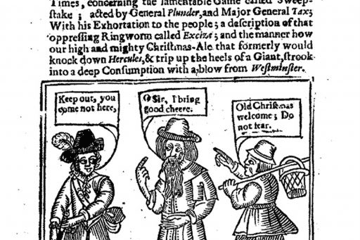
When King Charles II was restored to the throne in 1660 the ban collapsed and traditional carolling, feasting, and church services quickly returned. Also making a comeback was overindulgence. We know this as there was an increase in court cases for “Christmas Day misbehaviour”, including drink-fuelled assaults, domestic abuse, and public disorder as Devonians celebrated once more. Some things don’t change.
Torbay’s Puritans never really went away. In 1843, the world's first commercially produced Christmas card was designed by artist John Calcott Horsley at Torquay’s Orestone Manor. The card shows the feeding and clothing of the poor with a happy family raising a glass and enjoying Christmas festivities. Local temperance groups swiftly denounced the card for promoting rowdy drinking.