

The Torquay Palm: our iconic botanic import
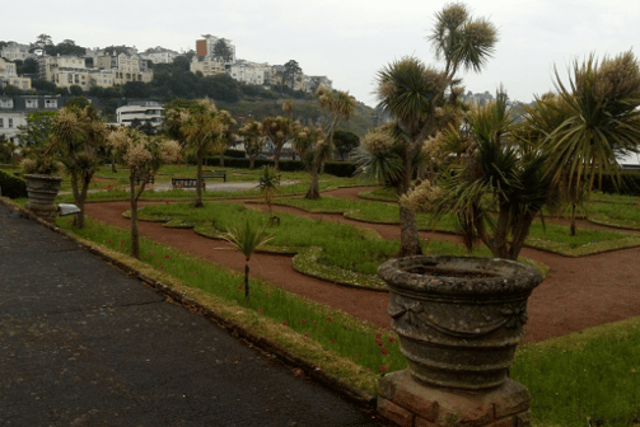

“The most noble of tropical plants, less a botanical species than an imaginative submersion in hot places” - Alexander von Humbold
From 1768 to 1771, a combined Royal Navy and Royal Society expedition explored the Pacific Ocean. Commanded by James Cook, HMS Endeavour visited Brazil, Tahiti, Australia, Java and New Zealand, and part of the mission was to collect plant specimens. Around 30,000 examples were collected, including over 1,000 previously unknown species.
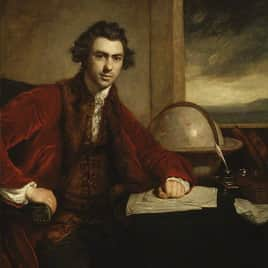
In 1769, the expedition visited New Zealand. Among the shore party was the botanist Joseph Banks, who was tasked not only with the collection of new plants but also with identifying any useful food sources that could be taken back on board.
Joseph recorded in his journal that many of the wild plants he sampled, such as fern roots, were barely edible. However, he found one type of local tree that had young and tender inner leaves and shoots that, when boiled, tasted like cabbage.
These trees had “leaves pleated like a fan; the Cabbage of these was small but exquisitely sweet” and provided “one delicious meal”. The cabbage also had the benefit, Joseph believed, of fighting scurvy, a severe deficiency of vitamin C that killed over two million sailors during the Age of Sail.
The expedition subsequently named this welcome discovery the “cabbage tree”.
The source of Joseph’s lunch was Cordyline australis, a tree belonging to the asparagus family which can grow up to 30 feet tall.
The Māori know it by the somewhat more impressive name of tī kōuka, and in its homeland it has many practical uses alongside a deep spiritual significance. Its leaves were used for food, medicine and weaving, while prominent trees are often used to mark burial grounds; resting places for spirits on their journey back to the sacred ancestral homeland of Polynesian folklore.
But the sacred tree of the Māori people didn’t remain in its native New Zealand. A hundred years on from James’ discovery, the tī kōuka had been exported, repackaged and renamed.
Beginning in the 1820s, specimens and seeds of Cordyline australis were being collected and transported the 12,000 miles to England to satisfy a demand for the novel, extravagant and eye-catching. Once in Britain, it was also discovered that this import thrived in the mild maritime microclimates of the south-west. And so, the unromantic cabbage tree became the exotic Torquay Palm.
It is certainly an attractive tree. As it matures, older leaves drop off the bottom to reveal a bare trunk topped with dramatic foliage. This gives it a palm-like appearance, though it isn’t strictly a palm. And, despite looking typically tropical, Cordyline australis is remarkably hardy. It can even grow in Norway, as it has salt-tolerant narrow leaves that help reduce wind resistance, and flexible trunks that bend, but not break, in strong coastal winds.
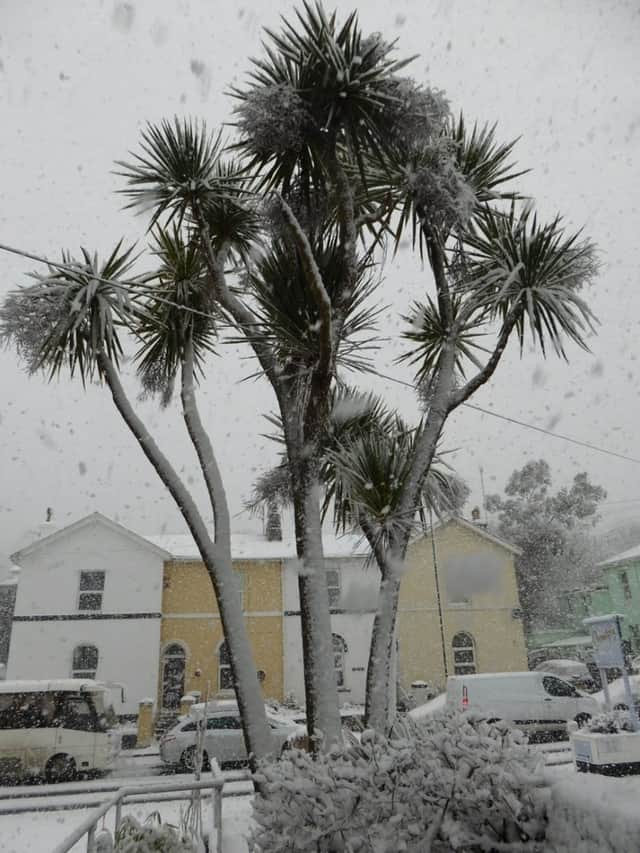
It likes it here in Torbay. Visitors from New Zealand have even commented that our palms often look healthier than they do at home, perhaps due to an absence of antipodean pests and diseases.
But the Torbay Palm became much more than a decorative garden ornament. It became the emblem of a new type of urban community and a leisured way of living that would become a goal for many Britons.
During the nineteenth century, Torquay’s population increased from around 800 to almost 34,000. The town became a place for the wealthy to buy holiday homes, the elderly to retire, and the sick to hopefully recover from their illnesses. Their homes were the famed five-hundred villas, many with gardens that could display the emerging middle class's enlightened taste, knowledge and wealth. Then, in the late 1840s, the Bay connected to the rail network, with many thousands of holidaymakers arriving every week needing accommodation in hotels and boarding houses.
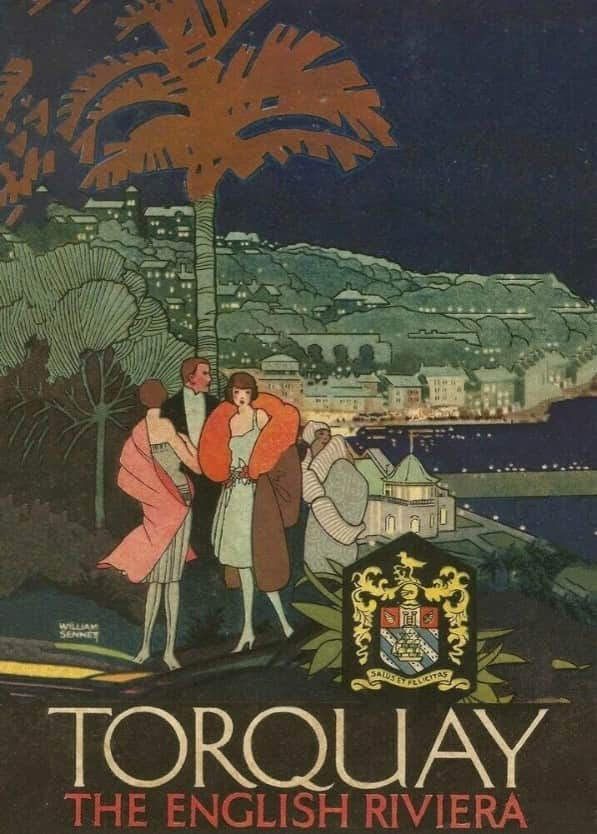
At first in these domestic settings, and then in hotels and public parks, the Torquay Palm was used as a symbol of the town’s elite leisure status. The resort saw itself at the centre of a vast empire, a system of grateful colonies that could send back animal and plant trophies to the motherland. The palm further became a living critique of the dirty, crowded, unmagical industrial cities, reinforcing the idea of Torquay as the English Riviera; foreign but also very English and an unthreatening gateway to what lay beyond the English Channel.
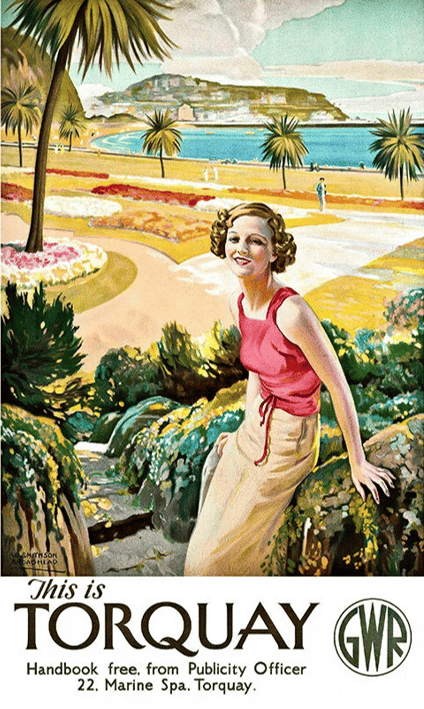
To maintain and communicate this uniqueness in a competitive holidaymaking market, parks played an important role. There were no public parks in Britain before the 1840s, but then these ‘urban lungs’ were introduced to improve public health and provide wholesome recreation. Torquay’s parks presented a wealthy and leisured society to both residents and visitors, with palms inevitably a feature. They also played a role in announcing the horticultural capabilities of the resort to its rivals.
All these villas, hotels and parks needed a way to acquire plants and trees and so emerged a new form of industry: the plant nursery. In Torquay, the first nursery opened in 1831. By 1861 there were four nurseries; six in 1881; 10 in 1891; and 16 in 1900.
We see from advertisements that the early market for Torquay Palms were the wealthy, but by the end of the nineteenth century, nurseries were offering plants to all classes. In addition to satisfying local demand, an inexpensive souvenir to take home or to gift a friend or neighbour was a juvenile palm. How many are still out there in the nation's suburban gardens is unknown.
Most of these Torquay nurseries have disappeared but are remembered by the names of the thoroughfares that replaced them: Sanford & Co’s Devon Rosery's legacy is Rosery Road, while Morgan’s Nursery is remembered in Morgan Avenue.
The twentieth century saw Torquay increasingly using the palm to promote itself as the best resort to offer sophisticated company, high-class entertainment and general wellbeing, all in a clement climate. This advertising presented the palm as a symbol of relaxation and tranquillity; Torquay had, it assured prospective visitors, a laid-back, carpe diem lifestyle. In 1986, a Los Angeles Times journalist called in and wrote, “Palm trees grace Torquay”.
Evidence that the palm had become embedded in the town’s identity came in 2023 when 40 trees were cut down in the Italian Gardens. The sudden felling caused uproar and made the national news. The Council launched an investigation, which revealed a "catalogue of errors", a public apology was issued for failing to communicate with the community, and an admission made that "very serious and substantial learning" was needed. Don’t mess with the Torquay Palm.
The Torquay Palm is then a metaphor for the resort itself, something older being repurposed again and again for new times and audiences. It may not be a real palm, and Torquay may not be on the genuine Riviera, though neither tree nor town is a fraud, just an example of ongoing adaptation.
So, is the Torquay Palm merely decorative, part of the resort’s mythmaking, and of no practical use? Perhaps not.
Cordyline australis was the first native plant in New Zealand used by early European settlers to produce Cabbage tree whiskey, a makeshift brew especially popular among whalers, sealers and those living off the land. Indicating its potency, in the 1850s it went by names such as Cooper's Schnapps or McShane's Chained Lightning.
Anyone fancy a Torquay Palm Potcheen?