

The history behind Goodrington’s beaches and promenades
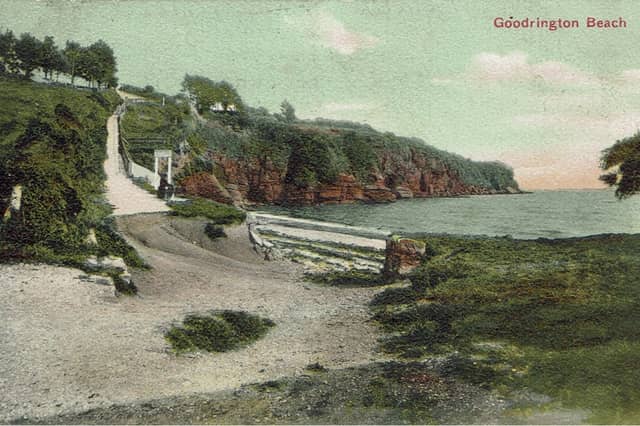

The popular seaside resort has transformed dramatically over the centuries, with a history stretching from Saxon times to the modern day
Goodrington Beach is one of the most popular beaches in the area, for good reason. Clear blue sea and spectacular sand make it a favourite with residents and visitors.
South Sands, with its row of beach huts and spectacular view of the steam trains as they travel to Dartmouth, is perfect for families.
North Sands also has beach huts situated a little further back from the sea; however, it has the added attraction for dog owners that their pets are allowed access all year round.
However, Goodrington also has a history. Known as Godrintone, it is recorded in the Domesday Book, and it is believed that people have lived in Goodrington since Saxon times. Remote and difficult to access from Paignton, where the custom house was located, Goodrington was perfect for smuggling and other dubious activities.
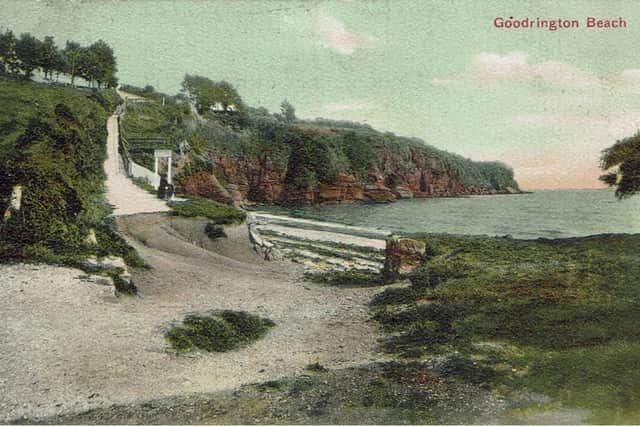
The area first started to become popular as a seaside resort after the end of the First World War. Paignton Council acquired the area in 1921.
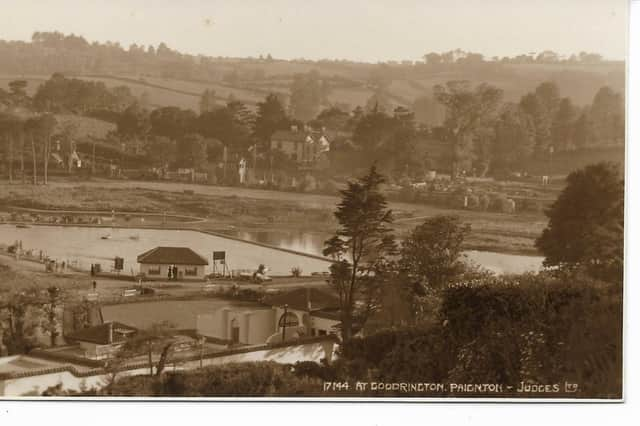
In 1922, the council purchased Goodrington Cottage and its twelve acres of adjoining land. The area could only be accessed by a very steep hill, and large amounts of rock and soil needed to be moved.
This work to construct the promenade and cliff walk adjacent to the North Beach was started in 1929 and was carried out by unemployed Welsh miners under the government’s Distressed Areas Relief Scheme. A temporary railway was built to transport the steam crane that was needed to enable the 80,000 tons of rock to be removed and carried away.
The rock paths and promenade were completed in 1936 when the trees and shrubs needed for the development were donated by Herbert Whitely from Paignton Zoo.
The temporary railway was removed, the cost of the work was believed to be in the region of £54,000.
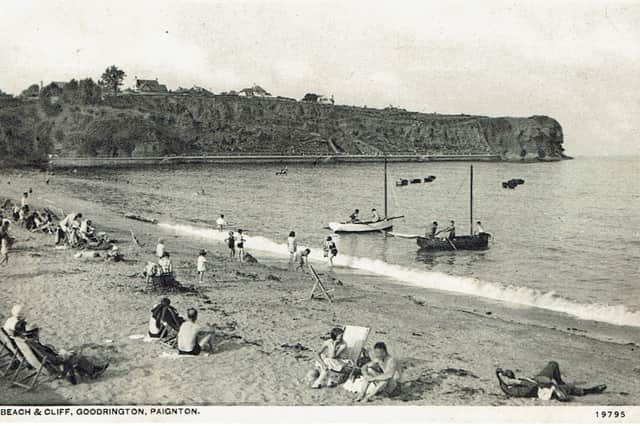
At the same time, work was carried out to construct the promenade on the South Beach. A slightly less daunting task than the cliff walk, as the area was level. Costs around £21,000 were incurred.
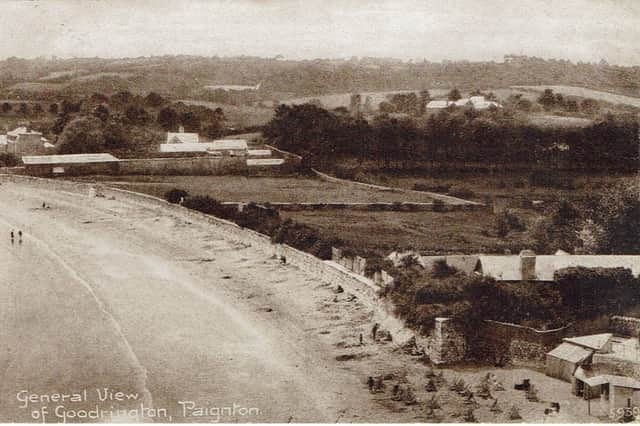
The area of Goodrington known as Young’s Park was also developed in the 1930s. Originally marshland, which needed to be drained, it contained a pond called May’s Pool. The pond was believed to be bottomless, and legend had it that anyone who fell in was doomed for all eternity. However, when it was drained and developed into the boating lake, it was found to be only two feet deep.
A naval hospital was built in Goodrington around 1800. It was deemed to be a suitable place due to its proximity to Dartmouth and Torbay. Britain had been at war with France for a number of years, and there were many casualties.
Sailors were brought there to recover from their injuries, but many didn’t make it, and of those that did, many died. It is thought that at least 300 bodies are buried in this area.
The park also contains the burial plot of Major Thomas Hill, who died in 1815 around the time of Waterloo. He was buried here and allowed a headstone because he was a British officer.
The building was later sold by the Admiralty and became a private house. Later still, it became an inn, which in turn became the Brewers Fayre Inn on the Quay.
Subsequently, in the 1980s, further development was carried out in the shape of Quay West, and many improvements have been made to the area, including the removal of the sewerage pipe which flowed onto the beach at low tide.
Paignton Heritage Society takes an active interest in all developments locally, believing it is essential to retain interesting and important landmarks for future generations. We wait to see proposals for the site of Baileys Hotel in Station Square, sadly lost and now demolished.
We were recently privileged to be allowed a visit to a building site in Paignton where Early Bronze Age and first-century Roman remains have been discovered. Until a few years ago, it was thought that the Romans didn’t reach this area. Clearly, they did, and the discoveries indicate a substantial presence.
New members to the Society are very welcome; subscription is £10 annually. Members receive a quarterly newsletter containing information on the Society’s activities. In addition, entry to our monthly meetings is at a discounted rate.
The Society works with English Heritage to open Kirkham House during July and August. This is Paignton’s oldest house and contains many original features. Situated in Kirkham Street, it is open from 1pm to 4pm on Sundays in August and on Bank Holiday Monday.
After a short break, our Junior Explorers group returns in September. With a packed programme of visits and activities requested by the members (aged 8–13), it looks like a busy autumn.
To find out more about the Society, check out the website: www.paigntonheritagesociety.co.uk