

The 1840s: Torquay’s dangerous decade

Chartism arrives in Torquay amid fears of revolution
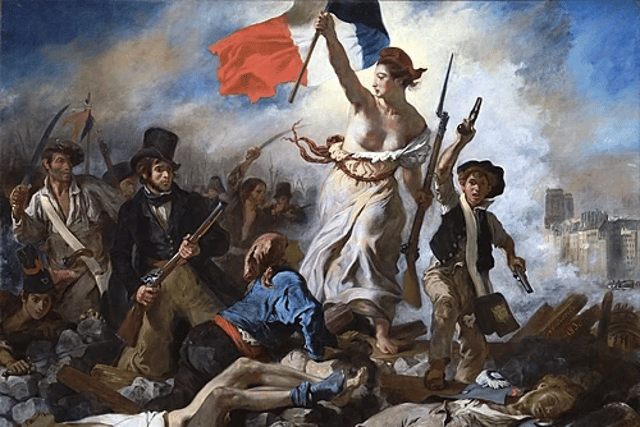
Between January 1848 and October 1849, over fifty countries across Europe experienced uprisings and revolutions. This was the ‘Springtime of the Peoples’, where workers and peasants united, blaming governments and elites for food shortages, mass unemployment, and inflation. At the same time, new ideologies such as liberalism, radicalism, and nationalism were demanding change. These revolutions, however, were quickly suppressed, with tens of thousands of people killed and many more forced into exile.
Britain avoided much of the bloodshed, largely due to the middle classes having been pacified by the extension of the franchise in the Reform Act 1832. However, more far-reaching democratic reforms were soon being demanded by those still unable to vote.
Chartism was the first working-class movement for parliamentary reform. It took its name from the 1838 People’s Charter, which contained six democratic demands. They were: universal male suffrage, equal electoral districts, vote by ballot, annually elected Parliaments, payment of members of Parliament, and abolition of the property qualifications for membership.
The Chartists adopted the motto “peaceably if we may, forcibly if we must” in a direct challenge to the state and vested interests at all levels. The authorities consequently viewed the campaign with great concern, with some in the propertied classes believing that the Chartists intended revolution.
Reports of Chartist activity in Torquay were therefore hostile. We see this in descriptions of a Chartist meeting held in Union Street’s Temperance Hall in September 1846. This was the venue for many radical gatherings in the nineteenth century, but the meeting still needed to be surreptitiously booked in the name of the less contentious ‘Land Co-operative Society’ “with the distinct understanding that nothing political should be introduced”.
Despite any assurances made, the Torquay and Tor Directory reported:
“To the surprise and disgust of the Society, the Lecture soon degenerated into a coarse Chartist declamation, the Lecturer endeavouring by exaggeration and calumny, to poison the minds of the ignorant against every institution, social and political, by which, under the blessings of providence, the industrious classes of this country have so long been raised above those of every nation upon earth.”
The report referred to the “Chartist Agitator” who addressed the meeting as the “slave of the mob who pay him”. To the consternation of the observer, the speaker had commented that “a servant, whatever may his wages, cannot feel as a man”, and he used “coarse ribaldry to assail the most hallowed principles of our political and social institutions”.
Other reviews of the meeting condemned “the recurrent attempts of Chartist agitators to influence this town” and Chartism’s “diabolical tendency to infuse envy, hatred, and malice between the different classes of our countrymen”. A later letter to the Directory called for “just influence to be restored to those whom providence has designed to be the natural leaders of Society, by education, character or station”.
Another asked, “Is it possible that any who call themselves Christians can ally themselves with such as this – can advocate rebellion and civil war as lawful means for overthrowing the powers which are ordained by God?”
By the 1840s, the national Chartist campaign had already by this time been frustrated by jailings, intimidation, and failed armed uprisings. In response, parts of the movement changed approach and, in 1843, established the National Charter Association “to provide for the unemployed and give means of support for those who are desirous to locate upon the land”.
At its peak, the Association had six hundred local branches, one of which was in Torquay. It was supported by local philanthropist Edward Vivian, joint proprietor of the Torquay Bank, member of the Local Board, editor of the Torquay Directory and, together with William Pengelly, explorer of Kent’s Cavern.
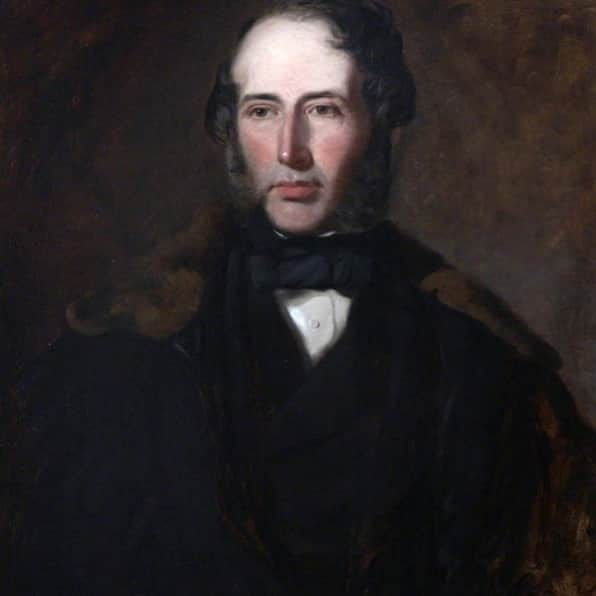
When Edward came to Torquay, he was determined to “lend assistance to anything and everything that had a tendency to elevate the moral and intellectual condition of the working classes”. As a Liberal, he opposed the secret ballot and the universal franchise, though he did take the side of the Salvation Army in the 1888 ‘Torquay War’. It was his empathy and practical solutions that brought him into contact with local Chartists.
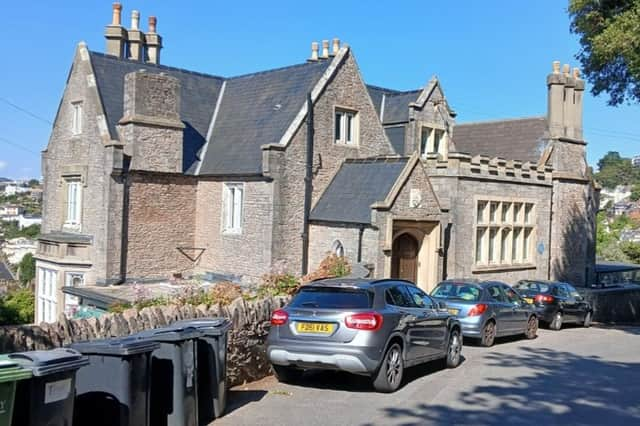
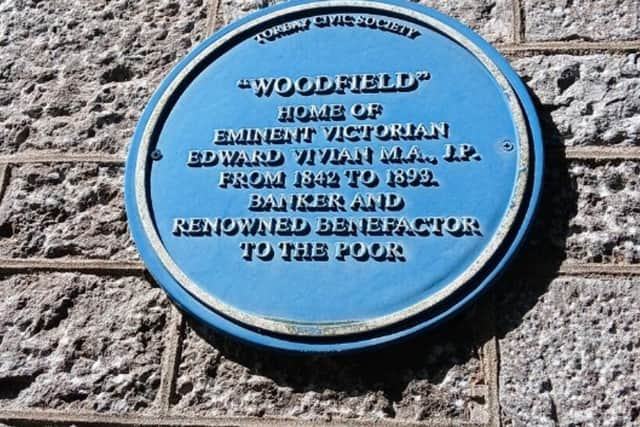
In 1848, Edward let thirty-eight quarter-acre ‘allotments’ at his house ‘Woodfield’ in Lower Woodfield Road to sixteen members of the National Charter Association. The aim was to encourage everyone to grow their own food.
However, the experiment in land reform, along with other similar self-help ventures, was unsuccessful, as many of the smallholders had little or no experience of agriculture. Despite this disappointment, the Chartists and their philanthropist allies remain pioneers in a long tradition of taking land into group ownership; what we now call lifestyle politics.
The other side to peaceful campaigning for change included sporadic eruptions of rebellion and riot, often triggered by desperation and a willingness to confront authority. A specific catalyst was any sudden deterioration in the living standards of working-class people.
The potato blight that ravaged Ireland in the mid-1840s also affected Devon. Prices paid for wheat at market doubled and social unrest broke out across the county. These were the Hungry Forties. Potential for local disorder increased and the mood turned ugly.
In March 1847, a letter was attached to the railing of Torquay's courthouse:
“A grey headed Policeman, rather too busy in matters that did not concern him, So this is to give him notice, that some of his friends to prevent such vexation propose to administer a pill which dose will be delivered with a true hand.”
It was signed by tradesmen and labourers, “Sworn to do their duty and not split. So take care of yourself,” and illustrated with “pistols and a dagger in a heart”. The threat was taken seriously. “The terror excited amongst the Police is of course extreme.”
Later that year, Bread Riots erupted in Dawlish, Okehampton, Cullompton, Crediton, and Tiverton. On 17 May, a Torquay mob ransacked bakers’ shops in lower Union Street, “the contents of which were carried off by the women in their aprons”. Several thousand rioters then raided shops in Fleet Street and Torre and fought with traders.
A number were arrested and it is then that the navvies intervened. Taking their name from the eighteenth-century canal-building ‘navigators’, the navvies were in Torquay constructing the new railway. They lived in a shanty town at Torre, had little fear of authority, a liking for alcohol, spoke their own dialect, and many had roots in Catholic Ireland.
Some had joined forces with locals during the riots and been detained, so sixty of their comrades marched from their encampment to free them, armed with “pickaxes, crowbars and shovels, with the avowed purpose of pulling down the Town Hall”. To restore order, a revenue cutter and a government steamer brought a detachment of coastguards, while forty troops arrived from Exeter and three hundred special constables were sworn in.
Eventually, twenty-seven rioters were jailed, though the prisoners had to be sent to Exeter by sea, instead of by road, as a plot to rescue them had been discovered.
The 1840s were a dangerous decade for those with power and authority, as a new society was coming into being. A new democratic politics was emerging and organisations to promote working-class interests were forming.
While the Chartists failed at the time, their demands became the basis for today’s democracy. This was indeed a long struggle — it wouldn’t be until 1928 that women achieved the right to vote — but local activists were part of that movement from the beginning.