

Peter Moore: the silent toll of conflict on families
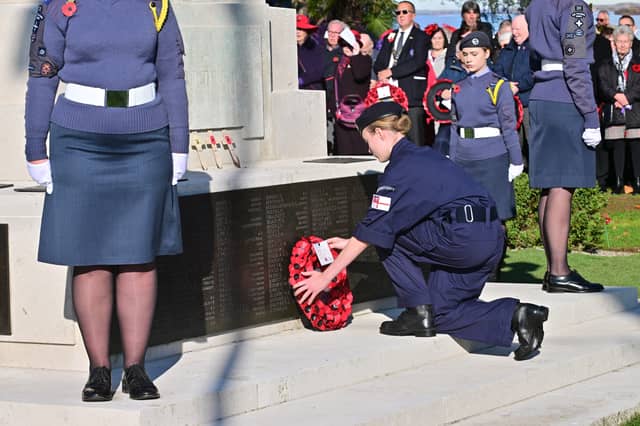

Peter Moore reflects on the impact of war on his family, highlighting the often-overlooked victims who survive but never fully recover.
On November 11th we commemorated the heroic people killed protecting our freedoms. What is often forgotten is that not all victims were killed in action. The evils of war often took its toll many years later.
My wife’s father was the oldest of six children, but he lost both his parents by the time he was twenty. The family always believed he caught TB in the tranches during the First World War and, when he came home, he gave it to his wife. There were no antibiotics and TB was often a death sentence. I did some research and found that her grandfather was honourably discharged from the army in 1918 on the grounds of ill health. His wife died in 1924 at the age of forty. I have a copy of her death certificate which confirms that she died of TB. He died five years later in 1929. He was not killed in action. Their names are not on any war memorial but there is no doubt that both were the victims of war.
My father, after being rescued from Dunkirk joined the Royal African Corp and was sent to Nigeria. After supplying the North African campaign, he was sent to Burma with his Nigerian troops. Like many other veterans he never spoke about his time in Burma but due to the appalling living conditions he developed rheumatic fever. He nearly died in hospital in India.
After the war he became a teacher but was left with a leaking heart valve. Today he would have an operation to replace the valve but that was not an option in the 1950s and 60s. In 1969 he suddenly died in his sleep. I was nineteen. It was six months before I was accepted into medical school.
Again, he was the victim of war without being killed in action.
I remember a patient who always appeared anxious and introverted. At the anniversary of D Day his wife told me he was staying at home. He did not want to see the celebrations. She explained that he was a bomb disposal officer who was sent across just after D Day. His job was to go ahead of the troops to defuse any booby traps left by the Germans. As well as the risks of the traps he was sometimes under sniper fire. And I had wondered why he appeared so anxious and introverted. Here was another brave soldier who survived the war physically but was permanently scarred emotionally.
Sadly, my family also lost friends and family. I was named Peter after a close friend of both my parents who was a merchant seaman, killed when his ship was torpedoed.
Both my maternal grandparents lost a brother in the First World War.
Although he never spoke about Burma my father made it clear that he hated the whole idea of war. He would have found the macho attitude in some of today’s social media offensive. Before he left the army he was stationed in Germany where he realised that many of the Germans were also victims of an evil regime. In November 1932 the Nazi Party had 33% of the vote. In the last free election nearly 70% of voters did not support the Nazis. In March 1933, in a new election when Hitler was already in power they still did not get a majority despite widespread intimidation, arrests and violence.
But my father was not a complete pacifist. He hated war having experienced it at first hand but also knew that there are some regimes so dangerous and evil that war is the only option. Negotiation is not possible.
He also did not like the phrase used in every remembrance commemoration “they gave their lives”. To him this sounded more like kamikaze pilots. Many of his friends had been killed. They were very brave knowing the incredible risks they were taking. They knew that they might be killed but also knew they were fighting evil. None chose to “give their lives”, none wanted to be killed which made their actions even braver.
When people said “never again” after 1918 it was a forlorn hope. We still see wars today in Ukraine, Gaza and numerous other places. On Remembrance Day we remembered the people lost but did we also remember those who survived the war but never recovered and died young? Perhaps the most important message is to remember is that war is evil, not glamorous as it may appear in a video game. Tragically it is sometimes a necessary evil.