

Paignton’s history of blazes and rebuilding

Recent events at Paignton Station are a reminder of the many fires that have shaped the town’s past, from historic cottages and piers to treasured landmarks
Fire is very much in the news at the moment for all the wrong reasons. Although this country has not experienced the catastrophic wildfires seen on the mainland of Europe, we are still seeing smaller outbreaks in many areas. These fires are generally not caused deliberately, unlike the recent fire at the railway station in Paignton, which was believed to have been arson. The damage caused and the inconvenience to passengers is unacceptable, and the mindset of the people involved is difficult to fathom.
The fire service in Paignton goes back many years. Originally operating from Well Street using horse-drawn manual and steam pump apparatus, it relocated to the newly built fire station behind the Palace Theatre in the 1920s. The Palace Avenue station was manned by on-call firemen for many years. In the days before pagers and mobile phones, the men were alerted by a siren and were expected to react immediately. The siren in the years following the Second World War was the all-clear siren from the war, and its wailing noise could be heard for miles around. In 1972, the current fire station in Cecil Road was opened, and the old station is now a café and offices.
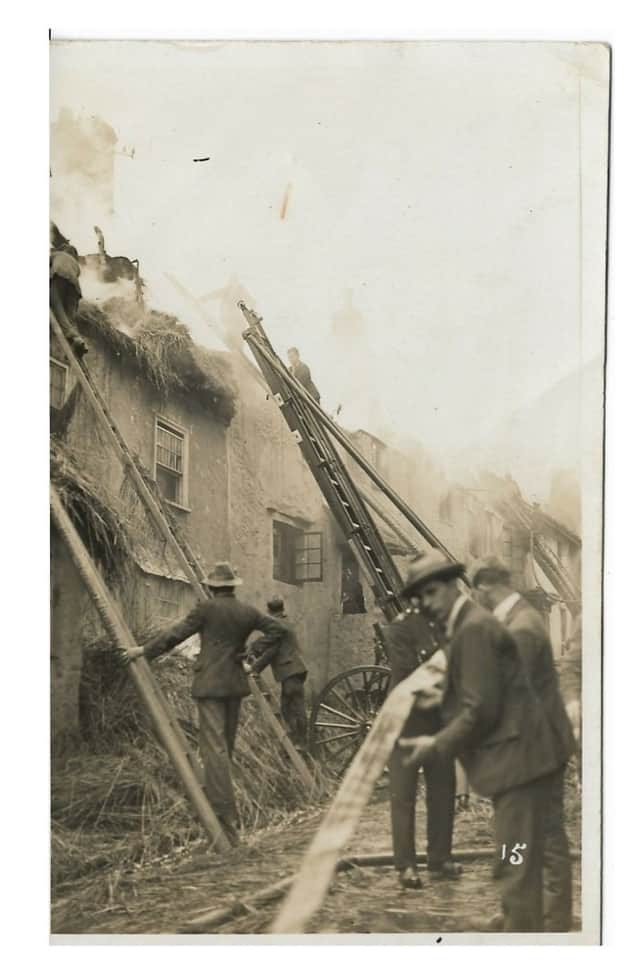
The picture below shows a fire in Winner Street, 1927. Two thatched cottages next to the Globe Inn were destroyed. Although the Globe lost its thatched roof, the building was saved. The destroyed cottages were replaced by a row of shops set back from the road, some of which can still be seen.
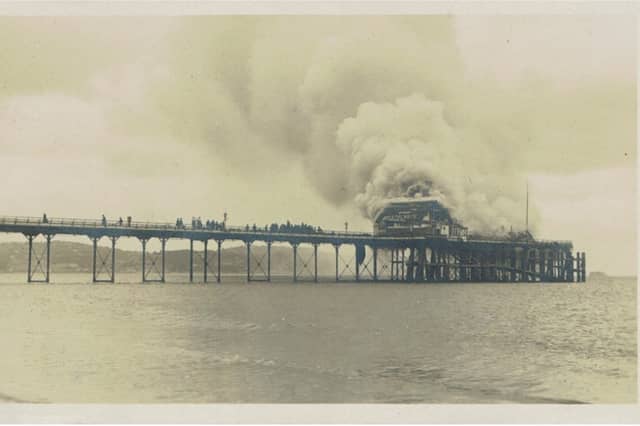
In 1919, a huge fire broke out at the end of Paignton Pier. The concert hall was completely destroyed, and the ruins fell into the sea. The pier was rebuilt, but without the concert hall, a sad loss. However, the pier remains and is a reminder of Paignton’s history as a holiday resort.
Similarly, although much later in 1974, fire destroyed the concert hall at the end of the pier in Torquay. The concert hall was not rebuilt, but the rest of the pier remained as a walkway. Sadly, in 1996 arson destroyed the walkway, leading to demolition of the rest of the pier.
Another notable local fire was in Totnes, where fire broke out in 1990 on the East Gate and destroyed an old and much-valued part of Totnes history. The East Gate has been rebuilt in the original style and still spans the main street in Totnes.
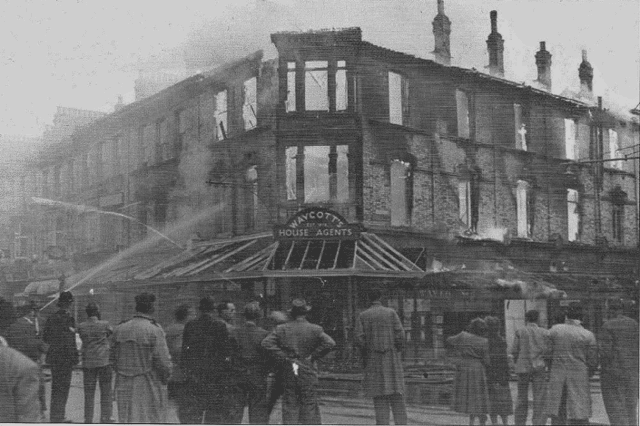
The fire in 1952 on Waycotts Corner in Paignton has been well documented. Flames could be seen rising from the corner of Victoria Street and Hyde Road. Huge crowds gathered to watch as the corner and some adjoining buildings were destroyed. Firemen extinguished the blaze. The building was eventually replaced, but the design of the corner section was criticised as less imposing than the original. However, this may have been due to the shortage of building materials following the war.
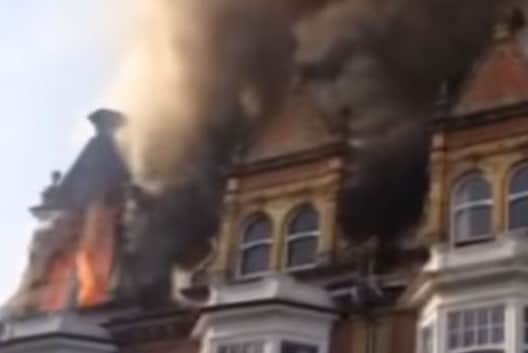
In 2013, fire broke out in part of the upper storeys of Queens Park Mansions in Torbay Road. Flames could be seen rising from the building, and much of the upper two storeys affected were completely destroyed. Luckily, it was possible to save the building and rebuild in the original style. No trace of the damage remains.
Paignton Heritage Society exists to preserve, where possible, the history of the town. The sad demise of Baileys Hotel in Station Square, although probably inevitable, reminds us of the importance of valuing and protecting our heritage. Much of the history of Paignton is documented in our Heritage Centre in Paignton Library. Open from 11am to 3pm on Mondays, Thursdays and Saturdays, it is well worth a visit.
Kirkham House in Kirkham Street in Paignton continues to be open on Sundays from 1pm to 4pm throughout August. Guided tours of this medieval/Tudor property are offered, and visits to the clink and the Bishop’s Tower are usually possible for early arrivals.
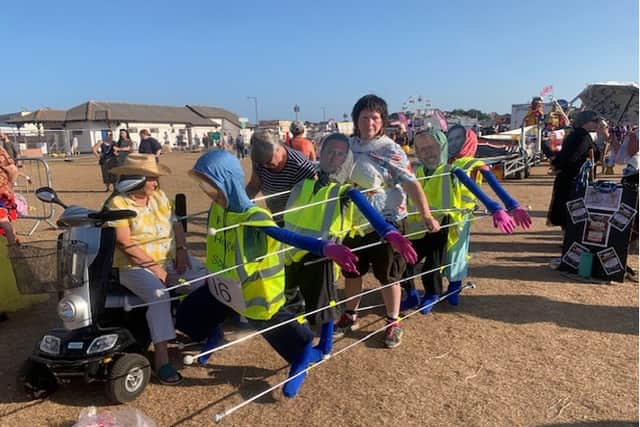
The Paignton Carnival on Wed 29th was spectacular; we were lucky enough to take part, and the support was amazing. So many people, both local and visitors, lined the route. The organisers and all the participants should be congratulated.