

Newton Road's 200-year history revealed as Torquay's main route


The road, which has been the main route into Torquay for over 200 years, has a rich history dating back to the 12th century, with a marketplace established by Torre Abbey's entrepreneurial canons.
Roads are more than paths that take us from one place to another. They illustrate past choices, geographical challenges, hope, success and failure. A road collects the stories of those who travel, and of the many who lived their lives along its route.
Up to the last decade of the twentieth century, Newton Road served as the primary route into Torquay; a thoroughfare that evolved from a muddy trackway into a major transport, industrial, retail, and leisure corridor.
At some time in the twelfth century, Torre Abbey’s entrepreneurial canons established a marketplace on a river crossing six miles from their abbey. They called it the new settlement, or ton, of the abbot and made a track to link the two communities. But our journey begins, as so many before us, at Brunswick Square on the edge of Torre. Here from 1821 stood a turnpike to collect tolls, near the gathering point at the Globe coaching house where travellers began their long journey. The Globe was later renamed the Printers Elbow II.
While fast mail coaches could reach London in less than 24 hours, standard coaches took anything up to ten days. This all changed on 18 December 1848 when a railway station at the bottom of Chapel Hill opened. For eleven years this was Torquay Station until the current seafront station extended the line. By the 1890s, it took only around five hours to reach the capital, and the implications for Torquay were immediate and immense.
Another travel innovation is remembered in the tram shelter built into the retaining wall of St Michael's Hill opposite the station. This dates from the former Torquay Tramways network which operated from 1907 until 1934.
Before the twentieth century, both pick-up points marked the fringes of Torquay, there being mostly countryside, scattered farmsteads, and village communities beyond.
In 1904 there were still open fields to host Buffalo Bill's 'Wild West and Congress of Rough Riders' during his British tour. The massive outdoor production featured sharpshooting, trick riding, Native American performers, cowboys, and dramatic reenactments of American frontier life.
Yet urban Torquay was expanding and needed land for industry and commerce. In 1931 Buffalo Bill’s field was acquired by Devon General for a garage, workshops, offices, canteen, and head office. It then became a Focus DIY store and garden centre, and in 2011 an Asda supermarket.
The edges of towns were always where communities disposed of their waste and right up until the the last decades of the twentieth century, Barton Valley, Barton Hall Farm, Kerswell Gardens, and Scott's Bridge operated as land fill sites.
Boundaries were also where outcasts lived and where secrets were buried. Operating out of a cottage near Lowe's Bridge, Charlotte Winsor's took in unwanted infants for a fee and murdered them by suffocation. Winsor’s dark trade was discovered on 15 February 1865 when the body of Mary Jane Harris’ illegitimate four-month-old son was found by the roadside. The baby farmer was quickly arrested and convicted, though the "most hated woman in England” avoided execution due to a legal technicality and she died in prison nearly 30 years later. A shocked nation consequently demanded changes to the laws concerning adoption and foster care.
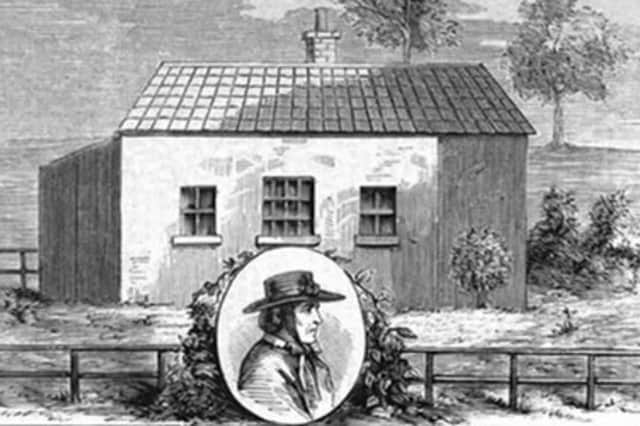
Such liminal places are often the focus of uncanny experiences. Early one July morning in 1951 taxi driver Jack Driscoll was returning from Newton Abbot in “drenching rain” when “he saw a ghost.” Jack “was nearing Lawe’s Bridge when he saw a man step off the pavement by the Torbay Hospital driveway. Thinking it must be a ‘fare’ he slowed down. The man carried on walking, without glancing left or right, and simply disappeared.
Note that the newspaper reporter called the site Lawe’s Bridge and not Lowe’s Bridge. The correct spelling is Lowe though, over the years, the Hospital, the Post Office, nearby car dealers, the petrol station, and even the bus service, referred to Lawe’s Bridge.
The apocryphal story is that when the route of the new railway was being decided in the 1840s the London surveyors asked a passerby whose land they were going to cross. The strongly accented Devonian accurately said ‘Mr Lowe’, but the surveyors misheard.
None of this would have been anything more than of minor local interest; few would ever have the need to cross this little rural bridge anyway. Then it was decided that Torquay needed a new hospital and, ever since it opened in 1928, we have all needed to find our way to Lowe’s Bridge.
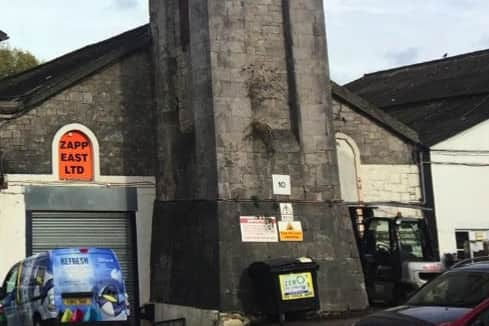
Further along, the road became more industrial. Beside Lidl we see an unusual tower, a relic of an innovation way ahead of its time. This was an engine house built in 1848 for Isambard Kingdom Brunel’s atmospheric railway but it was never used. From 1883 to the 1970s, Longpark Pottery occupied the site, before conversion to a warehouse for the fruit and vegetable wholesaler Frank H Mann and Co.
Opposite is one of those Torquay pubs that have a special place in the memories of successive generations. Some remember the Black Swan, others the Farmhouse Tavern, or maybe the Golden Butterfly’s rock and roll nights and its Teddy Boy devotees. Today it’s The Old Engine House.
In 1882 Torquay Corporation built an infectious diseases hospital, known variously as Torquay Sanitary Hospital, Torquay Isolation Hospital or the Sanatorium. Such institutions were sited away from town centres to quarantine patients with contagious diseases such as smallpox, scarlet fever, diphtheria, and tuberculosis. After the introduction of antibiotics and vaccines, it was no longer needed, and the buildings became the Torbay Hospital Annexe.
We are now on another border, with a granite stone near Rougemont Avenue marking the ancient parish boundary of Edginswell which takes its name from the Old English wielle, or spring, probably ‘Ecgwulf's spring’. In 1086 Domesday recorded that the settlement consisted of 16 villagers, 2 smallholders, and 7 slaves.
The stone is also inscribed TWM, for Torquay Water Main, and marks the 1861 bringing of Dartmoor water from Tottiford and Hennock reservoirs. If the long-discussed Edginswell Station ever gets built, no doubt the nearby Wighton will benefit from the commuter trade; the inn's name coming from the RNLI lifeboat stationed at Torquay from 1902 to 1923.
Up to the last decade of the twentieth century, the Newton Road was the main route between Torquay and Newton Abbot. It was often heavily congested, particularly in the summer months. Lined with hotels, guesthouses and garages seeking to make the most of the passing trade, it became known as Torquay’s ‘Golden Mile’.
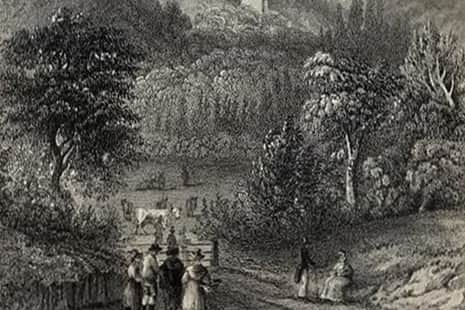
During the 1970s, the area north of the railway track was being promoted as horse-riding country. This all changed on 24 November 1991 when a new £7 million dual carriageway opened without ceremony. This was Riviera Way and it bypassed much of Newton Road, accelerating the redevelopment, expansion, and transformation of Torquay.
The focus was a major out-of-town shopping destination around Scott's Bridge and Barton with major retailers Sainsbury's and Marks & Spencer in the Willows, alongside other stores at Riviera Retail Park. All offered free parking and retail soon shifted away from the town centre.
Torbay’s annual wage is around £27,000, the the UK's third lowest. In contrast, Devon’s best-paid workers are in Exeter, just 24 miles away, where the wage is over £33,000. Making access to this higher paid employment so much easier and quicker was the South Devon Link Road which opened in December 2015 at a cost of £110 million.
For many, the Newton Road was therefore a means to an end; a gateway through which tourists and the retired arrived and the young departed. For others, it illustrates ongoing change, is their home or workplace, or a retail and leisure experience. Whatever its function, the Newton Road is not just a way of getting from one point to another.