

Leonard Cheshire VC: The wartime hero who became a global icon
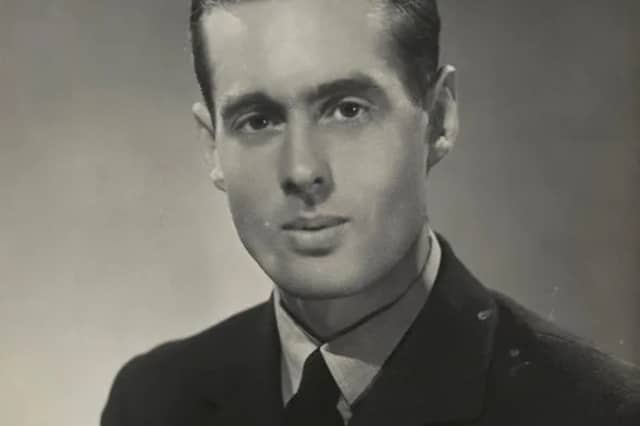

From a thrill-seeking Oxford student to one of the RAF’s most decorated wartime commanders, Group Captain Leonard Cheshire’s extraordinary journey saw him complete more than 100 bombing missions during the Second World War before dedicating his life to helping others through the creation of the renowned Cheshire Homes. In the first of a two-part series, Ian L. Handford explores the early life and remarkable military career of the man who became a national hero.
Awarded the Victory Cross (VC) for completing and surviving a hundred bombing raids
over heavily defended dams in World War 11 Group Captain Geoffrey Leonard Cheshire
was also famous after the war. Lord Cheshire established dozes of “Cheshire Homes”
and visited our home in Douglas Avenue Brixham nearing the end of his life
Eldest son of Geoffrey Chevalier Cheshire (Professor of Law at Oxford) and his wife
Primrose Eleanor Barstow (Geoffrey later dropped) Leonard was born on September 7 th
1917 at Egerton Nursing Home Chester and attended Cothill Village school before going
to Dragon School Oxford. He also spent a year at Pau in the Pyrenees with his mother in
1920 and later was fluent in French. By 1931 with scholarship he went o Stowe School
who would record him as “not being particularly gifted”. Yet he won a place to Merton
College Oxford and by 1936 had made German his third language.
Like all students this age Leonard loved “fast cars, reckless exploits, fantastic
extravagance and shady associations” while always in debt but living life to the full. It
was recorded he modelled himself on Leslie Charteris’s “The Saint” and in creating
many dubious under-graduate records they included being the fastest many to drive from
Hyde Park to Magdalen Bridge in an Alfa Romeo. He joined the University Air
Squadron in 1936 and graduated from Merton in 1939 with a second class degree.
He recalled watching Adolf Hitler rise during the late thirties and knew “that something
evil and dangerous was abroad” and wanted to do something about it. That opportunity
commenced in June 1940 when attending the RAF training school at Hullavington. Later
he would join 102 Squadron Bomber Command. However he did not immediately join
Fighter Command but chose inmstead to be co-pilot to Frank (Lofty) Long in an
Armstrong Whitworth Whitley aircraft. Frank (Lofty) soon turned him into a good pilot
while emphasising the skills of flying at night when under enemy fire.
In 1941 he was in Montreal to collect a plane while on legitimate leave. He decided to
take time out and flew down to New York and now suddenly met actress Constance
Binney. Our fast lane man now enjoyed a whirlwind romance before in July Constance
and he were married before returning to his home in October. Leonard now experienced
the wrath of his parents as neither were best pleased that he had chosen to marry while
abroad and it seems they even called Constance a “jezabel”.
By age twenty five Leonard had become the youngest appointed RAF Group Captain
ever and as Commander of 76 Squadron now captained dozens of raids over Germany
whilst achieving a special rapport with his crew and ground staff. One man summed it up
beautifully stating his “Captain could get me to do anything”. Commander Cheshire was
however criticised for drinking with his crew and merely replied “If I am good enough to
fight and fly with these men I am certainly good enough to drink with them”.
He later earned his DSO for returning his aircraft and crew home safely in a flack holed
aircraft after a raid over Bologne. Now he was called simply Ches to his men and the
record shows he also encouraged Constance to write up all his wartime experiences. She
would always want him out of Fighter Command initialy was pleased when he eventually
transferred to Guy Gibson’s group - although knowing little of it’s future missions to
come.
Ches had always wanted to return to bomber squadron although was the first to admit it
was risky flying and needs an awful lot of luck. With all these experiences captured and
written up by Constance in a book she titled “Bomber Pilot” this eventually saw 10,000
copies sold all around the world making her husband a British National icon. He also
now became a regular voice from 1942 on radio’s BBC’s Postscript service until in
November 1943 was appointed Wing Commander Cheshire in charge of 617 Squadron.
His squadron was picked for the most famous air mission of World War II - bombing
dams of Germany - which later would become the story behind the film “The
Dambuster March”. (To be continued next week)