

How the First World War left its mark on Paignton
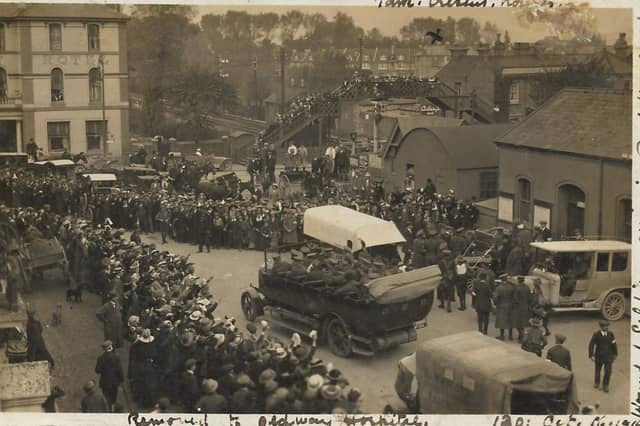

Local recruits, wartime hardships and the vital role of Oldway Mansion in caring for wounded soldiers
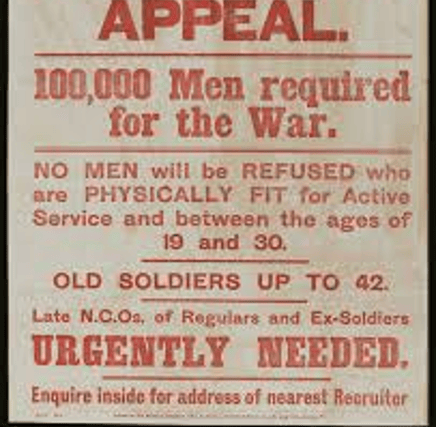
The First World War, frequently called the war to end all wars, sadly wasn’t. In a flurry of excitement and patriotism when war was declared in August 1914, young men in their droves signed up to join the fight. Possibly the belief that “it will be all over by Christmas” encouraged them to join up quickly in case they missed the action. Some even lied about their age to ensure that they would be accepted.
The whole country was affected and Paignton was no different. Groups of friends and workmates joined up together after promises that they would serve together in the same “Pals” regiment. This was encouraged by Kitchener as it took the pressure off the recruitment office. Sadly the pals often died side by side in the trenches of the Somme, Ypres and Passchendaele.
In Paignton the recruitment centre was the territorial army hall in New Street. After the briefest of training many were sent to the front. Those who joined at the start of the war in Wyvern Barracks in Exeter were more fortunate. Posted to India to relieve the regular troops, they spent some time in the relative safety of India, while the regulars were sent to the Somme, many never to return.
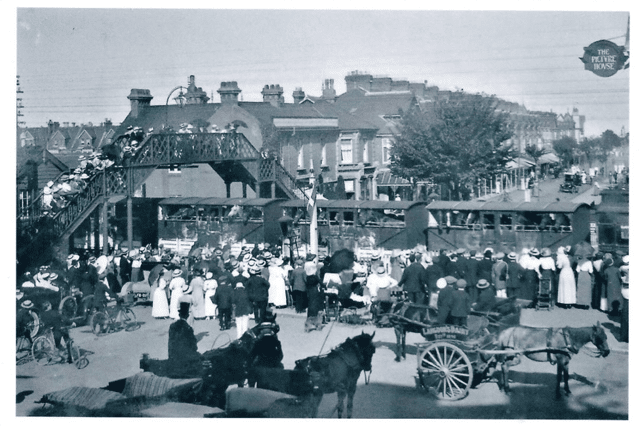
Along with the young soldiers who joined up were the horses who had no choice. Any horse was acceptable whether they were from a farm or were cherished pets kept for shows and leisurely trotting around the country lanes.
The picture below shows a group of soldiers leaving Paignton Station being waved off by friends and family. In the carriages behind those carrying the soldiers rows of horses can be seen. The majority of horses never returned. Paignton was one of the main departure points for horses being sent to France where they were used to transport ammunition, artillery and supplies.
Life in Paignton changed, the absence of young men was noticeable. Women took on work that had normally been done by men such as farmhands, railway staff and munitions workers.
Although the nearest munitions factories were in Tiverton and Bideford workers in Paignton were tasked with collecting scrap metal to feed into the munitions factories. For many women after the war they needed to continue to work. Left as widows often with children to support, work was essential for the families to survive.
Some of the returning soldiers were injured and would not have been able to work. Shell shock was not recognised as the life-changing condition that it was but in reality, those suffering from this were just as unable to work as those who had lost their sight or limbs.
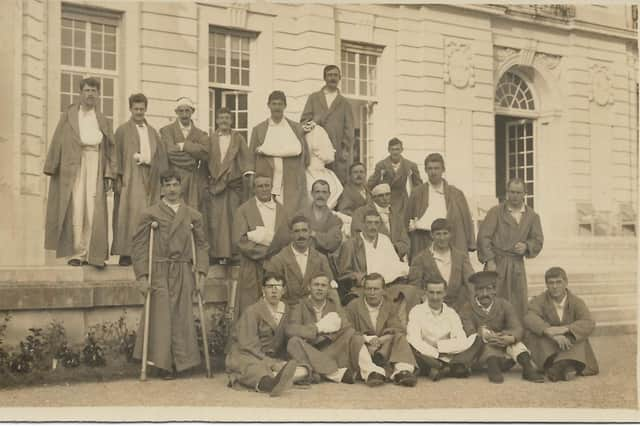
Oldway Mansion, thanks to the generosity of the Singer family, played a huge part in the recovery of injured soldiers. Acting as a convalescent home containing 250 beds, it is believed that between five and seven thousand were nursed back to health in this beautiful building.
Sadly those who made a complete recovery were often sent back to the front. In some ways it was better to lose a limb at least then there was no chance of returning to the trenches.
The end of the war with the surrender being signed in a railway carriage in the forest of Compiegne in France was designated to be 11am on 11th November 1918. Greeted with huge relief and much celebration the population of Great Britain organised parties and celebrations for the returning troops.
For many however, troops and families alike, there was little to celebrate as the reality of the loss of life together with the poor health of many returning soldiers took its toll.
Paignton Heritage Society does not hold meetings in July and August, but work goes on. The Archive room in Paignton Library is busy cataloguing all the items making them easily accessible for all. Our new website, much improved and easy to navigate is being continually updated.
Kirkham House, Paignton’s oldest house situated in Kirkham Street, is open from 1pm to 4pm every Sunday in July and August. Entry is free and includes a guided tour. Early arrivals can also take advantage of an accompanied visit to the Clink and the Bishop’s Tower.
Our new group for 8 to 13-year-olds who are interested in local history is going very well. Known as Junior Explorers there are currently around 14 members and we will look to increase the number to around 20 in the Autumn. There is a series of events and visits planned for the Autumn. The children have an input into all decisions.
Our series of leaflets on the Paignton area is being updated and can be seen and ordered on the website. Other items of merchandise are also available together with copies of the two books written in conjunction with Oldway School last year.
Check out the website www.paigntonheritagesociety.co.uk