

How our gardens are coping with heatwaves and hosepipe bans

What this year's dry conditions can teach us about plant choice, soil health and water conservation
In the Garden
We can’t be in denial about the conditions we are facing this year that has now gone into an additional phase with a hosepipe ban until further notice.
We are approaching our fifth official heatwave of the summer and need to take steps to ensure plants stay alive until rain arrives.
Our gardens are likely not to recover fully until around October when the water table has replenished fully after the initial run-off.
I’ve found that the soil is so dry, water is either not soaking in or running straight through and not affecting roots as much as they need. This emphasises the importance of covering beds with mulch in the autumn and having a more dense soil structure to retain moisture in the event of similar conditions next year.
Take note of what is surviving well this year and use them to replace dead or dehydrated plants. Sea Holly (Eryngium), Lavender, Echinacea, Echinops ritro, Sedum, Verbena, Geraniums and Cosmos will all thrive, so all is not lost. Olive trees and woody herbs have also done well, which is unsurprising.
On the other hand, Crocosmia, Hydrangea, Fuchsia, Roses, Phlox and Astilbe have all struggled. My Crocosmia ‘Lucifer’ flowered for barely a day before turning a rust colour and dehydrating. The addition of water, feed and mulch did very little to prevent its deterioration.
Choosing replacements that have a proven resistance to drought or have their history rooted in South American or Mediterranean countries is a good starting point. Some plants, like Sedum and Olive varieties, actively seem to flourish in the heat. Sedum has a waxy coating on its leaves to retain moisture. Choosing anything with similar leaves, or plants that have silver or hairy leaves, is another golden rule of gardening in warmer climates.
An important point to make, even though the weather can be challenging to work alongside, is that the sunshine is to be enjoyed first and foremost. We will soon be grumbling about rain and wishing it was like it is now.
On the Plot
Early varieties of chillies are now producing fruits. Hungarian Hot Wax are popping up everywhere, especially after a weekly, or twice-weekly, feed. Hotter varieties are flowering now or just showing signs of tentative bullet-shaped fruit loaded with fire. Keep cutting them off at the stem to keep them producing.
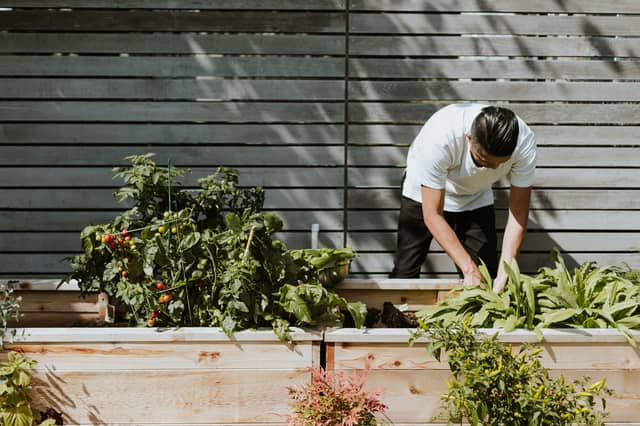
Tomatoes are requiring similar care and will keep producing flowers and fruit until mid-autumn if they are fed and watered. They don’t ‘cut and come again’ but are just quite prolific and loving the hot weather. It’s a gardener’s perk to eat them off the vine.
Sweetcorn is struggling, not due to lack of rain, but through a lack of wind. They are famously wind-pollinated, hence planting them in a square. They are designed to collect pollen on the top flowers that are the male parts, which are then blown across a neighbouring plant’s female parts. These are the beard-like fibres coming out of the top of the cobs. In order to imitate the wind, just push a hand upwards along the flowerhead and then sprinkle on the beards. This is much easier on an allotment, but I wouldn’t fancy doing it across a field of corn. Farmers must have a very expensive machine for that, no doubt.
Badgers can sometimes stand on their hind legs and push corn down, so I always, without fail, plant some for them too. It’s a good idea to plant more than you need in some instances, strawberries being a prime example. We can, by default, feed animals instead of plants. I’ve been planting some veg to attract butterflies, which has just seen the sparrow population increase after gorging on caterpillars.
All this sunshine means we need more time to rest in-between work sessions, so go the extra mile to make your seat and table extra comfortable.