

Hollowing out our hospitals: The quiet transformation of NHS care
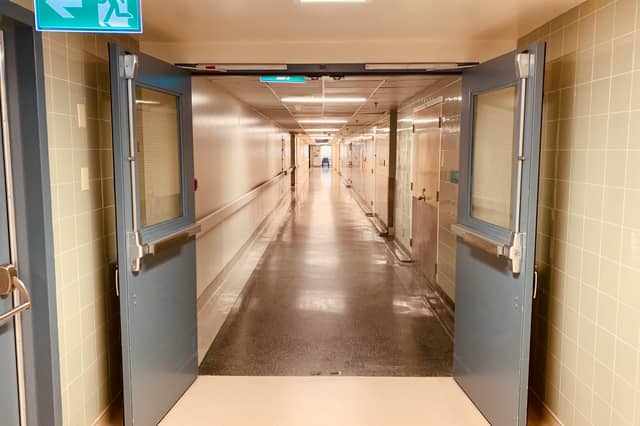

From maternity and stroke care to emergency services, the gradual centralisation of NHS provision could leave rural and coastal communities facing longer journeys and increasingly limited access to acute hospital care
It is not just in Torbay that we are fighting to save our hospital; across Britain, a quiet and sinister change is taking place in the way hospital care is delivered.
Maternity units are closing or being suspended. Stroke services are being concentrated at specialist centres. Emergency surgery has disappeared from some district hospitals. Children’s emergency departments are being moved. In other areas, hospitals that once provided a broad range of emergency and acute services are increasingly being designated for ‘planned’ rather than emergency care.
In basic terms, a deliberate NHS mismanagement disaster foisted on the public without their being informed.
Each individual change comes with its own misleading explanation: shortages of specialist doctors, patient safety, clinical outcomes, financial pressures, or the argument that concentrating expertise in larger centres provides better treatment. Some of those arguments are supported by strong clinical evidence; however, if you look at what is happening across Britain as a whole, a much bigger question emerges: Are Britain’s district general hospitals gradually being hollowed out – one specialist service at a time?
And, crucially, who is examining the cumulative consequences for the communities they serve? Frankly, it doesn’t look like anyone is, as by law the NHS has to consult the public on any major changes and yet they are avoiding public transparency and discussion.
The Save Torbay Hospital Campaign is deeply concerned about proposals and discussions involving the future location and configuration of specialist services, including cardiac and pathology services. Cardiac services are currently only ‘paused’ but are still in the overall mix to be considered for either closure or relocation.
Just one of many arguments against any changes to our award-winning hospital is that individual specialties cannot safely be considered in isolation. Removing interconnected services will affect intensive care, emergency surgery, diagnostics, recruitment and the ability of the hospital to provide other acute treatments. Ergo, the downgrading of an entire district general hospital.
Just 50 miles or so from Torbay lies one of the most striking current examples. North Devon District Hospital in Barnstaple serves a large, dispersed and predominantly rural population. This month, births at the hospital’s maternity unit were suspended because the NHS said it could no longer maintain sufficiently safe medical staffing.
Pregnant women are instead being directed principally to Exeter or Taunton. The situation has become sufficiently serious that emergency department doctors in Barnstaple received additional training to deal with obstetric emergencies should women arrive unable to reach another maternity unit. This situation demonstrates the vulnerability of a rural district hospital when a specialist workforce becomes difficult to sustain.
Travel east from Devon and another time-critical service is undergoing change. Stroke services serving Yeovil are being reorganised, with specialist hyper-acute treatment increasingly concentrated at designated centres. There is medical reasoning behind the development of specialist Hyper Acute Stroke Units. Evidence has shown that concentrating expertise, diagnostics and treatment can improve outcomes.
However, geography matters too, particularly as a stroke is a medical emergency. The challenge facing health planners is therefore not simply whether a specialist centre produces better results once a patient reaches it, but whether the complete patient journey, including additional ambulance travelling time, produces better outcomes for everyone. The distinction is critical.
It appears that the NHS will fundamentally change the roles of what they consider are neighbouring hospitals so that one increasingly concentrates on emergency care while another concentrates on planned treatment. A strategy that is completely workable in large conurbations like Manchester, Birmingham or London, but impossible and fatally dangerous in rural communities.
Another common and hugely important thread running through many of these cases is staffing. Services become difficult to sustain because there are insufficient consultants, nurses or other specialist staff. So that means that by stealth the NHS can concentrate the available specialists on fewer sites, which creates a vicious circle.
A hospital loses one specialist service. Its clinical range becomes narrower, making the hospital less attractive to nurses, doctors and consultants on a career path. Recruitment becomes more difficult and another service becomes fragile. The NHS then declare the service “unsustainable” and so they close another service. In my view, this is totally planned and cynical, with no concern for the ensuing mayhem and potential deaths.
The NHS has formal procedures governing major service change, including requirements concerning patient involvement, consultation, equality and health inequalities but, as mentioned above, they are not consulting with the public as they are bound to do by law.
Rural and coastal Britain cannot be treated like a city. Moving a service five miles across Manchester, Birmingham or London is fundamentally different from moving it 40 or 50 miles across Devon, Cumbria, Wales or rural Northern Ireland. An NHS map may show two hospitals within the same regional network but it does not show a tractor on an A-road, summer holiday traffic, flooding, poor public transport, an elderly spouse unable to drive, or the cost of repeatedly travelling to visit a seriously ill relative.
Has the NHS conducted proper research into this? Checking times on Google doesn’t work, as it doesn’t allow for the inevitable breakdowns, accidents and worse. It took me an hour and a half to get to Exeter the other day!
Before further major centralisation of acute services, communities should be entitled to clear answers to five questions:
- What services did this hospital provide ten years ago, what does it provide today, and what is it expected to provide ten years from now?
- What is the cumulative clinical impact of all the services already removed or centralised – rather than simply the impact of the latest proposal?
- What are the real door-to-treatment times for rural patients after centralisation, rather than simply the treatment outcomes after patients reach the specialist centre?
- Have clinicians at the hospital affected been genuinely involved in designing the change, and what proportion support it?
- Is the proposed change part of a wider strategy for the future role of that hospital?
Those answers should be publicly available.
How far can that process go before our district general hospital ceases, in any meaningful sense, to be a comprehensive acute hospital?
The Government, NHS England and the UK’s health authorities should now publish a national assessment showing which district hospitals have lost major acute services during the past decade, which further services are proposed for centralisation, the additional journey times created for patients and the cumulative effect those decisions are having on rural and coastal communities.
The Save Torbay Hospital Campaign has sent vast numbers of Freedom of Information requests to the ICB and the NHS Torbay Hospital Trust. Most are not answered adequately and some, they say, they can’t answer!
Only the public should judge whether what is happening represents necessary modernisation of the NHS, or the gradual hollowing out of Britain’s district hospitals.
Torbay Hospital is doing great work, so why change it for a vastly inferior system and risk so many lives in the process? It is about time they asked us directly what we think about their plans.