

Ernest Shackleton: From Torquay to the edge of the world - Part 2
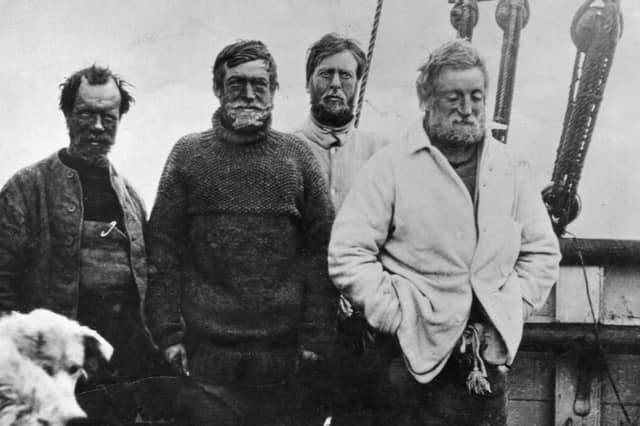

Sir Ernest Shackleton’s Nimrod expedition departed Torbay before setting new records in the Antarctic wilderness
As “Discovery” sailed up the River Thames from Dundee, Shacky from deck saw his younger sisters signalling in semaphore by using a handkerchief: “you have replaced the interloper Emily she will marry you”. It seemed the family name “Great Shacky” was appropriate as a smile came to his face; now all he had to do was win over Emily’s father.
With permission achieved, they then married at Christchurch Westminster on April 9th, 1904. He was still employed as Secretary to the Royal Scottish Geographical Society until 1905 when that British insatiable desire to place the Union Jack on every distant land or famous object determined his next adventure. The powers that be had already decided “Nimrod” would go South and the Antarctic, not North as originally planned.
Long before his death, Commander Scott and Shackleton became Freemasons, we presume to enjoy a closer union or perhaps as an eighteenth-century soothsayer said: "Masonry provides… no small advantage to a man who would rise in the world".
Now on 9th July, the former seal hunting schooner Nimrod set sail from London as a tug raced to overtake her. Its Captain was to deliver a letter from the King and quickly ordering a detour to Greenhithe where the King and Queen, plus Prince Edward (later King Edward VIII), were welcomed aboard. The King, a leading Mason, now presented Shackleton with the Victorian Order and the Queen gave him a Union Jack with a note saying: “May this Union Jack which I entrust to your keeping, lead you safely to the South Pole”.
Nimrod now set sail for Torquay where Shackleton met his wife on Haldon Pier. A special banquet had been arranged for the evening of August 6th, 1907, at Torbay Hotel, mere yards from Nimrod. The meal concluded with Shackleton’s giving a well-received speech before a final toast was made: “Success to the Nimrod”.
Next morning, 2000 locals gathered at the harbour and sang “Auld Lang Syne” to the crew before Nimrod set sail for New Zealand and the South Pole. Guests on board accompanying Commander Shackleton as it left the Pierhead were Mayor John Smerdon and members of his Town Council, who presented him with two framed views of Torquay as the ship sailed the bay.
Then, having shaken hands with the crew and given best wishes for a safe journey, the group with Shackleton boarded a vessel alongside who was to take them back to shore while the crew gave a rendition of “For he’s a Jolly Good Fellow” to their Captain.
Shackleton and his wife now spent two months in Torquay based at the Knoll off Barton Road, Torquay. They finally returned to London before Shackleton made the long journey to New Zealand to join up with his crew.
On New Year’s Day, the next stage of the expedition commenced when Nimrod set sail out of Lyttleton, New Zealand. The former seal hunting whaler “Nimrod” now sailed for the South Pole. It reached the famous Ross Barrier in January 1908, although was caught up in very heavy pack which forced Shackleton to abandon a planned landing on King Edward Island, although fortunately did succeed in getting to the Antarctic Plateau.
Now with five men, they reached latitude 88° 23' S, just 97 miles short of the South Pole, on January 16th, 1909. Later a second sledge pulled by dogs reached Mount Erebus, which they climbed to reach its summit on March 10th, now further South than any human being had achieved.
But with all his crew safely back on ship, Shackleton now turned her for home. Once back in Britain, the welcome was astonishing and Shackleton was feted as “hero of the hour” and even awarded a Knighthood by the King.
Later he admitted to having been weak after contracting scurvy, but his decision to turn the ship for home was made to protect everyone from massive ice flows that year. Before he left, he had planted HM Alexandra’s flag on the plateau just short of the South Pole by 100 miles.
It was not until Norway’s Roald Amundsen in 1911 planted their flag at the Pole, followed days later by Commander Scott, who reached the Pole for Britain. Sadly, Scott then died on the return journey back to base camp.