

“Dear Dizzi”: How a Torquay widow’s garden changed Britain’s politics
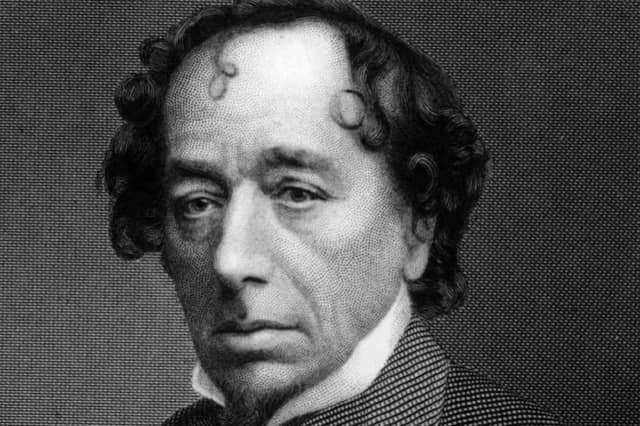

The relationship between the Torquay widow and Disraeli lasted for twelve years and 250 letters
In 1827, a lady by the name of Sarah Brydges Willyams leased a site in Torquay. There she built a house and named it Mount Braddon. The house is still there in Braddons Hill Road East.
An elderly widow without children, over time Sarah acquired a reputation for eccentricity. Her clothes were “odd, and she rarely ventured outdoors without two bulldogs on a leash”. She was described as "quite a miser, starves herself into a skeleton...keeps neither horses, nor carriages, nor men servants – only an enormous watchdog to protect her and her gold."
Torquay, of course, has been home to many eccentrics over the years, but it is Sarah’s friendship with one of the nineteenth century’s outstanding personalities that is the topic of our story.
In 1851, Sarah wrote to the politician Benjamin Disraeli, asking if he would consent to be the beneficiary of her will. Both were of Jewish descent, and distantly related. He agreed, and for twelve years Sarah and Benjamin corresponded regularly and exchanged gifts; she addressed him as “Dear Dizzi” and about 250 letters between them survive.
In August 1853, Benjamin and Mary Anne Disraeli came to stay at the Strand’s Royal Hotel for a week and met Sarah for the first time. Husband and wife then became regular visitors to the Bay, the friendship with the Torquay widow continuing until Sarah died in 1863.

Sarah was buried at the church near Disraeli's Buckinghamshire home, Hughenden Manor. He wrote, "I have lost a kind and faithful friend, but I have lost her in the fulness of years, and she has made me the heir to her not inconsiderable fortune."
That fortune included Mount Braddon, along with nearly £40,000 – around £6,500,000 today. The bequest certainly gave the often hard up Disraeli financial stability and helped progress his political career. However, he held no particular affection for Torquay and sold the house and land in 1865. The association, however, remained; during the 1980s, Mount Braddon housed a restaurant called ‘Disraeli's’.
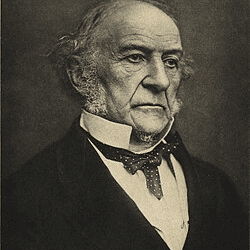
Benjamin Disraeli was a novelist and twice Conservative Prime Minister. He is also remembered for his long feud with that other Torquay visitor, William Gladstone, the four-time Liberal Prime Minister. Gladstone holidayed at Rock House (today Delmonte) overlooking the Strand. The witty Disraeli once said, “If Gladstone fell into the Thames, that would be misfortune; and if anybody pulled him out, that, I suppose, would be a calamity”.
Disraeli was the creator of One Nation Conservatism, a term that comes from his 1845 novel ‘Sybil; or the two nations’. In his novel, Disraeli described the growing divisions he had witnessed between rich and poor, an outcome of capitalism and industrial society. He wrote of, “Two nations; between whom there is no intercourse and no sympathy; who are as ignorant of each other’s habits, thoughts and feelings, as if they were dwellers in different zones, or inhabitants of different planets”
Disraeli believed that the selfish individualism of manufacturers and aristocrats was severing the ties that existed between people, classes and communities. In his view, social measures to improve the conditions of the working class were then needed to safeguard institutions such as the Church, the monarchy and the House of Lords. He further recognised that the Conservative party had to attract the votes of the newly enfranchised working classes in order to maintain its power and prevent revolutionary upheavals, “The palace is not safe when the cottage is not happy”.
Disraeli's ideas went on to significantly influence conservatism and established a reforming tradition. Beginning in the 1870s, this rebranding moved the Conservatives from being the party of wealth and privilege to become ‘one nation Tories’, promoting empire, patriotism and national defence.
This new approach worked. When the franchise was expanded in 1884, nearly doubling the number of Britons able to vote, many working-class men came out to support the Conservatives.
Gladstone, on the other hand, believed that Disraeli’s populist Conservative Party had abandoned its role as a bulwark against “dangerous and excessive innovation” and now depended “on influencing public passion.”
After Disraeli’s death in 1881, the populism continued and the mythology of the late prime minister began. This was a movement that needed a symbol and the humble primrose was chosen. This was Disraeli’s "favourite flower" and it was said that he first came to admire the blooms in Sarah’s Torquay garden. Whether this story is apocryphal or not, the primrose came to be closely associated with Disraeli and his philosophy.
The Queen was reported to have sent a wreath of primroses to his funeral with the handwritten message: "His favourite flowers: from Osborne: a tribute of affectionate regard from Queen Victoria". This was later denied, but on the day of the unveiling of Disraeli's statue, all Conservative MPs did display a primrose.
Right up until the 1920s, the anniversary of the statesman’s death on 19 April was commemorated on Primrose Day, with arrangements of primroses left at Disraeli's tomb and by his Parliament Square statue. On the day, supporters wore primroses as buttonholes, garlands, and hat decorations.
But this was more than mere adulation of Disraeli; it had a practical aspect. In 1883, in order to progress the “transformation into political energy” of the emotions aroused by Disraeli’s career and death, the Primrose League was founded. Its aims were, “To Uphold and support God, Queen, and Country, and the Conservative cause”.

Local branches were established to promote conservatism on the ground. In Torquay, for example, lived the staunch Conservative Mallock family of Cockington Court. Richard Mallock served as MP for Torquay from 1886 to 1895 and in 1906 Harriet Mallock was Dame President of the Torquay Primrose League, while sister Catherine was the Secretary to the Cockington Primrose League.
The League successfully combined a political message, sometimes through lantern slides and opportunities to meet Conservative MPs, with affordable music-hall visits, dances, teas, summer fêtes, train excursions, and cycling clubs.
With over a million members by 1891, it was the largest political organisation in the nation.
Half of the League’s membership were women, leading detractors to dismiss the organisation as a mere marriage bureau. However, when women gained the vote in 1928, this established local network proved invaluable. Some commentators worried that a women’s “petticoat government” would be elected at the 1929 ‘Flapper Election’, while the Daily Mail feared that “thousands of impressionable young females” would vote socialist. Yet the result was a hung parliament and the grassroots endeavours of Primrose League have been credited with the Conservatives' good performance amongst women.

With universal suffrage, however, the Conservative leadership decided on a mass membership to compete with the trade unions. As all could now join the party, the Primrose League went into decline. In 2004, after 121 years, the League was finally wound up.
Britain’s Conservatives were once recognised as the world’s oldest and most successful political party. Their winning strategy was the ability and willingness to reinvent, a pragmatism largely bestowed by Disraeli. The party continued to espouse his One Nation philosophy throughout the post-war consensus, embracing Keynesian intervention in the economy, the welfare state and the National Health Service. In the twenty-first century, Prime Ministers David Cameron, Theresa May, and Boris Johnson considered themselves to be one-nation conservatives.
Would that nineteenth century reinvention have happened without Benjamin Disraeli; and would Disraeli have become prime minister without the legacy of an eccentric Torquay widow?
Politics is, of course, transient while the rhythms of nature are eternal. So, we conclude where we began, at a Torquay house by the name of Mount Braddon. Under a cedar tree, each year primroses are the first to bloom. Their yellow flowers a welcome and cheerful sign of spring, but once an inspiration to millions.