

Caroline Voaden: Was Britain still governable under Keir Starmer?
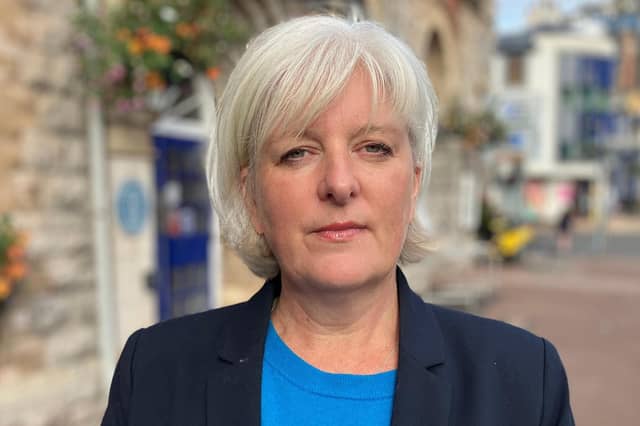

In her latest column, Caroline Voaden reflects on the political instability that has seen five Prime Ministers come and go in just over a decade, arguing that Keir Starmer’s downfall was rooted in a lack of clear direction, and questioning what the next Labour leader must do differently.
Whether Britain is governable or not is a question many will have asked themselves this
week. For those who veer towards yes, there is plenty of data on their side.
The six Prime Ministers who preceded David Cameron served for a combined thirty-six
years. The five who came after – the final being Sir Keir Starmer, who resigned on Monday –
cobbled together just over a decade between them. Not one served a full parliamentary
term.
While hindsight is a wonderful thing, it is clear the seeds of Starmer’s demise were sown the
moment he became Labour leader. Taking over after 2019’s crushing defeat, many expected
Starmer to steady the ship and put in the hard graft needed to turn the party around before
handing over to a more charismatic successor.
Without the Tory’s implosion, this may well have happened. And the truth is that by all
appearances Starmer relished purging Labour’s left, displaying a ruthlessness that went
missing the moment he walked into Number 10.
Sadly, though, Starmer and his allies did not possess the same zeal for political strategy as
they did for the Labour clear out.
During the Labour leadership election, Starmer set out 10 pledges to party members. After
the election, he announced five missions to guide his government. Months later came the
six milestones that made up his so-called ‘Plan for Change’.
It is a testament to just how poor a coherent strategy this was, that not even one of these
missions, goals or pledges has stuck in the public consciousness. Instead, a year after the
2024 election, fewer than 1 in 4 people said they knew what Starmer stood for.
This uncertainty was palpable during the election as well. While the number of MPs
confirmed a historic landslide, the fact that, despite everything the Tories had done, Labour
could only manage 33.7% of the vote should have been a warning of things to come. A savvy
politician would have recognised the need to wield their large majority to bring swaying
voters on side.
Instead, the Treasury announced a cut to winter fuel allowance and in a speech Starmer
glumly said: “Things will get worse before we get better”. So much for the change promised
at the election!
In truth, the die was cast then. While Starmer and co quickly switched gears to project a
more positive image, the winter fuel allowance cut and the general malaise with which they
entered government was an albatross around their neck for the rest of the PM’s tenure.
And when they did announce genuinely compelling policies, the messaging was muddled to
say the least. Scrapping the two-child benefit cap is a great example. Starmer should have
done this in his first week as PM. Instead, he suspended seven Labour MPs for voting to
scrap the cap. Before eventually deciding to scrap it a year later.
The result of this to-ing and fro-ing was a PM who appeared uncertain, having to be coaxed
into making decisions which he could not credibly claim credit for.
This happened time and time again during Starmer’s tenure, and it is an approach I hope the
next PM, who, let’s face it, will likely be Andy Burnham – will scrap.
Labour was elected under a mantra of change. What they have delivered so far, however, is
government by consultation, with every decision, big and small, tangled in red tape, feeding
into the belief that no matter who is in charge nothing gets better.
Andy Burnham was right that his victory was the “final chance to change” for Labour; let us
hope he carries that mentality with him into Number 10.