

Bernard Delfont: from Torbay theatre to the world of film
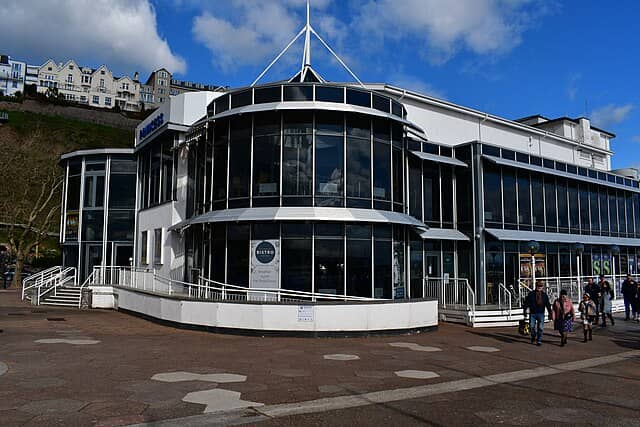

From the opening of the Princess Theatre to a career spanning theatres, films and television, Bernard Delfont became one of the biggest names in British entertainment
Having learned Lew had sold the Grade Organisation Company to EMI, Bernard continued to keep his workaholic lifestyle, yet trying to give the impression he was just an uncomplicated, charming businessman. Once quoted as saying “you could be successful without being ruthless”, in truth, Bernard was far from being “uncomplicated” as he was resourceful and a tough businessman. He must have known his heart never ruled his head and was often quoted as saying “well, business was business”, which says it all. Bernard was now approached by EMI, who said they needed someone to help them build their leisure-side businesses. They said they needed his skill, not, as with his brother, his company. Never a man to turn down a new challenge, Bernard agreed to help by becoming their employee. Now he entered the world of film-making.
Bernard was quoted as saying he “loathed losing money” and was certainly always forthright where theatre costs, or especially production costs, were being discussed. With his two Winogradsky brothers having sold out to EMI, their world of deals and partnerships had now ceased, leaving Bernard and his new friend Val Parnell to go on to control most theatres in London.
Meanwhile, Torbay Borough Council during the sixties were constructing the new “Princess Gardens Development Scheme”, which involved demolition of the Bandstand and Tent on the promenade to make way for their new theatre, “The Princess Theatre”. It was to be built centrally opposite the Princess Pier and would likely have a cafe alongside (later Pier Point Restaurant).
When members of Torquay Chamber of Trade saw the proposals, they had authorised their Chairman, Ernest Freed, to invite the new star of entertainment - Mr Bernard Delfont - to Torbay. Bernard accepted the invitation and later, after many meetings, he agreed to underwrite a five-year contract to provide an orchestra in Torbay, with suitable equipment included for the theatre. The Lieutenant of Devon - Right Honourable Lord Roborough JP - later declared the Princess Theatre open on June 7th, 1961, and now Mr Delfont signed the contract.
Torbay Council would be awarded a special “Come to Britain Trophy” in recognition of its “progressive work” at the Esplanade. Mr Delfont had sent his theatrical impresario, Mr Ray Lamar, to Torquay and from 1962 he opened shows like “What a Racket” with Arthur Askey and “Showtime” with Charlie Drake at the Princess Theatre. Initially, “Showtime” had starred Max Bygraves at the theatre before both Max and Ray (agent) later made Torbay their permanent home. Later still, Anthony, son of Max, would take on Babbacombe Theatre and open more shows.
Meanwhile, Bernard's Company eventually merged with the Grade Organisation in 1967 when the whole of the Delfont family empire became owned by EMI. Bernard’s business career had ended, although he was still employed by EMI. His initial task improving EMI’s leisure division had seen him purchasing Elstree Studios and its huge chain of cinemas. Then he had appointed Bryan Forbes, the most respected director of films in that era. By 1970, Bryan would release the famous film “The Railway Children” and later “The Go-Between”.
In 1974, Bernard was awarded a Knighthood for his long service to the entertainment industry, being the same year he would not renew his contract with EMI. Then he moved to a rival company and released the film “Murder on the Orient Express” and by 1980 even EMI had sold out to the Trust-house Forte Group.
Years later, Sir Bernard thought himself wealthy enough to formally start raising money for charities. Even now, as a philanthropist, his business head saw that money given, promised or raised had to be destined for a charity or linked to the entertainment world. Meanwhile, the Elstree Company, due to poor labour relations, hit an all-time low in 1979 when Lord Delfont finally sold it to Thorn Electrical.
Ever supportive of his Lordship, EMI Directors now offered to make the CEO role its most recent purchase, Trust-house Forte Group (THF). It had a portfolio which included many London theatres and even the Blackpool Tower & Ballroom, he could not possibly refuse!
Finally, in 1983, Lord Baron Delfont led a management buyout of THF and was appointed first Chairman of the First Leisure Corporation. Having staged a Royal Variety Performance show for 21 years and still managing the Entertainment Artists’ Benevolent Fund and Actors Benevolent Fund, he said “he was forever grateful for the opportunities his adopted country had given him” before he died at Angmering, Littlehampton (his home) in Sussex on July 28th, 1994.