

Welcome to Lady Glenconner - and princesses , palaces and flying mice
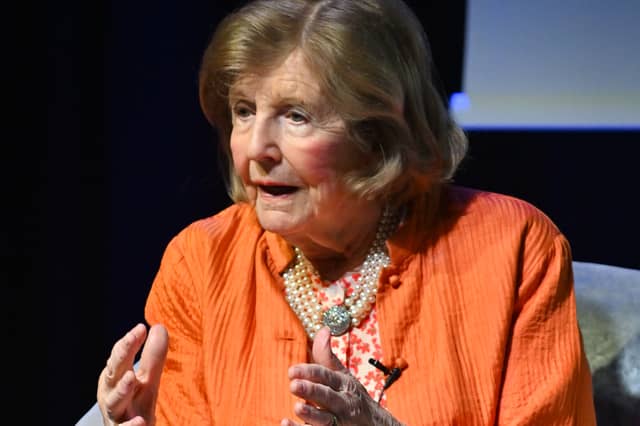

Ali McPhee on a storytelling bonanza from Lady Glenconner at the Torbay Literary Festival
There are interviews in which the interviewer asks the questions and the guest answers them. And then there are conversations with Lady Anne Glenconner, in which the interviewer sensibly accepts that he is merely providing the road signs.
In her conversation with Ben Tisdall, the bestselling author of Lady in Waiting: My Extraordinary Life in the Shadow of the Crown proved once again that she has an almost inexhaustible supply of stories — and an enviable ability to tell them. Some 1.5 million copies of her memoir have been sold so far, and it is not difficult to understand why.
Tisdall provided the structure for the conversation, but he hardly needed to provide much else. A question would be asked, Lady Glenconner would give him a knowing glance, turn towards the audience and, before anyone quite knew what had happened, launch into another extraordinary anecdote. Twenty minutes later, the story would finally come to an end.
There were tales of royal life, family, eccentricity and the wonderfully improbable situations that seem to have followed Lady Glenconner throughout her life — including, naturally, flying mice. The stories were funny without appearing to be told for effect, which is perhaps their greatest charm. Her humour is warm, affectionate and entirely at ease with the absurd.
Indeed, it was hard not to notice that Lady Glenconner seemed more interested in talking to the audience as to her interviewer. That was no slight on Tisdall; rather, it seemed a revealing sign of the warmth she has for people. She was not performing in the room. She was sharing stories with it.
The result was an evening that felt less like a formal literary interview and more like being invited into an extraordinarily well-stocked storehouse of memories. Tisdall's questions opened the doors, but Lady Glenconner did the rest.
And the generosity continued long after the conversation had finished. The book signing took considerably longer than expected, with an extremely long queue forming to meet her. Yet there was no sense that she was simply working her way through a line of books to be signed. She took time with everyone, talking to readers and writing personal messages in their copies rather than dispensing a hurried signature before moving on to the next person.
That patience was perhaps the most fitting conclusion to a morning centred on a life that has been anything but ordinary. Lady Glenconner's stories may contain princesses, palaces, flying mice and enough improbable episodes to fill several memoirs, but her greatest quality is rather simpler: she genuinely seems to enjoy people.
And, judging by the length of the queue, the feeling is very much mutual.