

Torquay’s trams: From unwanted 'bone-shakers' to nostalgic icons
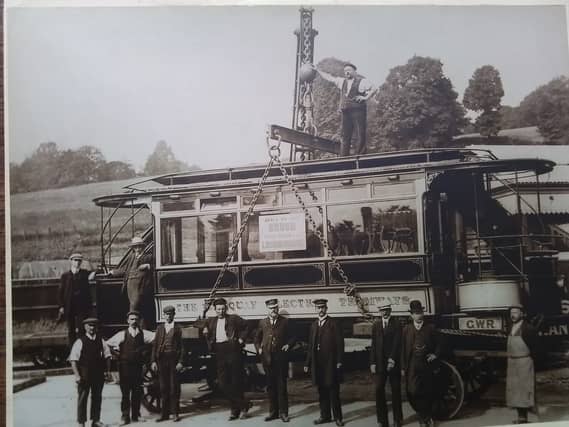

Torbay Weekly reporter finds out more about our transport heritage
Torquay Tramways operated in Torquay and later in Paignton for nearly 30 years.
These images, kindly provided by our partners — Torquay Library and Torquay Museum — give us an idea of how this historic transport network served the town between 1907 and 1934.
According to the Facebook group Torquay in Pictures, the introduction of trams to Torquay in 1907 was relatively late compared to other towns.
“Street railways” were first introduced to Britain in 1860 when American entrepreneur George Francis Train brought the concept to England.
The delay in Torquay was apparently due to trams being considered "too common" for such a wealthy town.
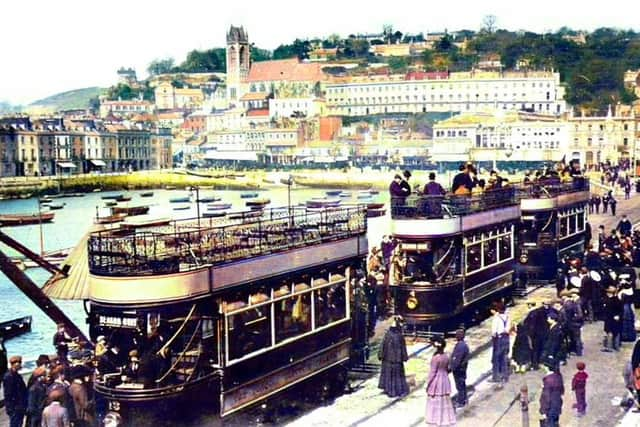
Above: Three trams lined up on Victoria Parade for the official opening of Torquay Tramways on April 4, 1907. Image: Torquay Museum
The first two trams carried the official party, including the mayor, while the third turned out to be unnecessary due to the lack of local enthusiasm.
After completing the first journey to Torre Station, St Marychurch, and Ellacombe, the dignitaries enjoyed a full lunch at the Bath Saloons in the former Victorian Marine Spa.
Local history expert Graham Wheatley, with whom we are also gratefully partnered, found that the Preston Tram Shed was built on Torbay Road at the junction with Orient Road to help the extension of the tram system to Paignton.
The Torquay Tramway Company, designed by engineer CJ Wharton, applied for this extension to the Torquay and Paignton councils in November 1908.
The laying of tram rails and overhead power lines was unpopular with the public.
Around 150 men worked on the project, which involved cliff-cutting past the Hollicombe Gasworks, later nicknamed Britain's Chernobyl-on-Sea after standing derelict for decades.
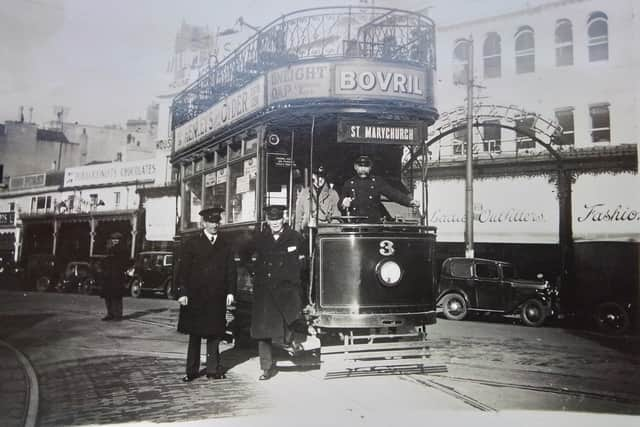
Above: The last day of the trams, 31st January 1934. Image: Torquay Library
In 1925, the Torquay council asked the Torquay Tramways Company to operate the Babbacombe Cliff Railway, which opened in 1926 to provide easier access to Oddicombe Beach.
Hoping to extend further into Paignton, the company sought permission in 1933 to convert the system to trolleybuses, which would also eventually replace the tramway system in Bournemouth.
However, the Western National Omnibus Company objected, and the necessary Act of Parliament was not passed. Instead, the company opted to switch to motor buses, receiving parliamentary approval on 18 July 1933.
Trams to Paignton were replaced by buses on 14 January 1934, and the remaining services ended on 31 January 1934. The tram tracks were gradually removed between 1934 and 1938, starting with Manor Road and finishing with Littlegate Road.
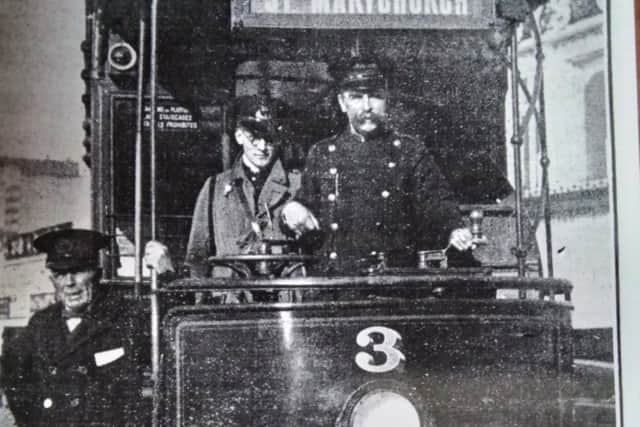
Sadly, no further information has been found about Mr Pugh or Mr Hawkins.
On Facebook, one person commented: “I saw a documentary about trams and how they never should have gotten rid of them. They are so economical. I think they should make Newton Abbot to Torquay a tramline connecting to the rest of Torquay. Sheffield and Manchester brought theirs back.”
Another said: “I actually saw those tramlines while driving past the clock tower when the road was dug up for the new-look harbourside, which looked so much better 100 years ago!”
A third added: “Personally, I think they should have incorporated the old tram lines into the harbourside redevelopment. It would have preserved the heritage of the area instead of just paving over everything.”
The Facebook group Undiscovered Torbay commented: “It always tickles me how unpopular the trams were with the locals, compared to the nostalgic 'bring them back' sentiment we see today. It's very telling that there was no enthusiasm for them from the very beginning.
By the 1930s, these unreliable bone-shakers — often horribly overcrowded — were seen as outdated, and the public decided they had to go. But you'd think they would have been greeted with more enthusiasm when they arrived. Apparently not! Perhaps they had a golden age when they were more loved, and of course, not everyone hated them. Far from it.”