

Torquay woman reveals connection to her family and disgraced MP John Stonehouse
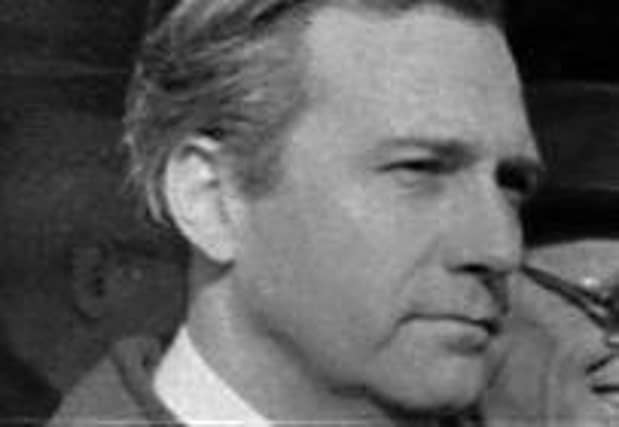

Torquay-based media consultant JANE BLANCHARD reveals the connection between her family and disgraced MP John Stonehouse. And how he spent his first days of freedom after release from prison in Torquay’s Grand Hotel: Oh not that wretched man again! I cou
Torquay-based media consultant JANE BLANCHARD reveals the connection between her family and disgraced MP John Stonehouse. And how he spent his first days of freedom after release from prison in Torquay’s Grand Hotel:
Oh not that wretched man again! I could almost hear my Dad’s voice saying those words when ITV broadcast a three-part series and a documentary on the turbulent life of disgraced MP John Stonehouse last week.
And a BBC documentary The Man Who Died Twice, focused on the very same subject. As far as I was concerned, they were unmissable. Dad would have been a bit sniffy about it.
You see, John Stonehouse was an ex-boyfriend of my Mum’s. They had a brief episode just after the war before my darling Dad swept her off her feet and they married in 1949.
Both men had served in the RAF in the war, Stonehouse as a pilot and my Dad had been an RAF navigation instructor. So maybe it was something to do with the uniform?
Mum had already had two lucky escapes during World War Two. Firstly, her family home in Southampton city centre took a direct hit from an incendiary. They came home to a heap of rubble. Then Southampton Art College, where my mum was studying, was bombed, killing all the students. That was escape number two for Mum because she was ill that day.
Lucky, escape number three was on the horizon.
After the war, Mum told me she joined a debating society called Citizens of Tomorrow where she met the very dashing and ambitious John Stonehouse, a fellow Southamptonian.
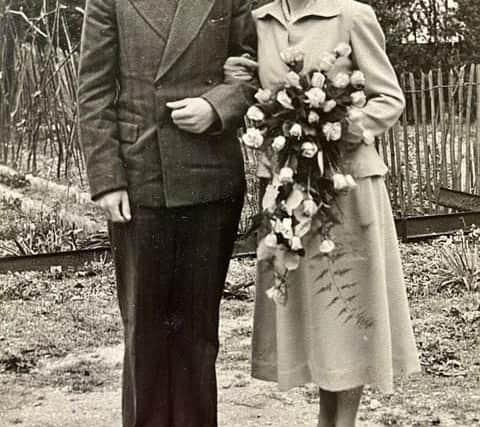
My Dad was wonderful. He was witty, fun, modest, sport mad, a font of constant wisdom and a highly respected teacher, eventually becoming head teacher of two schools in the city. The staff and pupils wept buckets when he retired.
But it was a very different story for John Stonehouse. His was a shabby tale of debt, deception, allegations of spying, adultery, oh, and a spell in prison.
I actually met him once. Mum and I bumped into him one afternoon in Southampton when I was about seven or eight.
There was a brief cheerful conversation after which my mum told me he was a ‘very important person’.
By this time, he had become an MP. I remember exactly where we were - outside Betty Veal’s legendary wool shop in London Road - but not much about the man himself. Only that he seemed very tall and said his oldest child was also called Jane.
John Stonehouse was Southampton’s local boy who made good, becoming Postmaster General in Wilson’s Labour Government.
He was even briefly tipped as a possible poster boy/future Prime Minister. Instead he hit the global headlines in November 1974 sealing his fate as one of the most badly behaved MPs of the 20th century.
Stonehouse had got himself into a big tub of hot water, allegedly spying for Czechoslovakia, trying his hand at a bit of creative accounting, or fraud as some of us would call it. And he was having an affair with his secretary.
When it all became too much, he faked his own death, leaving his clothes on a Miami beach and bunked off to Australia under an assumed name. Not any old name though.
He callously tricked a widow into giving him enough details to obtain a passport in her late husband’s name and got himself organised with multiple bank accounts in various names. His apparent demise captured headlines around the world.
Suddenly my brother Tim and I were dining out on ‘my mum used to go out with John Stonehouse’. Needless to say, Dad wasn’t quite so ecstatic.
Then it got spooky. My mum received a phone call from the ‘Home Office’ - we guessed it was MI5 - who interviewed her for a couple of hours, asking her over and over again if she thought he’d committed suicide. My mum was adamant he wasn’t the type.
She’d known him to be ruthlessly ambitious. He’d also told her during their relationship that he was a communist. That had clearly shocked her.
We were all gobsmacked that they had traced Mum nearly 30 years on. Heck, we weren’t even in the phone book until I was at university.
She was told to expect a file of information to read, and then they would follow up with a further phone call.
That file never arrived and the phone never rang because a few days later, John Stonehouse was arrested in Melbourne. He’d been under surveillance for some time, after bank tellers became suspicious of him shifting large sums of money between accounts.
Police there initially thought they had Lord Lucan in their sights. It had been a busy month for celebrity disappearances.
Lord ‘Lucky’ Lucan had fled following the murder of his children’s nanny, mounting gambling debts and a failing marriage. Despite numerous sightings and theories, Lucan has never emerged.
Stonehouse, however, was finally extradited to the UK and while awaiting trial on bail for theft, fraud and deception, resumed his duties as an MP. He served three years of a seven-year sentence, conducting his own defence.
He blamed his faked death on a mental breakdown and his family to this day claim he was never a Czech spy.
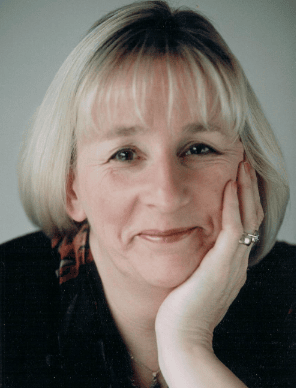
Following a tip-off that Stonehouse and Buckley were booked into the Grand Hotel, my Fleet Street photographer pal Richard Lappas quickly spotted them, strolling hand in hand along Torquay seafront.
He quickly parked and grabbed his camera to get a shot of the couple. Whether or not they had rumbled him, he was never sure but all he could achieve was a few photos of their departing car.
A couple of years later, Stonehouse finally made an honest woman of Buckley.
They had the temerity to marry in the register office of a small Hampshire town where my parents had moved to in retirement.
So we had another round of ‘oh not that wretched man again’ from Dad as the paparazzi descended.
Stonehouse died in 1988 after a long history of heart problems. I’ve only recently discovered his funeral took place at the same crematorium as my parents. Of course I had no idea about that when we arranged their funerals.
I’m sure my Dad would have had something to say about that too. But, oh my goodness, didn’t my Mum make a great choice!